
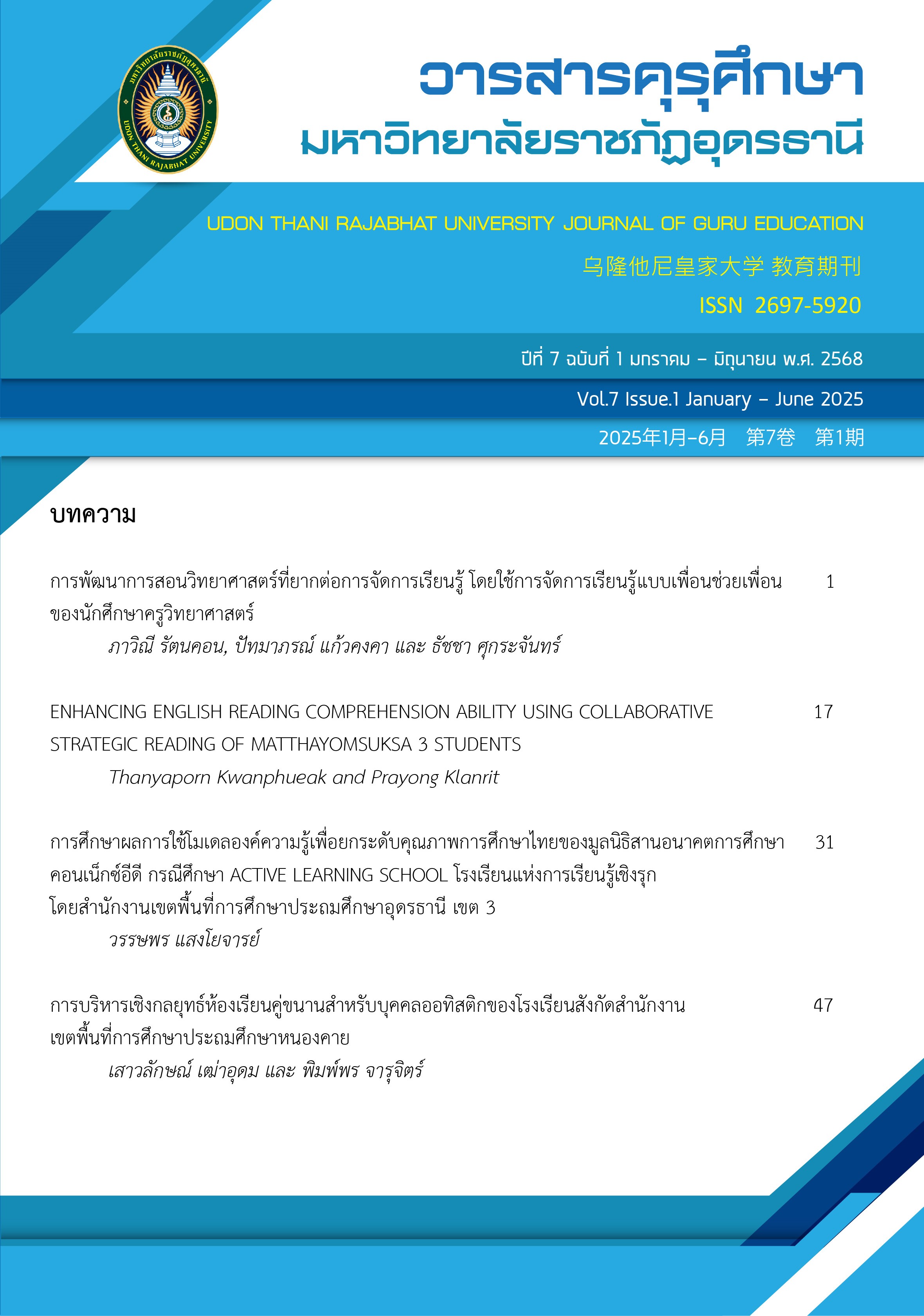
การศึกษาผลการใช้โมเดลองค์ความรู้เพื่อยกระดับคุณภาพการศึกษาไทยของมูลนิธิสานอนาคตการศึกษา คอนเน็กซ์อีดี กรณีศึกษา ACTIVE LEARNING SCHOOL โรงเรียนแห่งการเรียนรู้เชิงรุก โดยสำนักงานเขตพื้นที่การศึกษาประถมศึกษาอุดรธานี เขต 3
Article Sidebar
Main Article Content
บทคัดย่อ
การวิจัยครั้งนี้มีวัตถุประสงค์เพื่อ 1) ศึกษาผลการใช้โมเดลองค์ความรู้เพื่อยกระดับคุณภาพการศึกษาไทยของมูลนิธิสานอนาคตการศึกษา คอนเน็กซ์อีดี กรณีศึกษา Active Learning School โรงเรียนแห่งการเรียนรู้เชิงรุก โดยสำนักงานเขตพื้นที่การศึกษาประถมศึกษาอุดรธานี เขต 3 และ 2) ประเมินระดับความพึงพอใจของผู้มีส่วนเกี่ยวข้องต่อการใช้โมเดลดังกล่าว การวิจัยนี้เป็นการวิจัยแบบกรณีศึกษา (Case Study) สถิติที่ใช้วิเคราะห์ข้อมูลคือ ค่าเฉลี่ย และส่วนเบี่ยงเบนมาตรฐาน
ผลการวิจัยพบว่า 1. การใช้โมเดลองค์ความรู้ Active Learning School โรงเรียนแห่งการเรียนรู้เชิงรุก ส่งผลให้เกิดการพัฒนาในหลายด้าน ได้แก่ 1) ด้านสมรรถนะผู้บริหารสถานศึกษา พบการพัฒนาที่มีนัยสำคัญโดยเฉพาะในด้านทักษะการเป็นโค้ช การเป็นผู้นำการสร้างแรงบันดาลใจ และความรัก ความเอาใจใส่ 2) ด้านสมรรถนะครูผู้สอน พบการพัฒนาในด้านความรู้และทักษะ ทัศนคติและเจตคติ ทักษะการสื่อสาร และการวิเคราะห์การแก้ปัญหา 3) ด้านคุณภาพของนักเรียน พบพัฒนาการด้านทักษะทางวิชาการ ทักษะชีวิต และทักษะผู้ประกอบการ 2. ระดับความพึงพอใจผู้มีส่วนเกี่ยวข้องทั้งผู้บริหารสถานศึกษา ครูผู้สอน และนักเรียน ในการใช้โมเดลองค์ความรู้เพื่อยกระดับคุณภาพการศึกษาไทยของมูลนิธิสานอนาคตการศึกษา คอนเน็กซ์อีดี กรณีศึกษา Active Learning School โรงเรียนแห่งการเรียนรู้เชิงรุกแสดงความพึงพอใจต่อการใช้โมเดลในระดับมากที่สุด โดยมีจุดเด่นในด้านความเข้าใจแนวคิดโครงการ ประสิทธิภาพในการส่งเสริม Active Learning ความทันสมัย สอดคล้องกับศตวรรษที่ 21 และการสนับสนุนการเรียนรู้เชิงสร้างสรรค์
Article Details
ข้อความที่ปรากฏในบทความแต่ละเรื่องในวารสารวิชาการเล่มนี้ ไม่ใช่ความคิดเห็นและความรับผิดชอบของคณะผู้จัดทำ บรรณาธิการ กองบรรณาธิการ และมหาวิทยาลัยราชภัฏอุดรธานี ซึ่งความรับผิดชอบด้านเนื้อหาและการตรวจร่างบทความแต่ละเรื่องเป็นของผู้เขียนแต่ละท่าน
เอกสารอ้างอิง
บุญชม ศรีสะอาด. (2556). การวิจัยเบื้องต้น. พิมพ์ครั้งที่ 9. กรุงเทพฯ: สุวีริยาสาส์น.
Bonwell, C. C., & Eison, J. A. (1991). Active learning: Creating excitement in the classroom (ASHE-ERIC Higher Education Report No. 1). Washington: The George Washington University.
Fullan, M. (2007). The new meaning of educational change. 4th ed. New York: Teachers College Press.
Leithwood, K., Day, C., Sammons, P., Harris, A., & Hopkins, D. (2004). How leadership influences student learning. New York: The Wallace Foundation.
Prince, M. (2004). Does active learning work? A review of the research. Journal of Engineering Education, 93(3), 223–231.
Trilling, B., & Fadel, C. (2009). 21st century skills: Learning for life in our times.John Wiley & Sons.
Whitmore, J. (2009). Coaching for performance: Growing human potential and Purpose. 4th ed. Boston: Nicholas Brealey Publishing.
