The Guidelines to Develop a Student’s Responsibility Skills in Grades 7-9 under the Khon Kaen Primary Educational Service Area 1
Article Sidebar
Main Article Content
Abstract
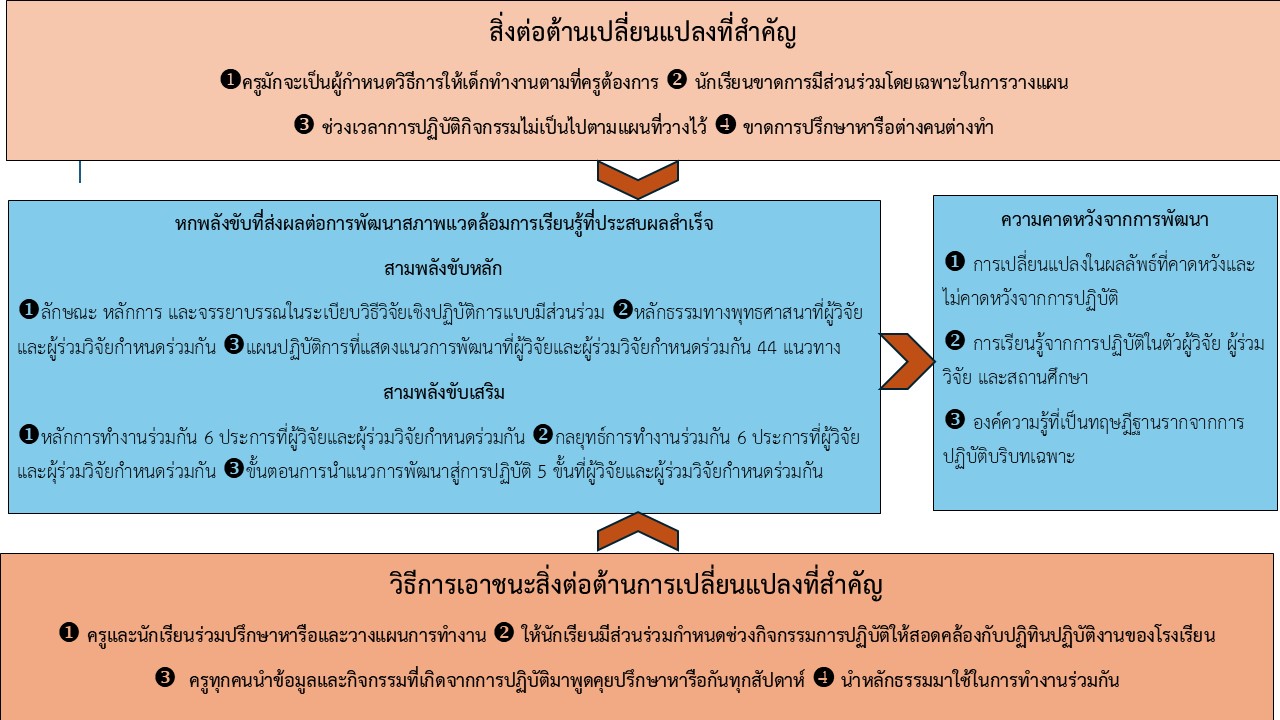
The purpose of this research aimed to: 1) investigate the changes in expected and unexpected outcomes from the practices aimed at developing the responsibility skills of lower secondary school students; 2) explore the learning experiences of the researcher, co-researchers, and educational institutions as lessons learned from developing the responsibility skills of lower secondary school students; and 3) propose guidelines for developing responsibility skills based on practices within the specific context of Ban Nong Kung Witthayakarn School, under the Khon Kaen Primary Educational Service Area Office 1. The research employs a participatory action research method with two cycles, each lasting one semester during the academic year 2022, involving six teachers and 53 students as the target group for development. The research results indicate that: 1) the improvement changes that were anticipated are reflected in the average scores from the assessment of the students' responsibility skills, comparing three stages: before and after the practices in the first cycle and after the practices in the second cycle, which showed progressively higher scores; 2) the learning from practices has led the researcher, co-researchers, and the school to recognize the importance of teamwork and effective learning management; and 3) the guidelines for developing responsibility skills among lower secondary school students include processes, activities, and methods that leverage three main driving forces and three supporting driving forces.
Article Details

This work is licensed under a Creative Commons Attribution-NonCommercial-NoDerivatives 4.0 International License.
เนื้อหาและข้อมูลในบทความที่ลงตีพิมพ์ในวารสารศูนย์ดัชนีการอ้างอิงวารสารไทย ถือเป็นข้อคิดเห็นและความรับผิดชอบของผู้เขียนบทความโดยตรงซึ่งกองบรรณาธิการวารสาร ไม่จำเป็นต้องเห็นด้วย หรือร่วมรับผิดชอบใด ๆ
บทความ ข้อมูล เนื้อหา รูปภาพ ฯลฯ ที่ได้รับการตีพิมพ์ในวารสารศูนย์ดัชนีการอ้างอิงวารสารไทย ถือเป็นลิขสิทธิ์ของวารสารศูนย์ดัชนีการอ้างอิงวารสารไทย หากบุคคลหรือหน่วยงานใดต้องการนำทั้งหมดหรือส่วนหนึ่งส่วนใดไปเผยแพร่ต่อหรือเพื่อกระทำการใด จะต้องได้รับอนุญาตเป็นลายลักอักษรจากวารสารศูนย์ดัชนีการอ้างอิงวารสารไทยก่อนเท่านั้น
References
กระทรวงศึกษาธิการ. (2559). แผนพัฒนาการศึกษาของกระทรวงศึกษาธิการ ฉบับที่ 12 (พ.ศ. 2560-2564). สำนักนโยบายและยุทธศาสตร์ สำนักงานปลัดกระทรวงศึกษาธิการ กระทรวงศึกษาธิการ www.bps.sueksa.go.th
เชาวลิต พันธุ์พฤกษา. (2565). รูปแบบการบริหารโรงเรียนทั้งระบบเพื่อพัฒนาคุณลักษณะความรับผิดชอบของนักเรียนระดับประถมศึกษา. วิทยานิพนธ์หลักสูตรการศึกษาดุษฎีบัณฑิต สาขาวิชาการบริหารการศึกษา มหาวิทยาลัยนเรศวร.
พระพรหมคุณาภรณ์ (ป.อ.ปยุตฺโต). (2545). ธรรมนูญชีวิต. พิมพ์ครั้งที่ 46. กรุงเทพฯ: โรงพิมพ์กรมศาสนา.
พระพรหมคุณาภรณ์ (ป.อ.ปยุตฺโต). (2551). พจนานุกรมพุทธศาสตร์ฉบับประมวลธรรม. พิมพ์ครั้งที่ 16. กรุงเทพฯ: เอส. อาร์. พริ้นติ้ง แมส โปรดักส์.
พุทธทาสภิกขุ. (2549). การงานที่เป็นสุข. กรุงเทพฯ: โรงพิมพ์ธรรมสภา.
ภิรมย์ ลี้กุล (2558). การพัฒนาตัวบ่งชี้ความรับผิดชอบต่อสังคมของโรงเรียนมัธยมศึกษา ในภาคตะวันออก สังกัดสำนักงานคณะกรรมการการศึกษาขั้นพื้นฐาน. วิทยานิพนธ์ดุษฎีบัณฑิต บัณฑิตวิทยาลัย มหาวิทยาลัยบูรพา.
วิโรจน์ สารรัตนะ. (2561). การวิจัยทางการบริหารการศึกษา: แนวคิดและแนวปฏิบัติ. (E-book). พิมพ์ครั้งที่ 4. กรุงเทพฯ: ทิพย์วิสุทธิ์.
ศรชัย เกษมสุข. (2564). การพัฒนารูปแบบการเสริมสร้างวินัยในตนเองของนักเรียนโรงเรียนบางเลนวิทยา. วิทยานิพนธ์หลักสูตรศึกษาศาสตรมหาบัณฑิต สาขาวิชาการบริหารการศึกษา มหาวิทยาลัยคริสเตียน.
ศุภมิต ศิริโสภณภิวัฒน์. (2560). การพัฒนารูปแบบเพื่อเสริมสร้างค่านิยมด้านความรับผิดชอบ ของนักเรียนระดับชั้นประถมศึกษาปีที่ 5. วิทยานิพนธ์หลักสูตรปริญญาปรัชญาดุษฎีบัณฑิต สาขาวิชาจิตวิทยาการศึกษาและการแนะแนว มหาวิทยาลัยมหาสารคาม.
สมเด็จพระพุฒาจารย์ (อาจ อาสภมหาเถร). (2546). คัมภีร์วิสุทธิมรรค. พิมพ์ครั้งที่ 4. กรุงเทพฯ: ประยูรวงศ์พริ้นติ้ง.
สำนักนโยบายและยุทธศาสตร์ สำนักงานปลัดกระทรวงศึกษาธิการ. (2560). รายงานการวิจัย เรื่อง การศึกษาคุณธรรม จริยธรรมของผู้เรียนในสถานศึกษาสังกัดกระทรวงศึกษาธิการ. กลุ่มยุทธศาสตร์การวิจัยและพัฒนา ค้นเมื่อ 20 พฤศจิกายน 2563 จาก shorturl.at/efvW8
อัครเดช อินทรสถาพร, ชูชาติ พ่วงสมจิตร์, เจริญศรี พันปี. (2565). การเสริมสร้างวินัยนักเรียนด้านความรับผิดชอบโดยการมีส่วนร่วมของผู้ปกครอง : กรณีศึกษาโรงเรียนอนุบาลอัจฉรา อำเภอสูงเนิน จังหวัดนครราชสีมา. วารสารวิทยาลัยนครราชสีมา (สาขามนุษยศาสตร์และสังคมศาสตร์), 16(2), 1-14.
Aydin, M. Z., & Akyol Gurler, S. (2012). Okullarda degerler egitimi: Yontemler, etkinlikler, kaynaklar [Values education in schools: Methods events, resources]. Nobel Broadcast Distribution.
Banda, M. A. E. (2017). Characteristics of a responsible person 1. Retrieved July 30, 2019 from https://bit.ly/2K5cgNQ
Bugdayci, S. (2019). Examining personal and social responsibility levels of secondary school students. Universal Journal of Educational Research, 7(1): 206-210.
Chaichanawirote U. & Vantum, C. (2017). Evaluation of Content Validity for Research Instrument. Journal of Nursing and Health Sciences. 11 (2), 105-111.
Deuren. J. V. (2014). Life skills: Responsibility – The definition. Retrieved June 14, 2019, from https://bit.ly/32pyz8f
Fidan, N., & Erden, M. (2001). Egitime giris [Introduction to education]. Alkim Publications.
Frankl, V. (2011). What characterizes responsibility? Retrieved July 30, 2019 from https://bit.ly/2LR6mSG
Gulec, S., & Yalcin, A. (2020). The value of responsibility in the point of view of the 5th grade students. International Journal of Educational Methodology, 6(1): 123-133.
Hsu, W, T., Pan, Y, H., Chou, H, S., Lee, W, P. & Lu, F, J, H. (2014). Measuring Students' Responsibility in Physical Education Instrument Development and Validation. International Journal of Sport Psychology. September 2014. DOI: 10.7352/IJSP.2014.45.487 https://bit.ly/3wy8KDG
Indeed Editorial Team. (2021). Why Is Leadership Training Important? Indeed Career Guide. Retrieved March 27, 2022, from https://www.indeed.com/career-advice/career-development/why-is-leadership-training-important
Ivy. (2009). How do you describe a responsible person? Retrieved July 24, 2019 from https://bit.ly/2GppMJW
Learning To GIVE. (n. d.). Steps to responsibility. Retrieved August 24, 2020, from https://bit.ly/2ExV1V3
León-del-Barco, B., Mendo-Lázaro, S., Felipe-Castaño, E., Fajardo-Bullón, F. & Iglesias-Gallego, D. (2018) . Measuring Responsibility and Cooperation in Learning Teams in the University Setting: Validation of a Questionnaire. Published online 2018 Mar 13. doi: 10.3389/fpsyg.2018.00326
Li, W.,Wright, P. M.,Rukavina, P. B.,& Pickering, M. (2008). Measuring Students’ Perceptions of Personal and Social Responsibility and the Relationship to Intrinsic Motivation in Urban Physical Education. Journal of Teaching in Physical Education 27(2):167-178 • April 2008. DOI: 10.1123/jtpe.27.2.167
Lifehack (n. d.). Five tips on how to be a more responsible person. Retrieved August 24, 2020, from https://bit.ly/2YrdJFi
Los Banos Junior High School (2020). Seven steps of highly responsible students. Retrieved August 24, 2020, from https://bit.ly/32qyIJA
Lunenburg, Fred C. and Ornstein, Allan C. (2000). Educational Administration: Concepts and Practices. 3rd ed. New York: Maple-VailBook.
MBA Research. (n.d.). What is responsible behavior? Retrieved July 24, 2019 from https://bit.ly/30RGSrQ
McTaggart, R. (2010). Participatory action research or change and development. Townsville, Australia: James Cook University.
Mergler, Amanda, G., Spencer, Fiona, H., Patton & Wendy A. (2007). Development of a Measure of Personal Responsibility for Adolescents. Retrieved July 8, 2020 from https://bit.ly/2D94l0V
Mills, G. E. (2007). Action research: A guide for the teacher researcher. 3nd ed. New Jersey: Merrill Prentice Hall.
Okumus, E. (2010). Toplum ve ahlak egitimi [Community and moral education]. Journal of View of Education/Egitime Bakis Dergisi, 6(18): 28-32.
Polit, D. F. & Beck, C. T. (2012). Nursing research: Generating and assessing evidence for nursing practice. Philadelphia, PA: Wolters Kluwer Health / Lippincott Williams& Wilkins.
Popstoolkit (n.d.). Developing a responsibility assignment matrix. Retrieved August 24, 2020, from https://bit.ly/31q3BhY
Reference Website. (2019). What are examples of responsibility? Retrieved July 24, 2019 from https://bit.ly/32PW1vp
Rohilla, K. (2018). Why is responsibility important? Retrieved July 16, 2019 from https://bit.ly/2LmQuan
Rovinelli, R.J., & Hambleton, R.K. (1977). On the use of content specialists in the assessment of criterion-referenced test item validity. Dutch Journal of Educational Research, 2, 49-60.
Sorgius. K. (2020). Five easy steps for teaching responsibility to your kids. Retrieved August 24, 2020, from https://bit.ly/31pctU
Turner, R. & Carlson, L.A. (2003). Indexes of item-objective congruence for multidimensional items. International Journal of Testing 3(2):163-171. DOI:10.1207/S15327574IJT0302_5
