
Learning in the 21st Century: The Digital World
Article Sidebar
Main Article Content
Abstract
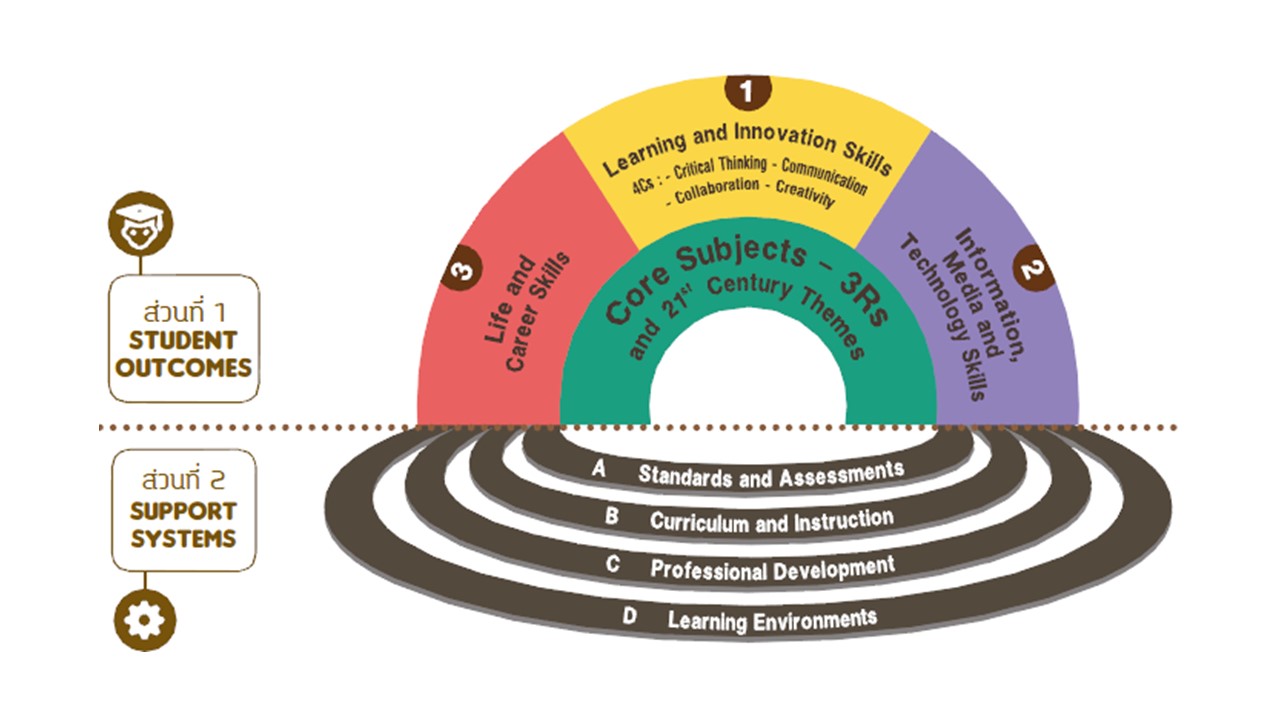
Teaching and learning in the 21st century develop skills beyond listening, watching, and remembering. Education in the 21st century incorporates advanced learning tools and, the development of skills, while actively involved in your own learning and environment. Also, education today is motivating while inspiring and preparing students for today’s world. Students gain the ability to adapt when needed for the changing world of tomorrow. Twenty-first century education is understanding how students learn with a more hands-on approach while building skills. However, the creativity, critical thinking, communication, and collaboration are skills that are important for students learning.
Article Details

This work is licensed under a Creative Commons Attribution-NonCommercial-NoDerivatives 4.0 International License.
เนื้อหาและข้อมูลในบทความที่ลงตีพิมพ์ในวารสารศูนย์ดัชนีการอ้างอิงวารสารไทย ถือเป็นข้อคิดเห็นและความรับผิดชอบของผู้เขียนบทความโดยตรงซึ่งกองบรรณาธิการวารสาร ไม่จำเป็นต้องเห็นด้วย หรือร่วมรับผิดชอบใด ๆ
บทความ ข้อมูล เนื้อหา รูปภาพ ฯลฯ ที่ได้รับการตีพิมพ์ในวารสารศูนย์ดัชนีการอ้างอิงวารสารไทย ถือเป็นลิขสิทธิ์ของวารสารศูนย์ดัชนีการอ้างอิงวารสารไทย หากบุคคลหรือหน่วยงานใดต้องการนำทั้งหมดหรือส่วนหนึ่งส่วนใดไปเผยแพร่ต่อหรือเพื่อกระทำการใด จะต้องได้รับอนุญาตเป็นลายลักอักษรจากวารสารศูนย์ดัชนีการอ้างอิงวารสารไทยก่อนเท่านั้น
References
กระทรวงศึกษาธิการ. (2551). แนวทางการจัดการเรียนรู้ตามหลักสูตรแกนกลางศึกษาขั้นพื้นฐานพุทธศักราช 2551. กรุงเทพฯ: โรงพิมพ์ชุมชนสหกรณ์การเกษตรแห่งประเทศไทยจำกัด.
กิตฑมาศ ศิริไชย. (2564). การประเมินความต้องการจำเป็นเพื่อพัฒนาการรู้ดิจิทัลของนิสิตพระสงฆ์. วารสารพุทธอาเซียนศึกษา, 6(2), 39.
ขวัญฟ้า รังสิยานนท์, พรรัก อินทามระ, ศศิพันธุ์ เปี๊ยนเปี่ยนสิน, ศีลสุภา วรรณสุทธิ์ และศิริพงษ์ ทิณรัตน์. (2562). การพัฒนารูปแบบการเสริมสร้างทักษะสมอง-อีเอฟ สำหรับเด็กปฐมวัยโดยใช้กระบวนการมีส่วนร่วมในโรงเรียนเครือข่าย มหาวิทยาลัยสวนดุสิต. สืบค้นจาก file:///C:/Users/ACER/Downloads/Kwanfah%20Rangsiyanon.pdf
ชาย โพธิสิตา. (2549). ศาสตร์และศิลป์แห่งการวิจัยเชิงคุณภาพ. พิมพ์ครั้งที่ 2. กรุงเทพฯ : อมรินทร์พริ้นติ้งแอนด์พับลิชชิ่ง.
นฤมล ปภัสสรานนท์. (2558). การจัดการเรียนรู้เอกสารประกอบรายวิชาการจัดการเรียนรู้และการจัดการชั้นเรียนคณะคุรุศาสตร์วิทยาลัยราชภัฎธนบุรี. (เอกสารจัดจัดสำเนา).
พงษ์พัชรินทร์ พุทธวัฒน. (2564). รูปแบบการจัดการเรียนรู้ในยุคดิจิทัล. วารสารนวัตกรรมการเรียนรู้และเทคโนโลยีเทคโนโลยี, 1(2), 21-32.
พรชนิตร์ สีนาราช. (2560). ทักษะการเรียนรู้ดิจิทัลเพื่อพัฒนาคุณภาพการเรียน. วารสารห้องสมุด, 61(2), 81.
วิจารณ์ พานิช. (2557). วิถีสร้างการเรียนรู้เพื่อศิษย์ในศตวรรษที่21. กรุงเทพฯ: มูลนิธิสดศรี- สฤษดิ์วงศ์.
Ashiabi, GS. (2007). Play in the preschool classroom: Its socioemotional significance and the teacher’s role in play. Early Childhood Education Journal, 35(2):199-207.
Baker, FS. (2014). Teachers’ views on play-based practice. Abu Dhabi kindergartens, 22(3):271-286.
Barkley, R. (2011). Executive Functions: What They are ,How They work and Why They evolved. New York : Guilford Press.
Creswell J. W. and Clark, V. P. (2007). Designing and Conducting Mixed Methods Research. New Delhi: SAGE.
Creswell, J. W. (2009). Research Design: Qualitative, Quantitative and Mixed Methods Approaches. 3rded, Thousand Oaks, CA: SAGE.
Creswell, J. W. (2014). Research Design: Qualitative, Quantitative, and Mixed Methods Approaches. 4th ed. Los Angeles: SAGE.
Creswell, J. W. (2015). Educational Research: Planning, Conducting, and Evaluating Quantitative and Qualitative Research. 5th ed. New Jersey: Pearson.
Danniels, E., and Pyle, A. (2018). Defining Play-based Learning. Retrieve from http://www.child-encyclopedia.com/sites/default/files/textes-experts/en/4978/defining-play-based-learning.pdf
Eastern Economic Corridor of Digital. (2022). Digital Education. https://eecd.eeco.or.th/wp-content/uploads/2022/11/cropped-cropped-eecd.png
Elias, CL, Berk, LE. (2002). Self-regulation in young children: Is there a role for sociodramatic play? Early Childhood Research Quarterly, 17:216-238.
Fisher, KR, Hirsh-Pasek, K, Newcombe, N, and Golinkoff, RM. (2013). Taking shape: Supporting preschoolers' acquisition of geometric knowledge through guided play, Child Development, 84(6):1872-1878.
Guba, E.G. (1990). The Alternative Paradigm Dialog. InGuba, E.G. (Ed.) The Paradigm Dialog (pp.17-27). Newbury Park, CA: SAGE.
Holt, NL, Lee H, Millar, CA, Spence, JC. (2015). Eyes on where children play: A retrospective study of active free play. Children's Geographies, 13(1):73-88.
Jonker, J. and Pennink, W.B. (2010). The Essence of Research Methodology: A Concise Guide for Master and PhD Students in Management Science. Heidelberg: Springer.
Kraybill, J. H., & Bell, M. A. (2013). Infancy predictors of preschool and post‐kindergarten executive function. Developmental Psychobiology, 55(5), 530–538.
Lynch, M. (2014). Ontario kindergarten teachers’ social media discussions about full day kindergarten. McGill Journal of Education, 49(2): 329-347.
Oxford University Press. (2016). Oxford Dictionaries. Retrieved from http://oxforddictionaries.com/definition/english/research?q=research.online January 28, 2016.
Pan, Y.J, and Li, X. (2012). Kindergarten curriculum reform in mainland China and reflections. In Sutterby, JA, ed. Bradford, UK: Emerald Group; Early education in a global context, 2012:1-26.
Patton, M.Q. (1990). Qualitative Evaluation and Research Methods. 2nd ed. Newbury Park, CA: SAGE.
Pyle, A, Danniels, E. (2017). A continuum of play-based learning: The role of the teacher in play-based pedagogy and the fear of hijacking play. Early Education and Development., 28(3):274-289.
Schwant, T.A. (2002). Dictionary of Qualitative Inquiry. 3rd ed. Thousand Oaks, CA: SAGE.
Synodi, E. (2010). Play in the kindergarten: The case of Norway, Sweden, New Zealand and Japan. International Journal of Early Years Education, 18(3):185-200.
Wallerstedt, C, and Pramling, N. (2012). Learning to play in a goal-directed practice. Early Years. 32(1):5-15.
Weisberg, D.S., Hirsh-Pasek, K, Golinkoff, RM. (2013). Guided play: Where curricular goals meet a playful pedagogy. Childhood Research Quarterly, 7:104-112.