
Career Project-Based Learning Management Model Combined with Learning Activity Packets to Develop Learning Achievement and Vocational Skills of Grade 12 Students, Sichompusuksa School
Article Sidebar
Main Article Content
Abstract
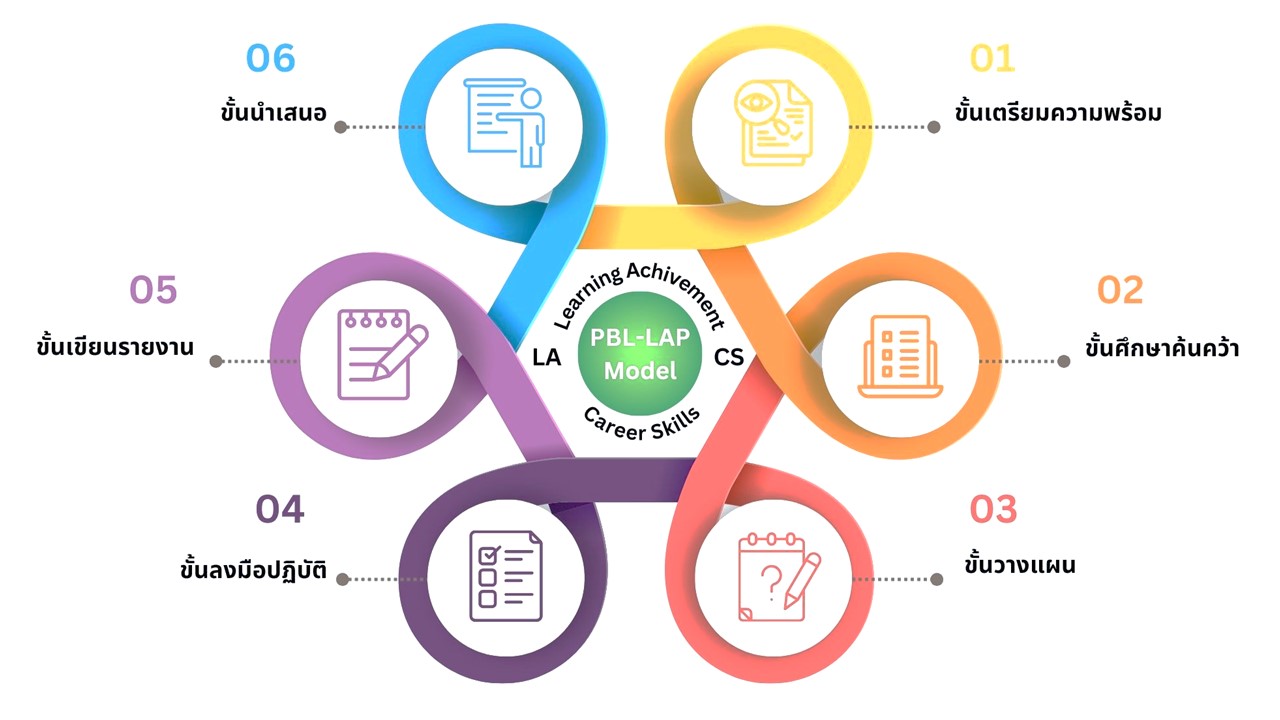
The research and development in this project aim to (1) study and analyze basic data and requirements for developing a project-based learning management model integrated with learning activities packets to enhance learning performance and vocational skills; (2) design and develop a project-based learning management model integrated with learning activities to effectively improve learning performance and vocational skills based on the 80/80 criteria; (3) experiment with using the project-based learning management model integrated with learning activities to improve learning performance and vocational skills; and (4) evaluate the effectiveness of the project-based learning management model integrated with learning activities in improving learning performance and vocational skills with a sample group of 37, grade 12 students in the second semester of the academic year 2023. The research tools used include problem search and cause analysis forms, research problem analysis forms, problem-solving guideline record forms and activity development, model usage guides, action plans, learning activity packets, learning performance measurement tests, vocational skills tests, and satisfaction surveys. The qualitative content analysis and basic statistical analysis found that: (1) there is a need to develop a project-based learning management model integrated with learning activities to improve learning performance and vocational skills; (2) the project-based learning management model integrated with learning activities, which includes principles, objectives, learning management steps, measurement and evaluation, and the factors and conditions for model implementation; (3) the effectiveness of the project-based learning management model integrated with learning activities in improving learning performance and vocational skills is 91.53/85.14, which exceeds the prescribed standard; (4) the post-learning performance is significantly higher than the pre-learning performance at the .01 level of statistical significance; and (5) the vocational skills average score of 88.58 exceeds the 80% average threshold, consistent with the set hypothesis.
Article Details

This work is licensed under a Creative Commons Attribution-NonCommercial-NoDerivatives 4.0 International License.
เนื้อหาและข้อมูลในบทความที่ลงตีพิมพ์ในวารสารศูนย์ดัชนีการอ้างอิงวารสารไทย ถือเป็นข้อคิดเห็นและความรับผิดชอบของผู้เขียนบทความโดยตรงซึ่งกองบรรณาธิการวารสาร ไม่จำเป็นต้องเห็นด้วย หรือร่วมรับผิดชอบใด ๆ
บทความ ข้อมูล เนื้อหา รูปภาพ ฯลฯ ที่ได้รับการตีพิมพ์ในวารสารศูนย์ดัชนีการอ้างอิงวารสารไทย ถือเป็นลิขสิทธิ์ของวารสารศูนย์ดัชนีการอ้างอิงวารสารไทย หากบุคคลหรือหน่วยงานใดต้องการนำทั้งหมดหรือส่วนหนึ่งส่วนใดไปเผยแพร่ต่อหรือเพื่อกระทำการใด จะต้องได้รับอนุญาตเป็นลายลักอักษรจากวารสารศูนย์ดัชนีการอ้างอิงวารสารไทยก่อนเท่านั้น
References
กนกนภัส สีหราช. (2563). การจัดกิจกรรมการเรียนรู้โดยใช้โครงงานเป็นฐานเพื่อพัฒนาทักษะอาชีพ เรื่องการถนอมอาหารและแปรรูปอาหาร สำหรับนักเรียน ชั้นมัธยมศึกษาปีที่ 4 โรงเรียนเวียงชัยวิทยาคม. วิทยานิพนธ์ปริญญาการศึกษามหาบัณฑิต สาขาวิชาหลักสูตรและการสอน มหาวิทยาลัยพะเยา.
กรมส่งเสริมการปกครองท้องถิ่น. (2562). คู่มือประเมินแผนพัฒนาการศึกษาสำหรับสถานศึกษาในสังกัดองค์กรปกครองส่วนท้องถิ่น ปีงบประมาณ พ.ศ. 2562. https://www.klai.go.th/datacenter/doc_download/a_160322_143115.pdf
กระทรวงมหาดไทย. (2565). คุณลักษณะสำคัญในการดำรงชีวิตในโลกยุคใหม่. http://www.law.moi.go.th/newlaw/main/?
กระทรวงศึกษาธิการ. (2563). แผนยุทธศาสตร์กระทรวงศึกษาธิการ (พ.ศ. 2563-2565). https://kku.world/oz1dk
กระทรวงศึกษาธิการ. (2565). แผนยุทธศาสตร์การพัฒนาบุคลากร ของสำนักงานปลัดกระทรวงศึกษาธิการ ประจำปีงบประมาณ พ.ศ. 2566 – 2570. https://kku.world/i3uus
ชัยยงค์ พรหมวงศ์, บุญเลิศ ส่องสว่าง และวาสนา ทวีกุลทรัพย์. (2551). ประมวลสาระชุดวิชาการพัฒนาหลักสูตรและสื่อการสอน. พิมพ์ครั้งที่ 2. นนทบุรี: มหาวิทยาลัยสุโขทัยธรรมาธิราช.
ทิศนา แขมมณี. (2550). ศาสตร์การสอน: องค์ความรู้เพื่อการจัดกระบวนการเรียนรู้ที่มีประสิทธิภาพ. พิมพ์ครั้งที่ 6. กรุงเทพฯ: จุฬาลงกรณ์มหาวิทยาลัย.
บุญชู งามขำ. (2561). ผลการจัดการเรียนรู้แบบโครงงาน รายวิชาการงานอาชีพและ เทคโนโลยีที่มีต่อ ความสามารถในการคิดแก้ปัญหาของนักเรียน ชั้นมัธยมศึกษาปีที่ 2. วิทยานิพนธ์ครุศาสตรมหา บัณฑิต สาขาหลักสูตรและการสอน มหาวิทยาลัยราชภัฎนครสวรรค์.
บูรชัย ศิริมหาสาคร. (2547). แผนการจัดการเรียนรู้ที่เน้นผู้เรียนเป็นศูนย์กลาง. พิมพ์ครั้งที่ 2. กรุงเทพฯ: บุ๊คพอยท์.
ประเวศ วะสี. (2544). ปฏิรูปการเรียนรู้ผู้เรียนสำคัญที่สุด. กรุงเทพฯ: วัฒนาพานิช.
เพ็ญนภา กุลนภาดล. (2563). การเสริมสร้างการควบคุมอารมณ์ของนักเรียนวัยรุ่นด้วยชุดกิจกรรมเชิงจิตวิทยา. วารสารสังคมศาสตร์, 9(2), 86-96.
วรรนิสา หนูช่วย. (2561). รูปแบบการเรียนโดยใช้โครงงานเป็นฐานด้วยสื่อสังคมออนไลน์เพื่อส่งเสริมการรู้สิ่งแวดล้อมของนักเรียนมัธยมศึกษาตอนปลาย. วิทยานิพนธ์รปริญญาครุศาสตรมหาบัณฑิต สาขาวิชาเทคโนโลยีและสื่อสารการศึกษา ภาควิชาเทคโนโลยีและสื่อสารการศึกษา คณะครุศาสตร์ จุฬาลงกรณ์มหาวิทยาลัย.
สำนักงานเลขาธิการสภาการศึกษา กระทรวงศึกษาธิการ. (2550). แนวทางการจัดการเรียนรู้ที่เน้นผู้เรียนเป็นสำคัญ การจัดการเรียนรู้แบบใช้ปัญหาเป็นฐาน. กรุงเทพฯ: โรงพิมพ์ชุมนุมสหกรณ์การเกษตรแห่งประเทศไทย.
สำนักวิชาการและมาตรฐานการศึกษา. (2561). การจัดรายวิชาเพิ่มเติมเพื่อส่งเสริมและพัฒนาทักษะทางอาชีพในหลักสูตรสถานศึกษา. กรุงเทพฯ: สำนักวิชาการและ มาตรฐานการศึกษา.
สุจิตรา สังข์เสวี. (2555). การเปรียบเทียบผลสัมฤทธิ์ทางการเรียนของนักเรียนชั้นประถมศึกษาปีที่ 6 ที่เรียนด้วยชุดการเรียนรู้กับการเรียบปกติ กลุ่มสาระการงานอาชีพและเทคโนโลยี. วิทยานิพนธ์ปริญญาครุศาสตรมหาบัณฑิต สาขาหลักสูตรและการสอน มหาวิทยาลัยราชภัฎบุรีรัมย์.
อิสริยา หนูจ้อย. (2549). การพัฒนาชุดกิจกรรมการเรียนรู้สิ่งแวดล้อมศึกษา เรื่อง ระบบนิเวศในนาข้าว สำหรับนักเรียนช่วงชั้นที่ 3. ปริญญานิพนธ์ กศ.ม. (การมัธยมศึกษา). กรุงเทพฯ: บัณฑิตวิทยาลัย มหาวิทยาลัยศรีนครินทรวิโรฒ.
Al-Balushi, S., M., , & Al-Aamri, S., S.,. (2014). The effect of environmental science projects on students’ environmental knowledge and science attitudes, International Research in Geographical and Environmental Education. International Research in Geographical and Environmental Education, 23(3), 213-227.
Bell, S. (2010). Project-based learning for the 21st century: Skills for the future. The Clearing House: A Journal of Educational Strategies, Issues and Ideas, 83(2), 39-43.
Capraro, R. M., Capraro, M. M., & Morgan, J. (2013). Why pbl? Why stem? Why now? An introduction to stem project-based learning: An integrated science, technology, engineering, and mathematics (stem) approach. STEM Project-Based Learning: An Integrated Science, Technology, Engineering and Mathematics (STEM) Approach, 1-5.
Katz, L. G., & Chard, C. (2000). Engaging Children’s Minds: The Project Approach. 2nded. Connecticut: Ablex Publishing Corporation, Stamford.
Kioupi, V. & Arianoutsou, M. (2016). Greek Students Research the Effects of Fire on the Soil System through Project-based Learning. DOI: 10.1080/00219266.2015.1117509
Shet, R. M., Iyer, N. C., Nissimgoudar, P. C., & Ajit, S. (2015). Integrated experience: Through project-based learning, New Delhi.
Smith, S. C. and Piele, P. K. (2006). School Leadership: Handbook for excellence in Student learning (4 Eds.). Thousand Oaks, CA. Corwin.
