
Kui Minority Language and Identity in the Digital Age
Article Sidebar
Main Article Content
Abstract
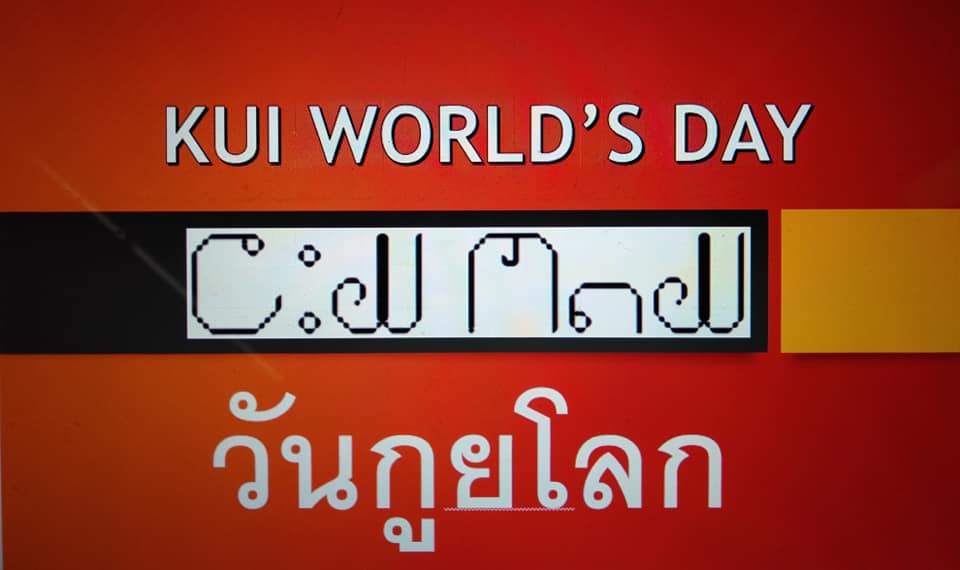
This article examines the online and offline media use of the Kui minority in Thailand, Laos, and Cambodia, focusing on their linguistic choices using social media. Without a writing system of their own, Kui speakers use majority languages for communication. The study explores the availability of media in Kui and the reasons for adopting national languages online. Findings highlight a desire for social inclusion while maintaining ethnic identity. Despite language shifts, Kui speakers persist in their cultural practices. This research challenges assumptions that language shift leads to cultural loss, showing how minorities navigate digital spaces without abandoning their heritages.
Article Details

This work is licensed under a Creative Commons Attribution-NonCommercial 4.0 International License.
References
• Alisa Santikarn. 2025. Indigenous Heritage and Identity of the Last Elephant Catchers in Northeast Thailand. Amsterdam: Amsterdam University Press.
• Baird, Ian. G. 2015. Translocal Assemblages and the Circulation of the Concept of “In-digenous Peoples” in Laos. Political Geography 46: 54–64. https://doi.org/10.1016/j.polgeo.2014.12.001.
———. 2022. Political Violence, Migration, Lack of Citizenship, and Agrobiodiversity Loss in the Borderlands of Thailand and Laos. Geoforum 128: 263–275. https://doi.org/10.1016/j.geoforum.2021.02.018.
• Belmar, Guillem. 2018. Minority Languages on Social Media: Multilingual Practices and Digital Presence. Paper presented at the Conference on Frisian Humanities: Multilin-gualism at the Rijksuniversiteit Groningen, April 25–26, 2018.
———. 2020. Digital Presence and Language Revitalization: Attitudes Towards and Use of Minority Languages on Social Media. In Comparative Studies in Bilingualism and Bilin-gual Education, ed. by Lydia Sciriha, 199–216. Newcastle upon Tyne: Cambridge Schol-ars Publishing.
• Belmar, Guillem & Glass, Maggie. 2019. Virtual Communities as Breathing Spaces for Minority Languages: Re-framing Minority Language Use in Social Media. Adeptus 14: Online. https://doi.org/10.11649/a.1968.
• Belmar, Guillem & Heyen, Hauke. 2021. Virtual Frisian: A Comparison of Language Use in North and West Frisian Virtual Communities. Language Documentation and Con-servation 15. 285–315.
• Bolander, Brook. 2017. Language and Identity on Facebook. In Language, Education and Technology. Encyclopedia of Language and Education, ed. by Steven L. Thorne & Stephen May, 143–154. New York City: Springer.
• Bos, Kees Jan. 2009. Kuy Grammar Sketch: A Basic Grammar Sketch of the Kuy Ntua Lan-guage in Cambodia. Phnom Penh: SIL Mainland Southeast Asia Group.
• Bradley, David. 2019a. Language Policy and Language Planning in Mainland Southeast Asia: Myanmar and Lisu. Linguistics Vanguard 5(1): Online. https://doi.org/10.1515/lingvan-2018-0071.
———. 2019b. Sociolinguistics of Language Endangerment in Africa and Asia. Anthropological Linguistics 61(1): 1–8. https://doi.org/10.1353/anl.2019.0007.
• Chaffey, Dave. 2024. Global Social Media Research Summary 2024. Smart insights. Re-trieved on 25 June 2024: https://www.smartinsights.com/social-media-marketing/social-media-strategy/new-global-social-media-research/
• Dupaigne, Bernard. 2016. Les Maîtres du fer et du feu dans le royaume d’Angkor. Paris: CNRS editions.
• Engelbert, Jörg Thomas. 2016. Vietnam’s Ethnic and Religious Minorities: A Historical Per-spective. Berlin: Peter Lang Verlag.
• Grabowsky, Volker. 2004. The Thai and Lao Ethnic Minorities in Cambodia: Their His-tory and their Fate after Decades of Warfare and Genocide. In Ethnic Minorities and Poli-tics in Southeast Asia, ed. by Jörg Thomas Engelbert & Hans Dieter Kubitscheck, 197–224. Berlin: Peter Lang Verlag.
———. 2010. Kleine Geschichte Thailands. München: C.H. Beck Verlag.
• Haenssgen, Marco J., Nutcha Charoenboon & Zanello, Giacomo. 2021. You’ve Got a Friend in Me: How Social Networks and Mobile Phones Facilitate Healthcare Access Among Marginalised Groups in Rural Thailand and Lao PDR. World Development 137: Online. https://doi.org/10.1016/j.worlddev.2020.105156 .
• Holt, John Clifford. 2009. Spirits of the Place: Buddhism and Lao Religious Culture. Honolu-lu: University of Hawai‘i Press.
• Ivarsson, Søren & Sing Suwannakij. 2022. Erik Seidenfaden and His Quest for Knowledge: Gendarmerie Officer, Amateur Scholar and the Siam Society. Journal of the Siam Society 110(2): 1–24.
• Keating, Neal B. 2013. Kuy Alterities: The Struggle to Conceptualise and Claim Indige-nous Land Rights in Neoliberal Cambodia. Asia Pacific Viewpoint 54(3): 309–322. https://doi.org/10.1111/apv.12026.
• Kemp, Simon. 2024. Digital 2024: Thailand. Datareportal: Online. Digital 2024: Thailand — DataReportal – Global Digital Insights.
• Kornai, András. 2013. Digital Language Death. PLoS ONE 8(10): Online. https://doi.org/10.1371/journal.pone.0077056.
• Laakso, Johanna et al. 2016. Towards Openly Multilingual Policies and Practices: Assessing Minority Language Maintenance Across Europe. Bristol: Multilingual Matters.
• Leppänen, Sirpa, Kytölä, Samu & Westinen, Elina. 2017. Multilingualism and Multi-modality in Language Use and Literacies in Digital Environments. In Language, Educa-tion and Technology. Encyclopedia of Language and Education, ed. by Steven L. Thorne & Stephen May, 119–130. New York City: Springer.
• Pimienta, Daniel, Prado, Daniel & Álvaro Blanco. 2009. Twelve Years of Measuring Lin-guistic Diversity in the Internet: Balance and Perspectives. In UNESCO Publications for the World Summit on the Information Society. Online: https://unesdoc.unesco.org/ark:/48223/pf0000187016.
• Schliesinger, Joachim. 2000. Ethnic Groups of Thailand: Non-Tai-speaking Peoples. Bang-kok: White Lotus.
———. 2011. Ethnic Groups of Cambodia: Introduction and Overview. Bangkok: White Lotus.
———. 2017. The Chong People. A Pearic-Speaking Group of Southeastern Thailand and Their Kin in the Region. Bangkok: BooksMango.
• Schrock, Joann L. 1970. Minority Groups in Thailand. Washington, DC: US Government Printing Office.
• Schulze, Wolfgang. 2010. Sprache – Kultur – Ethnie: eine kritische Reflexion. In Minderheiten als Mehrwert, ed. by Matthias Theodor Vogt et al., 27–43. Berlin: Verlag Peter Lang.
• Seidenfaden, Erik. 1952. The Kui People of Cambodia and Siam. Journal of the Siam Socie-ty 39(2): 144–180.
• Siebenhütter, Stefanie. 2019. Sociocultural Influences on Linguistic Geography: Reli-gion and Language in Southeast Asia. In Handbook of the Changing World Language Map, ed. by Stanley D. Brunn & Roland Kehrein, 1–19. New York City: Springer.
———. 2020. Language Practices and Attitudes Among Young Minority Language Speakers in Thailand. Journal of Multilingual and Multicultural Development 42(7): 595–620. https://doi.org/10.1080/01434632.2019.1711102.
———. 2021. 30 Contact and Convergence in the Semantics of MSEA. In The Languages and Linguistics of Mainland Southeast Asia: A Comprehensive Guide, ed. by Paul Sidwell & Mathias Jenny, 707–732. Berlin: De Gruyter Mouton.
———. 2022. Mehrsprachigkeit und Identität. Zur Identitätskonstruktion mehrsprachiger Min¬der¬heiten am Beispiel der Kui in Nordostthailand. Place? Verlag Dr. Kovač.
———. 2023. The Multilingual Profile and Its Impact on Identity: Approaching the Dif-ference Between Multilingualism and Multilingual Identity or Linguistic Identi-ty. Ampersand 10: Online. https://doi.org/10.1016/j.amper.2023.100123.
• Siripen Ungsitipoonporn et al. 2021. Community Archiving of Ethnic Groups in Thai-land. Language Documentation and Conservation 15: 267–284.
• Sumittra Suraratdecha. 2013. Language and Cultural Rights in the Ethnic Revival Movement of the Black Tai in Khaoyoi, Petchaburi. In Contemporary Socio-Cultural and Political Perspectives in Thailand, ed. by Pranee Liamputtong, 237–252. New York City: Springer.
• Suwilai Premsrirat. 2006. Thailand: Language Situation. In Encyclopedia of Language & Linguistics, ed. by Keith Brown, 642–644. Amsterdam: Elsevier [2nd Edition].
———. 2018. Orthography Development: A Tool for Language Revitalization and Preservation of Local Wisdom. In Language Revitalization: Insights from Thailand, ed. by Suwilai Premsrirat & David Hirsh, 45‒80. Berlin: Peter Lang Verlag.
• Swift, Peter. 2013. Changing Ethnic Identities Among the Kuy in Cambodia: Assimila-tion, Reassertion and the Making of Indigenous Identity. Asia Pacific Viewpoint 54(3): 296–308. https://doi.org/10.1111/apv.12025.
• Tagg, Caroline & Seargeant, Philip. 2015. Facebook and the Discursive Construction of the Social Network. In The Routledge Handbook of Language and Digital Communication, ed. by Alexandra Georgakopoulou & Tereza Spilioti, 353–367. London: Routledge.
