
The Legend and Cult of Gavampati Its Roots in Pali and Sanskrit Sources
Article Sidebar
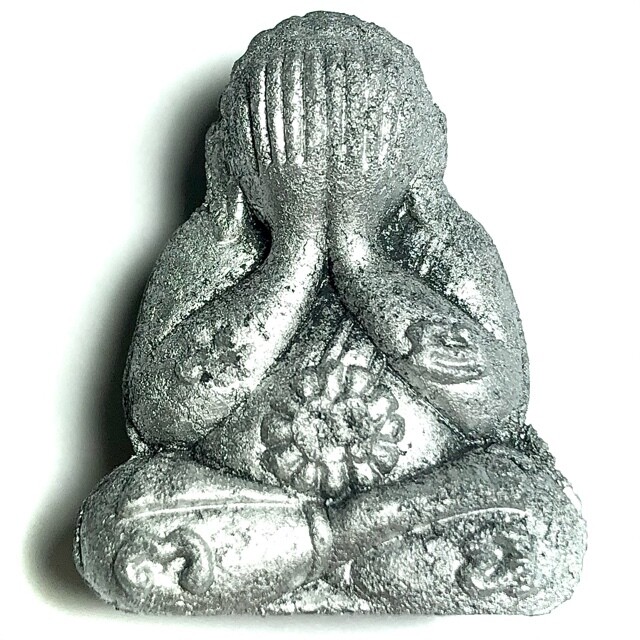
Main Article Content
Abstract
This article examines the legend and cult of Gavampati through Pali and Sanskrit sources, tracing the textual roots of a figure who later became prominent in Southeast Asian Buddhist traditions as the “Fat Monk”. Although briefly mentioned in early canonical texts, Gavampati appears in a wide range of later narratives that portray him variously as an arhat, miracle-worker, forest meditator, and missionary to frontier regions. By analyzing his shifting presence in lists of disciples, his association with the First Buddhist Council, his bovine etymology, and his role in missionary and relic traditions, the study highlights the fluid and multifaceted character of Gavampati and the processes of “syncretism” that shaped his evolving cult.
Article Details

This work is licensed under a Creative Commons Attribution-NonCommercial 4.0 International License.
References
References to canonical and commentarial Pali texts adhere to the Pali Text Society (PTS)’s conventions. I adopt the abbreviation system utilized and provided by the Critical Pāli Dictionary.
Primary Sources
• Bodhi Bhikkhu, trans. 2000. The Connected Discourses of the Buddha. A Translation of the Saṁyutta Nikāya. Boston: Wisdom Publications.
―――, trans. 2012. The Numerical Discourses of the Buddha: A Translation of the Anguttara Nikāya. Boston: Wisdom Publications.
• Burlingame, Eugene W., trans. 1921. Buddhist Legends: Translated from the Original Pali Text of the Dhammapada Commentary. 3 Volumes. Cambridge, MA: Harvard University Press.
• Davids, C.A.F. Rhys, trans. 1986. Sacred Writings of the Buddhists. 3 Volumes. Delhi: Cosmo Publications [Reprint Ed.].
• Feer, Léon, trans. 1883. Fragments extraits du Kandjour. Paris: Ernest Leroux.
• Foucaux, Philippe Edouard, trans. 1884. Le Lalita Vistara―Développement des jeux. Paris: Ernest Leroux.
• Geiger, Wilhelm, trans. 1912. The Mahāvaṁsa or the Great Chronicle of Ceylon. London: PTS.
• Gómez, Luis O., trans. 1996. The Land of Bliss: The Paradise of the Buddha of Measureless Light. Honolulu: University of Hawai‘i Press.
• Horner, I.B., trans. 1938–52. The Book of the Discipline. 6 Volumes. London: PTS.
―――, trans. 1975. Chronicle of Buddhas and Basket of Conduct. London: PTS.
• Inagaki Hisao, trans. 1995. The Three Pure Land Sutras. Berkeley: Numata Center for Buddhist Translation and Research.
• Jayawickrama, N.A., trans. & ed. 1971. The Chronicle of the Thūpa and the Thūpavaṁsa. London: PTS.
• Kern, Hendrik, trans. 1884. Saddharma-Puṇḍarīka or the Lotus of the True Law. Oxford: Clarendon Press.
• Lamotte, Étienne, trans. 1949–80. Le traité de la grande vertu de sagesse. 5 Volumes. Louvain: Institut Orientaliste.
• Law, Bimala Churn, trans. 1952. The History of the Buddha’s Religion (Sāsanavaṁsa). Delhi: Sri Satguru Publications.
• Li Rongxi, trans. 1993. The Biographical Scripture of King Aśoka. Berkeley: Numata Center for Buddhist Translation and Research.
• Mangrai, Sao Saimong, trans. 1981. The Pāḍaeng Chronicle and the Jengtung Chronicle Translated. Ann Arbor: University of Michigan.
• Masefield, Peter, trans. 1989. Elucidation of the Intrinsic Meaning: So Named the Commentary on the Vimāna Stories. Oxford: PTS.
• Mingun Sayadaw. 1990–98. The Great Chronicle of Buddhas. 6 Volumes, trans. by Tin Lwin & Tin Oo (Myaung). Yangon: Ti-Ni Publishing Center.
• Müller, Friedrich Max & Nanjio Bunyiu, ed. 1883. Sukhāvatī-Vyūha: Description of Sukhāvatī, the Land of Bliss. Oxford: Clarendon Press.
• Ñāṇamoli Bhikkhu & Bodhi Bhikkhu, trans. 1995. The Middle Length Discourses of the Buddha. Boston: Wisdom Publications.
• Norman, K.R., trans. 1969. The Elders’ Verses, I: Theragāthā. London: PTS.
• Obermiller, Eugene, trans. 1931–32. History of Buddhism (Chos-hbyung) by Bu-ston. 2 Volumes. Heidelberg: O. Harrassowitz.
• Pe Maung Tin, trans. 1923. The Path of Purity, Being a Translation of Buddhaghosa’s Visuddhimagga. London: PTS.
• Vajirañāṇavarorasa, Prince, ed. 1974. (Anubuddhapavatti) Biographies of Some of the Noble Disciples. 2 Volumes. Bangkok: Mahamakut Buddhist University.
• Walshe, Maurice, trans. 1987. Thus Have I Heard: The Long Discourses of the Buddha. London: Wisdom Publications.
Secondary Sources
• Aung-Thwin, Michael A. 2005. The Mists of Rāmañña: The Legend that was Lower Burma. Honolulu: University of Hawai‘i Press.
• Bareau, André. 1963. Recherches sur la biographie du Buddha dans les sūtrapiṭaka et les vinayapiṭaka anciens : de la quête de l’éveil à la conversion de Śāriputra et de Maudgalyāyana. Paris: EFEO.
• Bigandet, Paul. 1979. The Life or Legend of Gaudama. 2 Volumes. Delhi: Bharatiya Publishing House [Reprint; 1st Ed. 1858].
• Bizot, François. 1976. Le figuier à cinq branches. Paris: EFEO.
―――. 2000. La place des communautés du Nord-Laos dans l’histoire du bouddhisme d’Asie du Sud-Est. Bulletin de l’École française d’Extrême-Orient 87: 511–528.
• Denis, Eugène. 1977. La Lokapaññatti et les idées cosmologiques du bouddhisme ancien. 3 Volumes. Lille: Université de Lille.
• Duroiselle, Charles. 1933. Explorations at Pagan and Mandalay. In Annual Report of the Archaeological Survey of India for the Years 1928–29, ed. by H. Hargreaves, 109–113. Delhi: Manager of Publications.
• Guillon, Emmanuel. 1983. Notes sur le bouddhisme Môn. In Nachrichten der Akademie der Wissenschaften Göttingen, Philologisch-Historische Klasse, 43–76. Göttingen: Vandenhoeck & Ruprecht.
―――. 1987. À propos d’une version mône inédite de l’épisode de Vasundharā. Journal asiatique 275(1–2): 143–162.
• Htin Aung, Maung. 1978. Folk Elements in Burmese Buddhism. Westport: Greenwood Press.
• Kloppenborg, Ria. 1973. The Sūtra on the Foundation of the Buddhist Order. Leiden: Brill.
• Lagirarde, François. 2000. Gavampati et la tradition des quatre-vingts disciples du Buddha. Bulletin de l’École française d’Extrême-Orient 87: 57–78.
―――. 2001. Gavampati–Kaccāyana : le culte et la légende du disciple ventripotent dans le bouddhisme des Thais. PhD Dissertation. Paris: EPHE.
―――. 2003. Devotional Diversification in Thai Monasteries: The Worship of the Fat Monk. In The Buddhist Monastery: A Cross-Cultural Survey, ed. by Pierre Pichard & François Lagirarde, 149–168. Bangkok: EFEO.
―――. 2005. From the Mon–Myanmar Cult of Gavampati to the Thai Cult of Kaccāyana: More Questions About the “Fat Monk”. In Myanmar Historical Commission Conference Proceedings. Part 2, 125–135. Yangon: Myanmar Jubilee Publication Committee.
―――. 2019. Gavampati in Southeast Asia. In Brill’s Encyclopedia of Buddhism. Volume II: Lives, ed. by Jonathan A. Silk et al., 191–195. Leiden: Brill.
• Lamotte, Étienne. 1988. History of Indian Buddhism, trans. by Sara Webb-Boin. Louvain: Institut Orientaliste.
• Lévi, Sylvain. 1932. Mahākarmavibhanga et Karmavibhangopadeśa. Paris: Ernest Leroux.
• Lévi, Sylvain & Chavannes, Édouard. 1916. Les seize arhats protecteurs de la loi. Journal asiatique 8: 5–48, 189–304.
• Lévi-Strauss, Claude. 1962. Le Totémisme aujourd’hui. Paris: PUF.
• Lévy, Paul. 1957. Buddhism: A “Mystery Religion”? London: The University of London.
• Luce, Gordon H. 1969–70. Old Burma―Early Pagan. 3 Volumes. Ascona: Artibus Asiae Supplementum.
• Malalasekera, G.P. 1974. Dictionary of Pali Proper Names. 2 Volumes. London: PTS.
• Panglung, Jampa Losang. 1981. Die Erzählstoffe des Mūlasarvāstivāda-Vinaya analysiert auf Grund der tibetischen Übersetzung. Tokyo: The Reiyukai Library.
• Porée-Maspero, Éveline. 1962–69. Étude sur les rites agraires des Cambodgiens. 3 Volumes. Paris: Mouton and Co.
• Przyluski, Jean. 1923. La légende de l’empereur Açoka (Açokāvadāna) dans les textes indiens et chinois. Paris: Paul Geuthner.
―――. 1926. Le concile de Rājagr̥ha. Paris: Paul Geuthner.
• Revire, Nicolas. 2018. Facts and Fiction: The Myth of Suvaṇṇabhūmi Through the Thai and Burmese Looking Glass. TRaNS: Trans -Regional and -National Studies of Southeast Asia 6(2): 167–205. https://doi.org/10.1017/TRN.2018.8.
• Schnake, Javier. 2024. The Great Disciple Mahākassapa and his Parinibbāna. Journal of the Siam Society 112(1): 131–162. https://doi.org/10.69486/112.1.2024.7a.
• Shorto, Harry L. 1963. The 32 Myos in the Medieval Mon Kingdom. Bulletin of the School of Oriental and African Studies 26: 572–591.
―――. 1970. The Gavampati Tradition in Burma. In R.C. Majumdar Felicitation Volume, ed. by Himansu Bhusan Sarkar, 15–30. Calcutta: K.L. Mukhopadhyay.
• Stadtner, Donald M. 2005. Ancient Pagan: Buddhist Plain of Merit. Bangkok: River Books.
• Strong, John S. 1983. The Legend of King Aśoka. Princeton: Princeton University Press.
―――. 1992. The Legend and Cult of Upagupta. Princeton: Princeton University Press.
―――. 2001. The Buddha: A Beginner’s Guide. Oxford: OneWorld.
―――. 2004. Relics of the Buddha. Princeton: Princeton University Press.
• Than Tun. 1959. Mahākassapa and His Tradition. Journal of the Burma Research Society 42(2): 99–118.
• Weiler, Royal W. 1956. The Karuṇāpuṇḍarīka: Chapter I and II. PhD Dissertation. Philadelphia: University of Pennsylvania.
