
Intertextuality in Thai–Lao Buddhism The Gavampatisutta
Article Sidebar
Main Article Content
Abstract
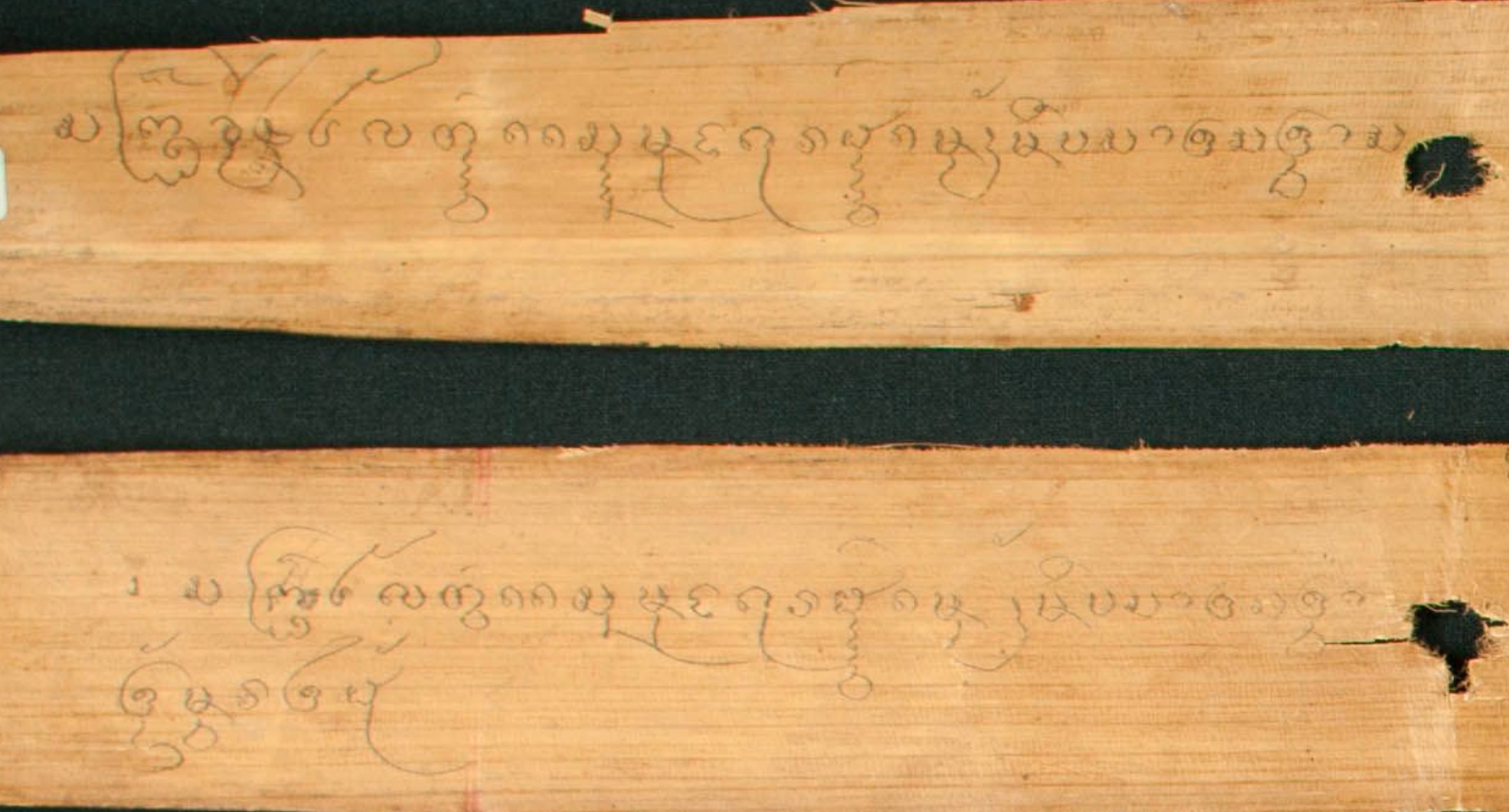
Reflecting his prominence in Thai–Lao Buddhism, the Buddha’s disciple Gavampati is the subject of a corpus of texts recounting the religious career of the “Fat Monk” and culminating in his final extinction (parinibbāna). Although these narratives have received some scholarly attention, closer study of their manuscript transmission and textual features invites a reassessment of their structure, intertextual relationships, and circulation. This article examines the Gavampatisutta within the broader context of Tai Buddhist literary production, highlighting its links with Pali canonical and post-canonical traditions, the role of nissaya literature in vernacular transmission, and the articulation of themes such as merit-making and filial piety across Thai–Lao communities.
Article Details

This work is licensed under a Creative Commons Attribution-NonCommercial 4.0 International License.
References
References to canonical and commentarial Pali texts adhere to the Pali Text Society’s conventions. I adopt the abbreviation system utilized and provided by the Critical Pāli Dictionary.
Manuscripts
• Khs1: ᨣᩕᩅᨾ᩠ᨷᨲ᩠ᨲᩥᩇᩩᨯᩕ [Khavampattisut; P., Gavampatisutta], dated [10]59 CS (= 1697/8 CE), id. number dllm_12733 (former DLLM Code: 06018502074_00), Lao and Pali, Tham Lao script, one fascicle, 50 folios, National Library of Laos, Vientiane, Laos PDR. Accessible online:
https://iiif.crossasia.org/s/dllm/collections/19862/manifests/19875/mirador.
• Khs2: ᨣᩅᨾ᩠ᨷᨲ᩠ᨲᩥᩇᩪᨯ [Khavampattisut; P., Gavampatisutta], dated 1216 CS (= 1854/5 CE), id. number dllm_01048 (former DLLM Code: 01012902011_05), Lao and Pali, Tham Lao script, 3 fascicles, 74 folios, Luang Prabang Provincial Museum, Laos PDR. Accessible online:
https://iiif.crossasia.org/s/dllm/manifests/23835.
Secondary Sources
• Bernon, Olivier de. 2000. Le manuel des maîtres de kammaṭṭhān. Étude et présentation des rituels de méditation dans la tradition du bouddhisme khmer. PhD Dissertation. Paris: INALCO.
• Cœdès, George. 1966. Catalogue des manuscrits en pāli, laotien et siamois provenant de la Thaïlande. Copenhagen: The Royal Library.
• Cole, Alan. 1998. Mothers and Sons in Chinese Buddhism. Standford: Standford University Press.
• Filliozat, Jacqueline. 2020. Catalogue descriptif des manuscrits du fonds pāli. Révision avec nombreux ajouts. Séminaire des Missions Étrangères de Paris. https://irfa.paris/wp-content/uploads/2022/02/Catalogue-Filliozat-2020.pdf.
• Finot, Louis. 1917. Recherches sur la littérature laotienne. Bulletin de l’École française d’Extrême-Orient 17(5): 1–218. https://doi.org/10.3406/befeo.1917.5323.
• Griswold, Alexander B. & Prasert na Nagara. 1979. An Inscription of 1563 A.D. Recording a Treaty Between Laos and Ayodhyâ in 1560. Journal of the Siam Society 67(2): 54–89.
• Huxley, Andrew. 1996. Thai, Mon and Burmese Dhammathats―Who Influenced Whom? In Thai Law, Buddhist Law. Essay on the Legal History of Thailand, Laos and Burma, ed. by Andrew Huxley, 81–131. Bangkok: White Orchid Press.
• Kourilsky, Gregory. 2007. Note sur la piété filiale en Asie du Sud-Est theravādin : la notion de « guṇ ». Aséanie 20: 27–54. https://doi.org/10.3406/asean.2007.2047.
―――. 2015. La place des ascendants familiaux dans le bouddhisme des Lao. PhD Dissertation. Paris: EPHE.
―――. 2021. Writing Pali in 16th century Lan Na (Northern Thailand): The Life and Work of Sirimaṅgala. Journal of the Pali Text Society 34: 69–124.
―――. 2022. Filial Piety: Shades of Difference Across Theravadin Traditions. In Routledge Handbook of Theravāda Buddhism, ed. by Stephen C. Berkwitz & Ashley Thompson, 156–169. London: Routledge.
• Lagirarde, François. 1994. Textes bouddhiques du pays khmer et du Lanna : un exemple de parenté. In Recherches nouvelles sur le Cambodge, ed. by François Bizot, 63–77. Paris: EFEO.
―――. 2000. Gavampati et la tradition des quatre-vingts disciples du Buddha. Bulletin de l’École française d’Extrême-Orient 87(1): 57–78. https://doi.org/10.3406/befeo.2000.3470.
―――. 2001. Gavampati–Kaccāyana. Le culte et la légende du disciple ventripotent dans le bouddhisme des Thaïs. PhD Dissertation. Paris: EPHE.
―――. 2004. Un pèlerinage bouddhique au Lanna entre le XVIe et le XVIIe siècle d’après le Khlong Nirat Hariphunchai. Aséanie 14: 69–107. https://doi.org/10.3406/asean.2004.1829.
―――. 2005. From the Mon–Myanmar Cult of Gavampati to the Thai Cult of Kaccāyana: More Questions About the “Fat Monk”. In Myanmar Historical Commission Conference Proceedings. Part 2, 125–135. Yangon: Myanmar Jubilee Publication Committee.
―――. 2006. The Nibbāna of Mahākassapa the Elder: Notes on a Buddhist Narrative Transmitted in Thai and Lao Literature. In Buddhist Legacies in Mainland Southeast Asia, ed. by François Lagirarde & Paritta Chalermpow Koanantakool, 79–112. Bangkok: EFEO.
• Lammerts, Christian & Kieffer-Pulz, Petra. 2025. Vernacular Legal Knowledge and Pāli Law in Seventeenth-Century Burma: Pāṭha and Nissaya in Manusāradhammasattha. Paper presented at the 20th Congress of the International Association of Buddhist Studies, Leipzig, 10 August.
• Lorrillard, Michel. 1995. Les chroniques royales du Laos. Essai d’une chronologie des règnes des souverains lao (1316–1887). PhD Dissertation. Paris: EPHE.
―――. 2014. Économie et réseaux dans l’espace lao au XVIIe siècle. Péninsule 68(1): 189–212.
―――. 2021. Regards croisés sur l’historiographie et l’épigraphie du Lan Xang : le cas d’édits royaux relatifs à la pratique religieuse du XVIe siècle. Péninsule 82(1): 23–68.
• Luce, Gordon H. 1969–70. Old Burma―Early Pagán. 3 Volumes. Ascona: Artibus Asiae Supplementum.
• McDaniel, Justin. 2008. Gathering Leaves and Lifting Words: Histories of Buddhist Monastic Education in Laos and Thailand. Seattle: University of Washington Press.
• Penth, Hans. 1994. Jinakālamālī Index. An Annotated Index of the Thailand Part of Ratanapañña’s Chronicle Jinakālamālī. Oxford: The Pali Text Society.
―――. 1997. Buddhist Literature of Lān Nā on the History of Lān Nā’s Buddhism. Journal of the Pali Text Society 23: 43–81.
• Schnake, Javier. 2024. The Great Disciple Mahākassapa and his Parinibbāna. Journal of the Siam Society 112(1): 131–162. https://doi.org/10.69486/112.1.2024.7a.
―――. 2025. An Early Religious and Historical Tradition of Laos. The Aḍḍhabhāgabuddharūpanidāna of Ariyavaṃsa. Journal of the Pali Text Society 36: 127–161.
• Skilling, Peter & Santi Pakdeekham. 2002. Pāli Literature Transmitted in Central Siam. Bangkok: Fragile Palm Leaves Foundation.
• Walker, Trent. 2022a. Bilingualism. Theravāda Bitexts Across South and Southeast Asia. In Routledge Handbook of Theravāda Buddhism, ed. by Stephen C. Berkwitz & Ashley Thompson, 271–284. London: Routledge.
―――. 2022b. Until Nirvana’s Time. Buddhist Songs from Cambodia. Boulder: Shambhala.
