
Silpa Bhirasri and the Making of Thai Modern Art A Historiographical Journey
Article Sidebar
Main Article Content
Abstract
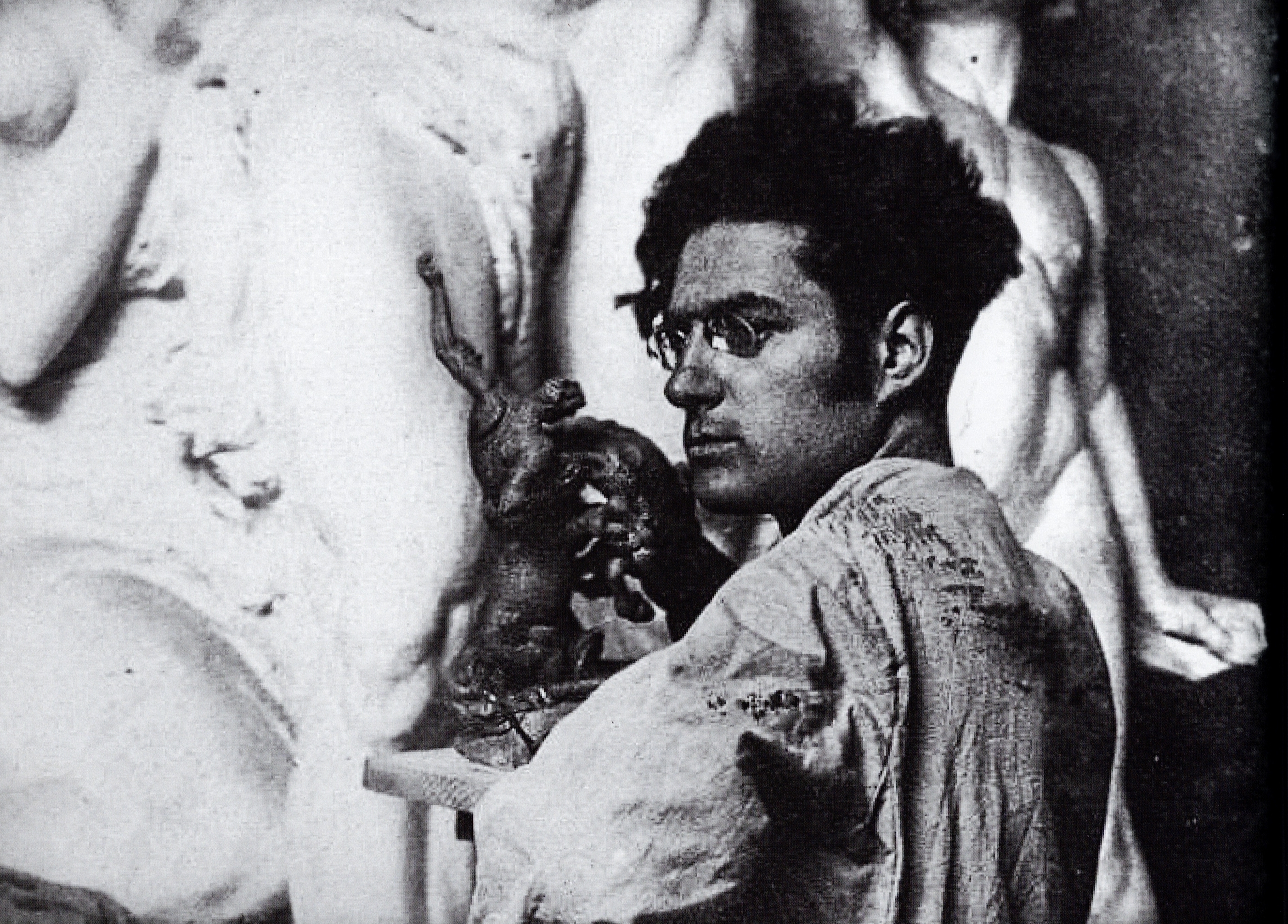
Often described as the “Father of Thai modern art”, Silpa Bhirasri (1892–1962; born Corrado Feroci) occupies a canonical place in Thai art history. This article adopts a historiographical approach to examine how his artistic production, pedagogical role, and public writings have been received and interpreted in Thai scholarship and how these readings have shaped his reputation and legacy since his death in 1962. Drawing on sources in Thai, French, Italian, and English, the study highlights both convergences and divergences in these discourses. It concludes by identifying avenues for future research on his role in the formation of Thai modern art.
Article Details

This work is licensed under a Creative Commons Attribution-NonCommercial 4.0 International License.
References
• Apinan Poshyananda. 1992. Modern Art in Thailand: Nineteenth and Twentieth Centuries. Singapore: OUP.
―――. 2007. Behind Thai Smile: Selected Writings, 1991–2007. Bangkok: Ministry of Culture.
• Bhabha, Homi K. 1994. The Location of Culture. London: Routledge.
• Boissier, Annabelle. 2008. L’art contemporain est-il par définition international ? Les relations transnationales dans le processus de légitimation de l’art contemporain en Thaïlande. PhD Dissertation. Paris: EHESS.
• Cate, Sandra. 2003. Making Merit, Making Art: A Thai Temple in Wimbledon. Honolulu: University of Hawai‘i Press.
• Clark, John. 1995. Decoration and Distance: The Work of Damrong Wong-Upparaj. Art & Asia Pacific 2(3): 50–57.
―――. 1998. Modern Asian Art. Honolulu: University of Hawai‘i Press.
―――. 2010. Asian Modernities: Chinese and Thai Art Compared, 1980 to 1999. Sydney: Power Publications.
―――. 2020. “Tradition” in Thai Modern Art. Southeast of Now: Directions in Contemporary and Modern Art in Asia 4(2): 39–89. https://doi.org/10.1353/sen.2020.0007.
• Clark, John & Phaptawan Suwannakudt. 2021. A History of Phaiboon Suwannakudt (1925–1982). Journal of the Siam Society 109(1): 1–36.
• Curtin, Brian. 2021. Essential Desires: Contemporary Art in Thailand. London: Reaktion Books.
• De Grassi, Massimo. 2022. Sguardi sull’Oriente: Corrado Feroci e l’occidentalizzazione artistica della Thailandia. Between 12(23): 137–164.
• Heinich, Nathalie. 1996. The Glory of Van Gogh: An Anthropology of Admiration. Chicago: University of Chicago Press.
• Kessara Srinaka (เกษรา ศรีนาคา). 2558 BE (2015 CE). ศิลป พีระศรี กับการสถาปนาศิลปะแห่งชาติ (พ.ศ. 2475–พ.ศ. 2505) [Silpa Bhirasri and the Establishment of National Art (1932–1962)]. MA Thesis. Chiang Mai University.
• Khien Yimsiri (เขียน ยิ้มศิริ). 2545 BE (2002 CE). ศาสตราจารย์ศิลป์ พีระศรี; บทความ ข้อเขียน และงานศิลปกรรมของศาสตราจารย์ศิลป์ พีระศรี [Professor Silpa Bhirasri; Writings and Artistic Works of Professor Silpa Bhirasri]. Bangkok: Amarin Printing.
• Kris, Ernst & Kurz, Otto. 1979. Legend, Myth, and Magic in the Image of the Artist: Historical experiment. New Haven: Yale University Press.
• Maneepin Phromsuthirak. 2003. Special Note: Professor Silpa Bhirasri’s Life and Works. Silpakorn University International Journal 3(1–2): 39–46.
• McDaniel, Justin Thomas. 2011. The Lovelorn Ghost and the Magical Monk: Practicing Buddhism in Modern Thailand. New York City: Columbia University Press.
• Michaelsen, Helen. 1990. Modern Art in Thailand: An Outline of its Development from 1932–1960. SPAFA Digest 11(3): 32–38.
―――. 1993. Under Threat from the West? Thai Art & Culture 69(1): 59–61.
• Pairoj Jamuni. 2000. Silpa Bhirasri: The Father of Contemporary Art in Thailand. Silpakorn University International Journal 1(1): 1–21.
• Pandit Chanrochanakit. 2004. Feeling Contemporary: The Politics of Aesthetics in Rirkrit Tiravanija’s Art. In Nothing: A Retrospective, ed. by Rirkrit Tiravanija & Kamin Lertchaiprasert, 30–53. Bangkok: PLAN.b.
• Peleggi, Maurizio. 2003. Purveyors of Modernity? Europeans Artists and Architects in Turn-of-the-Century Siam. Asia Europe Journal 1(1): 91–101.
―――. 2017. Monastery Monument Museum: Sites and Artifacts of Thai Cultural Memory. Honolulu: University of Hawai‘i Press.
• Pinyapan Potjanalawan (ภิญญพันธุ์ พจนะลาวัณย์). 2557 BE (2014 CE). ศิลปาณานิคม ในนามของ ศิลป์ พีระศรี: ว่าด้วยอำนาจนำวงการศิลปะไทย [Artistic Colonialism in the Name of Silpa Bhirasri: On Hegemony in the Thai Art World]. รัฐศาสตร์สาร [Political Science Journal] 35(1): 178–243.
• Piriya Krairiksh. 1982. Art in Thailand since 1932: A Brief History. Bangkok: Thammasat University Press.
―――. 1986. Thai Reflections on American Experiences. Bangkok: Bhirasri Institute of Modern Art.
• Pishnu Supanimit. 2012. Social Space and Art Patronage. Art in the Reign of King Rama IX: Thai Trends from Localism to Internationalism, exh. cat., 44–48. Bangkok: Bangkok Art and Culture Centre.
―――. 2015. Diary: The Construction of Professor Silpa Bhirasri Monument. Silpa Bhirasri (Journal of Fine Arts) 3(1): 17–58. https://doi.org/10.69598/sbjfa240954.
• Salvagnini, Gigi. 1998. Gli esordi di Corrado Feroci scultore e medaglista fiorentino. Libero (6)11: 12–24.
• Seng, Yu Jin. 2017. Cultural Wars in Southeast Asia: The Birth of the Critical Exhibition in the 1970s. In Charting Thoughts: Essays on Art in Southeast Asia, ed. by Sze Wee Low & Patrick D. Flores, 214–231. Singapore: National Gallery Singapore.
• Shioda, Junichi. 1995. Bangkok and Chiang Mai: Ways of Modernity. In Asian Modernism: Diverse Developments in Indonesia, the Philippines, and Thailand, ed. by Furuichi, Yasuko, 238–242. Tokyo: The Japan Foundation Asia Center.
• Smithies, Michael. 1978. The Bangkok Art Scene in the Early 1960s: A Personal Souvenir. Journal of the Siam Society 66(2): 146–158.
• Somporn Rodboon. 1995. History of Modern Art in Thailand. Asian Modernism: Diverse Developments in Indonesia, the Philippines, and Thailand, ed. by Yasuko Furuichi et al., 243–256. Tokyo: The Japan Foundation Asia Center.
―――. 2005. Developments in Contemporary Thai Art. Art and Social Change, Contemporary Art in Asia and The Pacific. ed. by Caroline Turner, 278–296. Canberra: Pandanus Books.
―――. 2017. The Transition of Thai Traditional Art to Modern Art in the 1950’s and 1960’s. In Charting Thoughts: Essays on Art in Southeast Asia, ed. by Sze Wee Low & Patrick D. Flores, 154–163. Singapore: National Gallery Singapore.
• Soranat Tailanga. 2008. Modernist Thai Short Stories, 1964–1973: The Relationship with Art. Manusya, Journal of Humanities 11(2): 125–141.
• Sutee Kunavichayanont (สุธี คุณาวิชยานนท์). 2546 BE (2003 CE). จากสยามเก่าสู่ไทยใหม่: ว่าด้วยความพลิกผันของศิลปะจากประเพณีสู่สมัยใหม่และร่วมสมัย [From Old Siam to New Thailand: On the Transformation of Art from Tradition to Modern and Contemporary]. Bangkok: Ban Hua Laem.
• Teh, David. 2017. Thai Art: Currencies of the Contemporary. Cambridge, MA: MIT Press.
• Thanavi Chotpradit (ธนาวิ โชติประดิษฐ). 2553 BE (2010 CE). ปรากฏการณ์นิทรรศการ: รวมบทความว่าด้วยทัศนียภาพของศิลปะร่วมสมัย [Exhibition Phenomena: Collected Essays on the Visuality of Contemporary Art]. Bangkok: Sammathi.
―――. 2555 BE (2012 CE). มองไปทางไหนก็เห็นแต่เทวดา [Deity is Everywhere]. อ่าน [Aan] 4(2): 32–48.
―――. 2017. A Dark Spot on a Royal Space: The Art of the People’s Party and the Politics of Thai (Art) History. Southeast of Now: Directions in Contemporary and Modern Art in Asia 1(1): 131–157. https://doi.org/10.1353/sen.2017.0004.
• Thanom Chapakdee. 2012. Art Criticism Through Book Context, Arts for Life, Arts for People, and Contemporary Arts in Thailand. In Art in the Reign of King Rama IX: Thai Trends from Localism to Internationalism, ed. by Apinan Poshyananda, 278–291. Bangkok: Bangkok Art and Culture Centre.
• Thongchai Winichakul. 1995. The Changing Landscape of the Past: New Histories in Thailand since 1973. Journal of Southeast Asian Studies 26(1): 99–120.
• Viboon Leesuwan. (ลี้สุวรรณ วิบูลย์). 2535 BE (1992 CE). ศาสตราจารย์ศิลป์ พีระศรี กับงานศิลปะวิชาการ [Professor Silpa Bhirasri and Academic Art]. วารสารมหาวิทยาลัยศิลปากร [Silpakorn University Journal: 136–155.
―――. 1996. The Life and Works of Silpa Bhirasri. Bangkok: SITCA.
• Wright, Michael. (ไมเคิล ไรท). 2535 BE (1992 CE). อนุสาวรีย์ ประชาธิปไตย อนุสาวรีย์โกหก ที่ถูกดัดแปลงให้พูดความจริง [The Democracy Monument: A Monument of Lies That Has Been Reinterpreted to Speak the Truth]. ศิลปวัฒนธรรม [Art & Culture] 14(2): 178–181.
