A Buddhist Supervision Model to Enhance Teacher Competencies Based on the Philosophy of Sufficiency Economy in Khon Kaen Municipality Schools
Article Sidebar
Main Article Content
Abstract
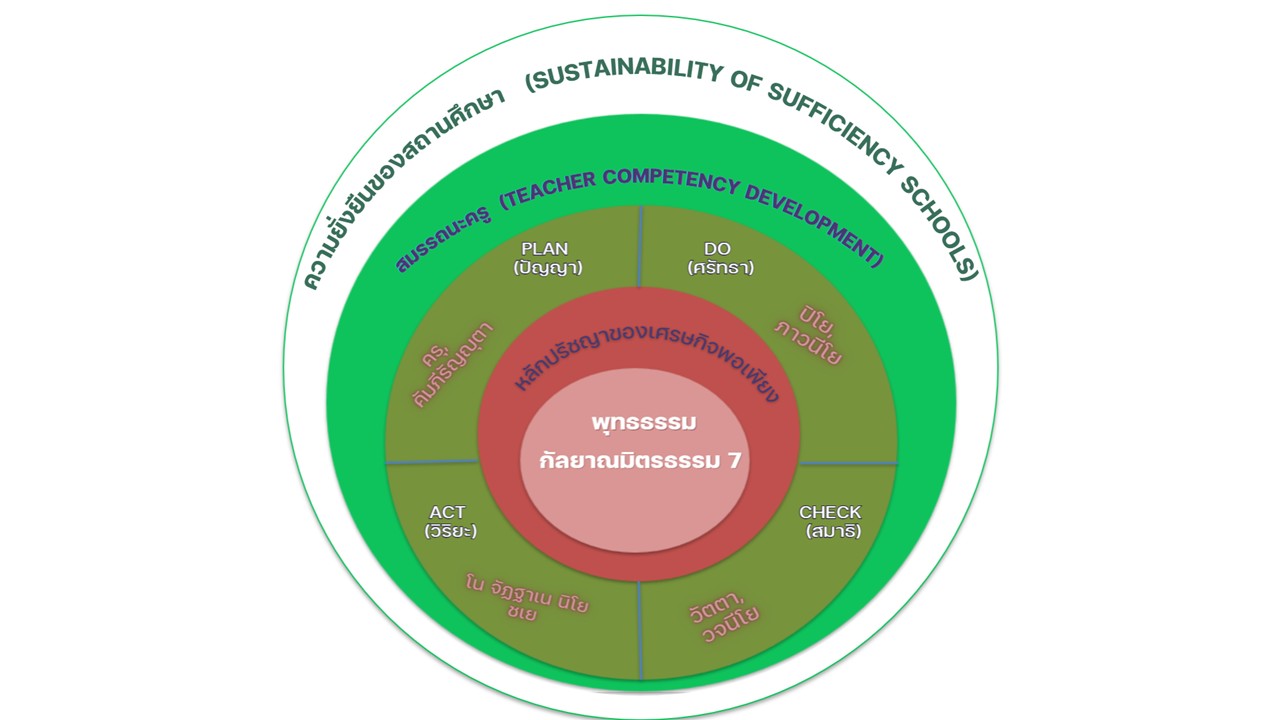
This academic paper proposes a Buddhist supervision model to enhance teachers' competencies, grounded in the Philosophy of Sufficiency Economy, in Khon Kaen Municipality Schools. The framework is grounded in the concept of Kalyanamitta Dhamma 7 (Seven Virtues of a Good Friend) and integrated with the four principles of social harmony (Sangahavatthu 4) to nurture teachers’ moral qualities, teaching competence, and self-development. This model correlates with the Sufficiency Economy Philosophy (S.E.P.), which consists of two conditions, three principles, and four dimensions, and is aligned with King Rama X’s educational policy focusing on developing students to be “good, disciplined, and happy.” Buddhist supervision is not merely about evaluation but also spiritual guidance, supporting teachers with compassion, wisdom, and social responsibility. The results demonstrate that Buddhist supervision can empower teachers to be lifelong learners and sustain the development of Sufficiency Economy-based schools. The proposed model is grounded in collaborative learning, participatory supervision, and the integration of Buddhist ethics to promote educational sustainability.
Keywords: Buddhist Supervision, Kalyanamitta Dhamma 7, Teacher Competency, Sufficiency Economy Philosophy
Article Details

This work is licensed under a Creative Commons Attribution-NonCommercial-NoDerivatives 4.0 International License.
เนื้อหาและข้อมูลในบทความที่ลงตีพิมพ์ในวารสารศูนย์ดัชนีการอ้างอิงวารสารไทย ถือเป็นข้อคิดเห็นและความรับผิดชอบของผู้เขียนบทความโดยตรงซึ่งกองบรรณาธิการวารสาร ไม่จำเป็นต้องเห็นด้วย หรือร่วมรับผิดชอบใด ๆ
บทความ ข้อมูล เนื้อหา รูปภาพ ฯลฯ ที่ได้รับการตีพิมพ์ในวารสารศูนย์ดัชนีการอ้างอิงวารสารไทย ถือเป็นลิขสิทธิ์ของวารสารศูนย์ดัชนีการอ้างอิงวารสารไทย หากบุคคลหรือหน่วยงานใดต้องการนำทั้งหมดหรือส่วนหนึ่งส่วนใดไปเผยแพร่ต่อหรือเพื่อกระทำการใด จะต้องได้รับอนุญาตเป็นลายลักอักษรจากวารสารศูนย์ดัชนีการอ้างอิงวารสารไทยก่อนเท่านั้น
References
กรมส่งเสริมการปกครองท้องถิ่น. (2564). แนวทางการพัฒนาคุณภาพการศึกษาโรงเรียนสังกัดองค์กรปกครอง
ส่วนท้องถิ่นสู่สถานศึกษาพอเพียง. กรุงเทพมหานคร: โรงพิมพ์ชุมชนท้องถิ่นไทย.
กระทรวงศึกษาธิการ. (2562). นโยบายและจุดเน้นการจัดการศึกษา พ.ศ. 2562–2565. กรุงเทพฯ: สำนักงาน
ปลัดกระทรวงศึกษาธิการ.
คณะกรรมการพัฒนาการเศรษฐกิจและสังคมแห่งชาติ. (2560). หลักปรัชญาของเศรษฐกิจพอเพียงกับ
การพัฒนาที่ยั่งยืน. กรุงเทพฯ: สำนักงานคณะกรรมการพัฒนาเศรษฐกิจและสังคมแห่งชาติ.
จันทร์ฉาย ศิริไสย. (2565). การบริหารเชิงพุทธกับการพัฒนาจิตวิญญาณความเป็นครู. วารสารพุทธบริหาร
การศึกษา, 8(2), 45–59.
ชญานินทร์ พิทักษ์วงศ์. (2566). การนิเทศการศึกษาตามหลักกัลยาณมิตรธรรมเพื่อพัฒนาคุณภาพครู
ในสถานศึกษาท้องถิ่น. วารสารวิชาการการศึกษาและการบริหาร, 12(3), 89–104.
ณัฐวดี วงศ์สุวรรณ. (2564). การพัฒนาสมรรถนะครูในศตวรรษที่ 21 ด้วยกระบวนการนิเทศภายในแบบพุทธ.
วารสารส่งเสริมการเรียนรู้, 10(2), 113–128.
นภัสรพี พงษ์ไทย. (2563). การประยุกต์หลักปรัชญาของเศรษฐกิจพอเพียงในการบริหารสถานศึกษา.
กรุงเทพฯ: สำนักพิมพ์แห่งจุฬาลงกรณ์มหาวิทยาลัย.
ปรียาภรณ์ วิรัชศิลป์. (2562). กัลยาณมิตรธรรมกับภาวะผู้นำทางการศึกษา. กรุงเทพฯ: สำนักพิมพ์สำนัก
พุทธธรรม.
สำนักงานคณะกรรมการข้าราชการครูและบุคลากรทางการศึกษา. (2561). กรอบสมรรถนะครูและบุคลากร
ทางการศึกษา พ.ศ. 2561. กรุงเทพฯ: ก.ค.ศ.
สุทธิชัย วัฒนากูล. (2560). การบริหารและการนิเทศเชิงพุทธในศตวรรษที่ 21. กรุงเทพฯ: มหาวิทยาลัย
มหาจุฬาลงกรณราชวิทยาลัย.
Choompol, W., & Siripong, S. (2021). Integrating Sufficiency Economy Philosophy into
Educational Administration in Thailand. Journal of Education and Development, 7(4),
–45. https://doi.org/10.5539/jed.v7n4p33
Krairiksh, S. (2020). The Philosophy of Sufficiency Economy and Its Application in Thai
Educational Contexts. Asian Journal of Moral Education, 4(2), 55–68.
Lovat, T., & Toomey, R. (2021). Values Education and Quality Teaching: The Double Helix
Effect. Springer.
Phra Brahmagunabhorn (P. A. Payutto). (2019). Buddhist Economics: A Middle Way for the
Market Place. Bangkok: Buddhadhamma Foundation.
Sirisophon, S. (2022). Buddhist-Based Leadership for Teacher Development in Local
Administration Schools. Journal of Buddhist Educational Review, 5(1), 41–60.
The Office of the National Education Commission. (2020). The National Scheme of Education
B.E. 2563–2570. Bangkok: ONEC.
UNESCO. (2021). Reimagining Our Futures Together: A New Social Contract for Education. Paris: UNESCO Publishing. https://unesdoc.unesco.org/ark:/48223/pf0000379707
Viboon, P. (2022). Buddhist Supervision and Spiritual Leadership in Thai Schools: A New
Model for Holistic Development. International Journal of Education, 15(3), 74–89.
