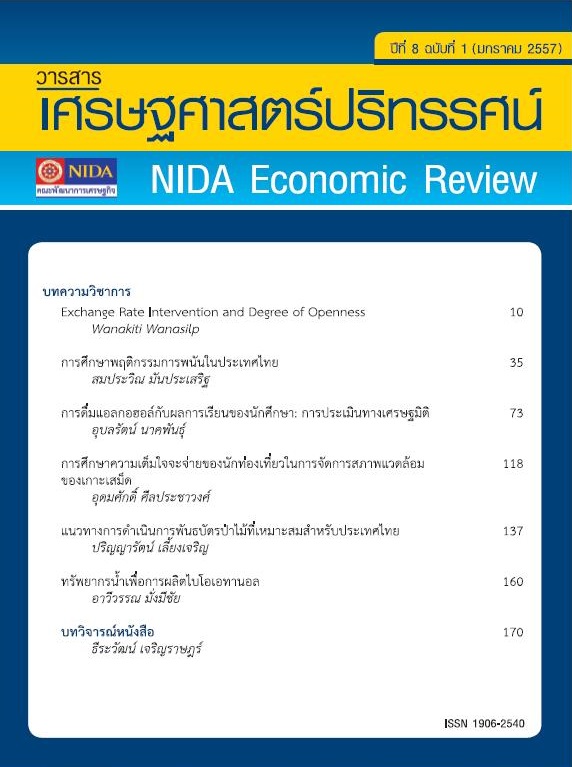
Water-Related to Bioethanal Production in Thailand
Keywords:
Bio-ethanol, life-cycle consumptive water use, water resource managementAbstract
The Thai government has been promoting a bio-ethanol production to reduce
greenhouse gas emissions and government expenses on crude oil imports. There
are many profound concerns related to such policy especially limited fresh water
resources of crops. This study provides an overview of bio-ethanol water footprint
in sugarcane and cassava based ethanol which is the main sources of bio-fuel
production in Thailand. The result shows that the production of bio-ethanol requires
large amount of consumptive water use. The government should aware of this
tremendous increasing demand in the areas where farms and ethanol plants are
located to avoid water shortages and conflicted uses between industrial sector and
human consumption. Additionally, irrigation systems and water allocation policy
should be adjusted properly for this oil transition.
Downloads
Published
Issue
Section
License
Copyright to published manuscripts becomes the property of the Graduate School of Development Economics, National Institute of Development Administration. Reproduction of all or part of a Development Economic Review (DER) article by anyone, excluding author(s), is prohibited, unless receiving our permission.
Disclaimer: Opinions expressed in articles published in this journal are those of the author (s) and do nto necessarily represent opinions of the Graduate School of Development Economics, National Institute of Development Administration. Trade and proprietary names are only for identification and not constitute our endorsement.


