
Phra Mai: Reflection of Phu Thai performing culture in film
DOI:
https://doi.org/10.14456/tiat.2025.14Keywords:
Belief, Phu thai tribe, Wooden buddha, Horror film, Soft powerAbstract
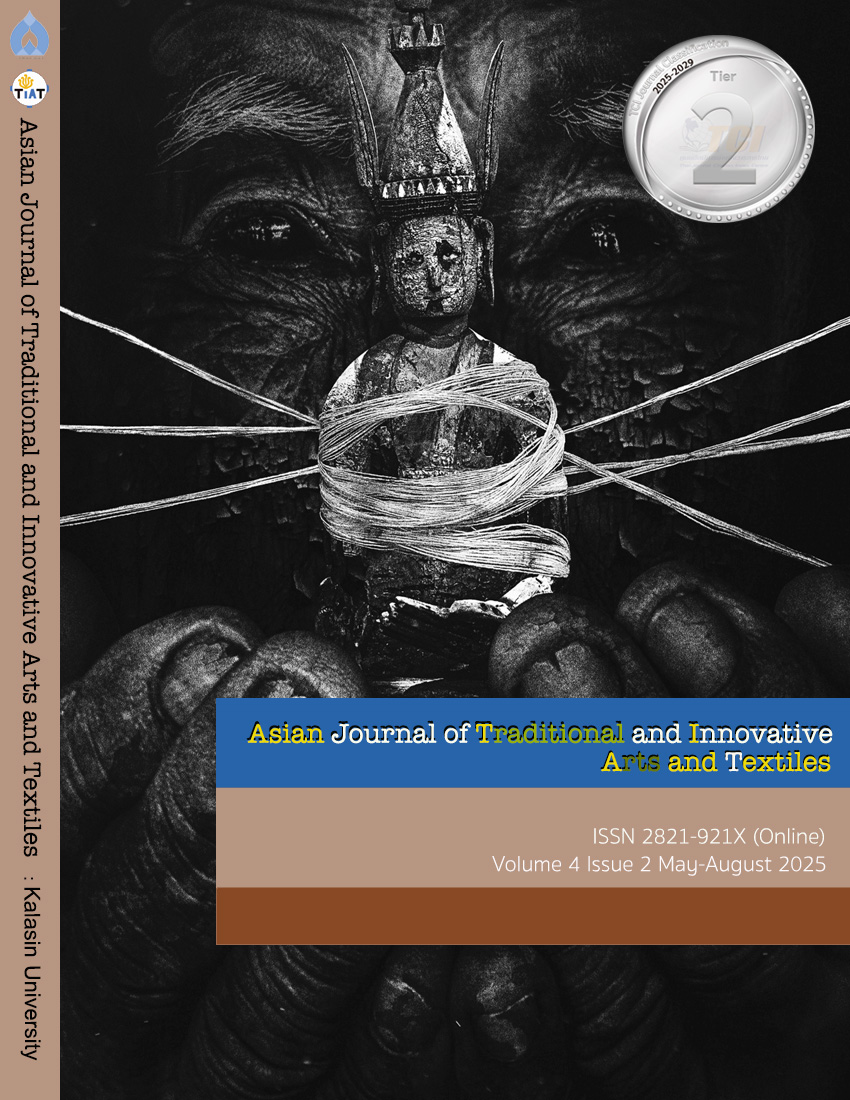
Subject research management model of Phra Mai: Reflection of Phu Thai performing culture in film. The objective is to produce a film based on the belief in wooden Buddhas from the Phu Thai ethnic culture. “Wooden Buddhas” are symbols of faith in Buddhism and play an important role in rituals and beliefs about ghosts of the Phu Thai people. This research applied these elements to create thriller, horror, and detective films to present complex and profound stories about the beliefs and traditions of the Phu Thai tribe. From this study, one thriller, horror, and detective film was produced by Mr. Prachaya Pinkaew and directed by Niyom Wongpongkham and Preecha Sakorn under the concept of “Wooden Buddhas, Dangerous Objects, Do Not Bring Them into Your Home” as a medium to connect the concept of Buddhist ways in using the teachings of the Lord Buddha as a spiritual support rather than using Buddha images as a symbol of sacredness to gain benefits other than the teachings, as the saying goes, “Do not let the Buddha image cover the Buddha.”
References
กานต์ กาญจนพิมาย, ตรีชฎา สุขเกษม, อุษา กลมพันธ์, ศิรประภา รัตนรวมการ, และ ศิรประภา สันตะวงศ์. (2566). คุณค่า และความงามของพระพุทธรูปไม้อีสานในวัดอาม็อง. วารสารศิลปะและวัฒนธรรมลุ่มแม่น้ำมูล. 12(2) : 59-67.
นิยม วงศ์พงษ์คำ. (2557). พระพุทธรูปไม้ในภาคอีสาน. ขอนแก่น: มหาวิทยาลัยขอนแก่น.
นิยม วงศ์พงษ์คำ. (2567). รายงานผลการทำกิจกรรมส่งเสริมและสนับสนุนการวิจัย: โครงการพระพุทธรูปอีสาน: หมายและการตีความหมายในมุมมองคนท้องถิ่นในพื้นที่ภาคอีสาน. มหาวิทยาลัยขอนแก่น. https://explore.nrct.go.th/file_upload/submitter/file_upload//faadc25f0710758676102815c69bf72b9d763256fb50159e.pdf
พระมหาปพนกตสาโร. (2560). พระพุทธรูปไม้: คุณค่าและคติธรรมที่มีต่อวิถีชีวิตคนอีสาน. วารสารวิชาการธรรมทรรศน์. 17(2) : 99-114.
มหาวิทยาลัยราชภัฏนครปฐม. (2561). เทศกาลและพิธีกรรมทางศาสนาพราหมณ์-ฮินดู. Retrieved 12 สิหาคม 2568, from http://courseware.npru.ac.th/admin/files/20170116113300_1034d25f0a4c5cc7297669bd7d1714a9.pdf
รัชนีกร ไวกล้า. (2562). ภูมิปัญญาท้องถิ่นและการอนุรักษ์ประเพณีการเหยาของชาวภูไท. Journal of Arts Management. 3(1) : 53-68.
สุกัญญา สมไพบูลย์. (2566). หนังผีไทย คืออะไร. Retrieved 1 มีนาคม 2568, from https://www.silpa-mag.com/on-view/article_105818
สุรพล วิรุฬห์รักษ์. (2557). หลักการแสดงนาฏยศิลป์ปริทรรศน์. กรุงเทพฯ : สำนักพิมพ์แห่งจุฬาลงกรณ์มหาวิทยาลัย.
สำนักงานจังหวัดนครพนม. (2561). พิธีเหยา (รักษาคนป่วยแบบโบราณ). Retrieved 1 มีนาคม 2568, from http://www2.nakhonphanom.go.th/charm/detail/66
Sakorn, P. (2023). A Study of an Adaptation of an E-San Novel to Screen Play: A Case Study of Ratree. (2023). Journal of Namibian Studies : History Politics Culture. 34(2) : 819-833. https://doi.org/10.59670/jns.v34i.1746
Sornsena, S., Apirating, P., & Suksamran, S. (2021). The Beliefs and Aesthetics of Isaan Heritage Trees. Academic Journal of Interdisciplinary Studies. 10(3) : 158-167. https://doi.org/10.36941/ajis-2021-0072
Thapkhampha, P. K. ., Leeka, J., & Ritthithit, P. J. . (2022). The Belief on the Building of Wooden Buddha of Isan People. Journal of Graduate MCU KhonKaen Campus. 9(3) : 26–40.
Downloads
Published
How to Cite
Issue
Section
License
Copyright (c) 2025 Asian Journal of Traditional and Innovative Arts and Textiles

This work is licensed under a Creative Commons Attribution-NonCommercial-NoDerivatives 4.0 International License.