Buddhist Propagation in Modern Society: A Case Study of Monks in Northeastern Thailand
Article Sidebar
Main Article Content
Abstract
This research aims to 1) study the propagation of Buddhism as found in Buddhist scriptures; 2) study the dissemination of Buddhism in modern society; and 3) propose a model for the dissemination of Buddhism in modern society by the monastic community in Northeastern Thailand. The research is qualitative, using tools such as in-depth interviews and group discussions. Key informants include 5 monks, 5 religious scholars, 5 community leaders, 5 local sages, and 10 laypeople, totaling 30 participants. The data was analyzed descriptively.
The research results are as follows:
1. The propagation of Buddhism as found in Buddhist scriptures involves teaching the Dhamma that the Buddha attained to liberate sentient beings from suffering. It began with the Buddha's first sermon to the Pañcavaggīya in the Deer Park at Isipatana. The Buddha initially sent 60 disciples to spread Buddhism with the goal of benefiting and bringing happiness to the masses, the principle and method used by the Buddha and his monastic disciples is to meet people and choose to teach them the Dharma that suits their temperament.
2. The dissemination of Buddhism in modern society has taken many forms, adapted by monks to suit contemporary needs and to provide options for those seeking to learn the Dhamma. Buddhism is disseminated through books, articles, sermons, teachings, Dhamma lectures, and through modern media such as television, YouTube, websites, as well as through social welfare activities like vocational training, reforestation, water source creation, peaceful community building, and the establishment of meditation centers.
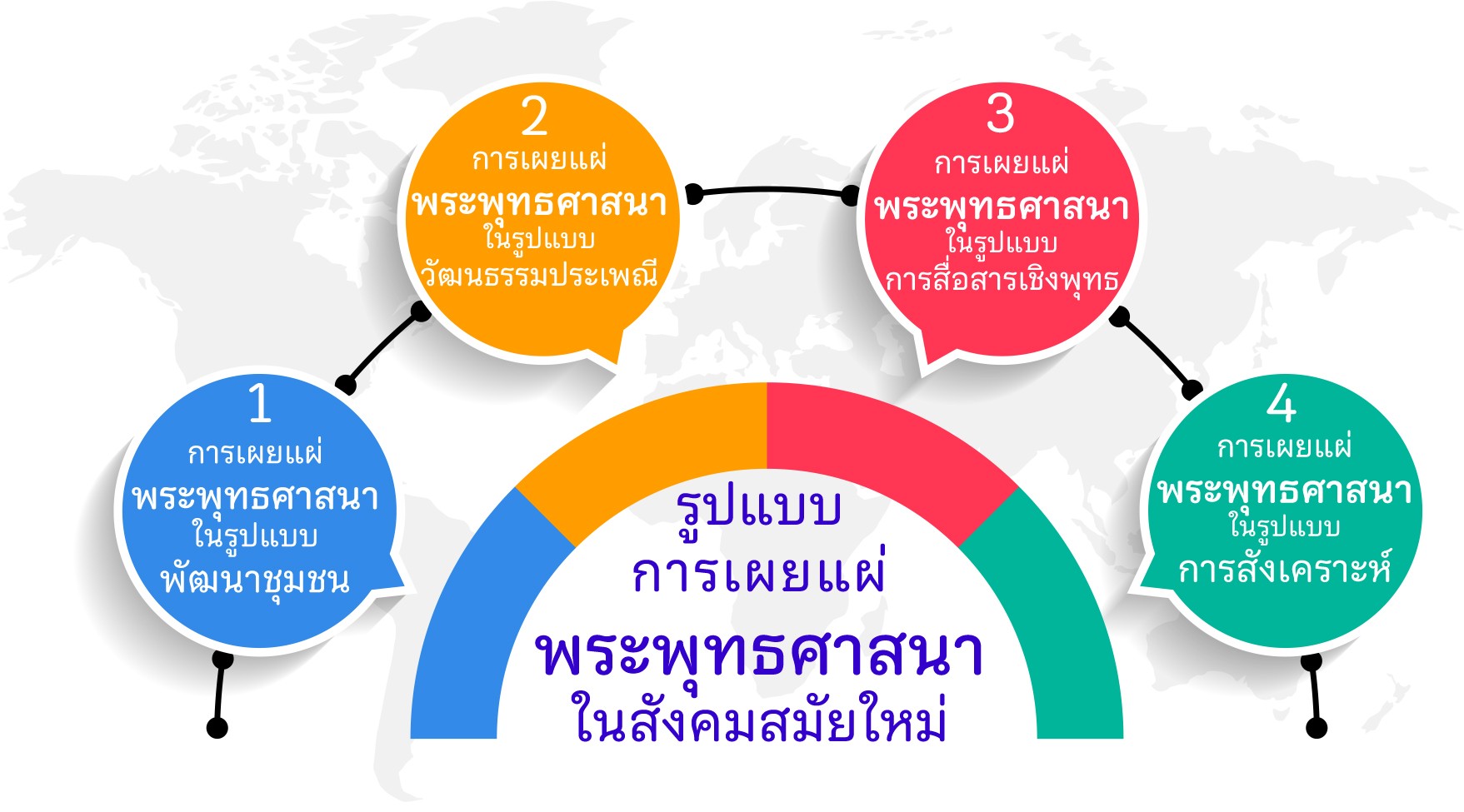
3. The model for disseminating Buddhism in modern society by the monastic community in Northeastern Thailand proposed in this research includes four approaches: (1) Community development through the propagation of Buddhism, (2) Propagation of Buddhism through cultural traditions, (3) Buddhist communication dissemination, and (4) Propagation of Buddhism through charitable activities.
Article Details

This work is licensed under a Creative Commons Attribution-NonCommercial-NoDerivatives 4.0 International License.
เพื่อให้เป็นไปตามกฎหมายลิขสิทธิ์ ผู้นิพนธ์ทุกท่านต้องลงลายมือชื่อในแบบฟอร์มใบมอบลิขสิทธิ์บทความ ให้แก่วารสารฯ พร้อมกับบทความต้นฉบับที่ได้แก้ไขครั้งสุดท้าย นอกจากนี้ ผู้นิพนธ์ทุกท่านต้องยืนยันว่าบทความ ต้นฉบับที่ส่งมาตีพิมพ์นั้น ได้ส่งมาตีพิมพ์เฉพาะในวารสาร วิชาการธรรม ทรรศน์ เพียงแห่งเดียวเท่านั้น หากมีการใช้ ภาพหรือตารางของผู้นิพนธ์อื่นที่ปรากฏในสิ่งตีพิมพ์อื่นมาแล้ว ผู้นิพนธ์ต้องขออนุญาตเจ้าของลิขสิทธิ์ก่อน พร้อมทั้ง แสดงหนังสือที่ได้รับการยินยอมต่อบรรณาธิการ ก่อนที่บทความจะได้รับการตีพิมพ์References
กรกต ชาบัณฑิต, เกษมชาติ นเรศเสนีย์ และภิศักดิ์ กัลยาณมิตร. (2556). ยุทธศาสตร์การเผยแผ่พระพุทธศาสนาเชิงรุก. วารสารบัณฑิตศึกษามหาวิทยาลัยราชภัฎวไลยอลงกรณ์ ในพระบรมราชูปถัมภ์, 7(2), 55-56. https://so02.tci-thaijo.org/index.php/JournalGradVRU/article/view/31385/26963
กองบริหารงานทรัพยากรบุคคล. (2567). วันอาสาฬหบูชา. เข้าถึงได้จาก https://www.doe.go.th/prd/hrad/custom/param/site/138/cat/40/sub/0/pull/detail/view/detail/object_id/1086
ณรงค์ เส็งประชา. (2545). วิถีไทย. กรุงเทพฯ: โอ.เอส.พริ้นติ้งเฮ้าส์.
พระครูญาณเพชรรัตน์ (เทวินทร์ ปิยทสฺสี). (2557). ยุทธศาสตร์การเผยแผ่พระพุทธศาสนาเชิงรุก. วารสารสันติศึกษาปริทรรศน์ มจร, 2(2), 80-91. https://so03.tci-thaijo.org/index.php/journal-peace/article/view/76535/61489
พระธรรมปิฎก (ป.อ.ปยุตฺโต). (2544). พุทธวิธีในการสอน. กรุงเทพฯ: การศาสนา.
พระราชธรรมนิเทศ (ระแบบ ฐิตญาโณ). (2544). ประวัติศาสตร์พระพุทธศาสนา. กรุงเทพฯ: มหามกุฎราชวิทยาลัย.
พระราชวรมุนี (ประยุทธ์ ปยุตฺโต). (2531). เทคนิคการสอนของพระพุทธเจ้า. กรุงเทพฯ: มูลนิธิพุทธธรรม.
มหาจุฬาลงกรณราชวิทยาลัย. (2539). พระไตรปิฎกฉบับภาษาไทย ฉบับมหาจุฬาลงกรณราชวิทยาลัย. กรุงเทพฯ: มหาจุฬาลงกรณราชวิทยาลัย.
วัดป่ามหาชัย สำนักปฏิบัติธรรมประจำจังหวัดนครพนม แห่งที่ 2. (2567). วันอาสาฬหบูชา. เข้าถึงได้จาก http://www.watpamahachai.net/Buddha/Buddha5.htm
