Developing a Curriculum to Enhance Supervisory Competency for Supervision Monks Under the Office of Moral Teaching Monks of Mahachulalongkornrajavidyalaya University
Article Sidebar
Main Article Content
Abstract
The purposes of this research were to: 1) study the basic information necessary for developing a curriculum to enhance the supervisory competency of supervision monks, 2) develop the curriculum, 3) examine the results of its implementation, and 4) evaluate the curriculum. This research employed a research and development (R&D) design conducted in four phases: Phase 1 involved studying basic information; Phase 2 focused on curriculum development; Phase 3 examined the implementation results; and Phase 4 evaluated the curriculum. The sample consisted of 44 supervision monks from the Teaching Morality Office at Mahachulalongkornrajavidyalaya University, selected through purposive sampling. The research instruments included the curriculum, a curriculum evaluation form, a supervisory competency assessment form, a learning reflection form, an observation form for supervisory behavior, and a satisfaction questionnaire. Data were analyzed using means, standard deviations, and paired-sample t-tests.
The results revealed that:
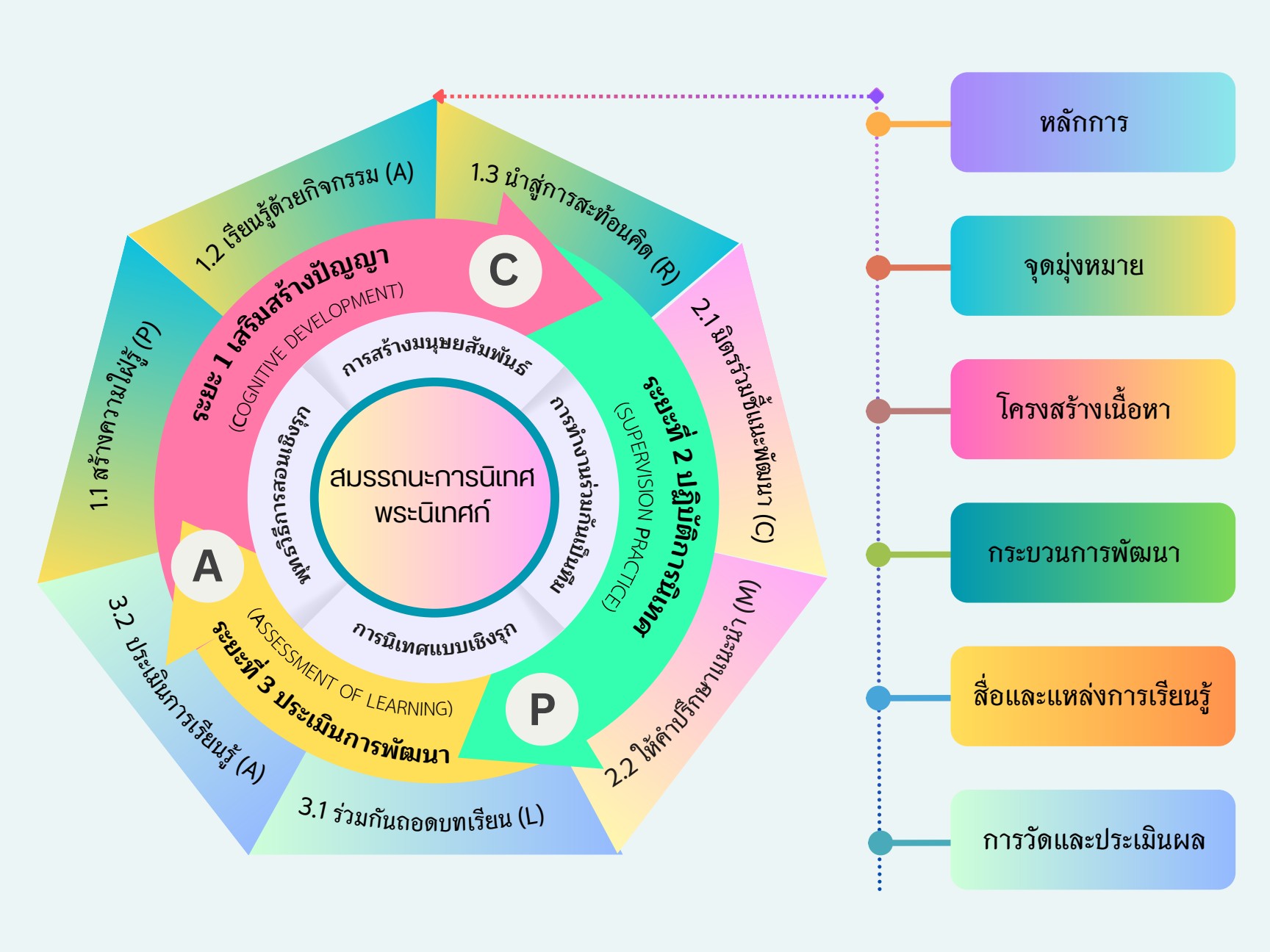
1. The study of basic information revealed that supervisory competency comprised four components: building interpersonal relationships, teamwork, active supervision, and learning management based on Buddhist principles. Supervision monks, administrators, and experts agreed that these competencies should be developed through workshop training, school-based practices, and coaching and mentoring.
2. The developed curriculum consisted of six components: principles, objectives, content structure, development processes, media and learning resources, and measurement and evaluation. Experts rated the curriculum’s quality at a very high level.
3. The implementation of the curriculum significantly improved the supervisory competency of supervision monks (p < .01).
4. Curriculum evaluation results showed that overall satisfaction with the curriculum was at the highest level.
Article Details

This work is licensed under a Creative Commons Attribution-NonCommercial-NoDerivatives 4.0 International License.
เพื่อให้เป็นไปตามกฎหมายลิขสิทธิ์ ผู้นิพนธ์ทุกท่านต้องลงลายมือชื่อในแบบฟอร์มใบมอบลิขสิทธิ์บทความ ให้แก่วารสารฯ พร้อมกับบทความต้นฉบับที่ได้แก้ไขครั้งสุดท้าย นอกจากนี้ ผู้นิพนธ์ทุกท่านต้องยืนยันว่าบทความ ต้นฉบับที่ส่งมาตีพิมพ์นั้น ได้ส่งมาตีพิมพ์เฉพาะในวารสาร วิชาการธรรม ทรรศน์ เพียงแห่งเดียวเท่านั้น หากมีการใช้ ภาพหรือตารางของผู้นิพนธ์อื่นที่ปรากฏในสิ่งตีพิมพ์อื่นมาแล้ว ผู้นิพนธ์ต้องขออนุญาตเจ้าของลิขสิทธิ์ก่อน พร้อมทั้ง แสดงหนังสือที่ได้รับการยินยอมต่อบรรณาธิการ ก่อนที่บทความจะได้รับการตีพิมพ์References
กิตติชัย สุธาสิโนบล. (2564). การพัฒนารูปแบบการจัดการเรียนรู้พระพุทธศาสนาที่มีสติเป็นฐานการเรียนรู้ที่เหมาะสมกับผู้เรียนระดับประถมศึกษาในสังคมไทยยุคปัจจุบัน. วารสารบัณฑิตศึกษา มหาวิทยาลัยราชภัฏวไลยอลงกรณ์ ในพระบรมราชูปถัมภ์, 15(2), 40-53. https://so02.tci-thaijo.org/index.php/JournalGradVRU/article/view/242089
นิภาวรรณ เดชบุญ. (2563). สมรรถนะการนิเทศของศึกษานิเทศก์. วารสารการบริหารและนิเทศการศึกษา, 11(3), 7-16. https://so20.tci-thaijo.org/index.php/JAD/article/view/234
พระมหาณรงค์ราช ปณิธานธิติ. (2564). การพัฒนารูปแบบการโค้ชแบบพหุวิธีเพื่อพัฒนาสมรรถนะการจัดการเรียนรู้โดยใช้อริยสัจเป็นฐานของพระสอนศีลธรรมในการเสริมสร้างความสามารถการคิดเชิงเหตุผลทางพระพุทธศาสนาสำหรับนักเรียนระดับการศึกษาขั้นพื้นฐาน. (ดุษฎีนิพนธ์ปรัชญาดุษฎีบัณฑิต). นครปฐม: มหาวิทยาลัยศิลปากร.
พระศรีธรรมภาณี. (2564). การพลิกโฉมพระสอนศีลธรรม: การพัฒนาพระบริหารการนิเทศ พระนิเทศก์ และพระสอนศีลธรรมเพื่อสร้างพลังขับเคลื่อนศีลธรรมในสังคมไทย. วารสารสันติศึกษาปริทรรศน์ มจร, 10(3), 938-953. https://so03.tci-thaijo.org/index.php/journal-peace/article/view/260000
พิมพันธ์ เดชะคุปต์ และพเยาว์ ยินดีสุข. (2563). การเรียนรู้เชิงรุกแบบรวมพลังกับ PLC เพื่อการพัฒนา. (พิมพ์ครั้งที่ 4). กรุงเทพฯ: จุฬาลงกรณ์มหาวิทยาลัย.
สมบัติ ท้ายเรือคำ. (2566). การพัฒนาหลักสูตรเพื่อเสริมสร้างความสามารถในการจัดกระบวนการจัดการเรียนรู้ สำหรับครูที่จบการศึกษาไม่ตรงวุฒิ/วิชาเอกคณิตศาสตร์. วารสารวิชาการและวิจัยสังคมศาสตร์, 18(1), 1-16. https://so05.tci-thaijo.org/index.php/JSSRA/article/view/258660
สำนักงานคณะกรรมการข้าราชการครูและบุคลากรทางการศึกษา. (2567). รายงานผลการกำหนดยุทธศาสตร์การปฏิรูปวิชาชีพศึกษานิเทศก์ สังกัดกระทรวงศึกษาธิการ. เข้าถึงได้จาก https://otepc.go.th/th/otepc12/km-otepc12/item/5134-2024-10-17-02-41-35.html
สำนักงานพระสอนศีลธรรม. (2566). แผนพัฒนาสำนักงานพระสอนศีลธรรม พ.ศ. 2566-2570. พระนครศรีอยุธยา: มหาวิทยาลัยมหาจุฬาลงกรณราชวิทยาลัย.
_______. (2567). รายงานสรุปสภาพปัญหาและความต้องการพัฒนาสมรรถนะการนิเทศของพระนิเทศก์จากผู้มีส่วนได้ส่วนเสีย ปีพุทธศักราช 2567. พระนครศรีอยุธยา: มหาวิทยาลัยมหาจุฬาลงกรณราชวิทยาลัย.
สำนักงานเลขานุการของคณะกรรมการยุทธศาสตร์ชาติ. (2561). ยุทธศาสตร์ชาติ พ.ศ. 2561-2580 (ฉบับประกาศราชกิจจานุเบกษา). กรุงเทพฯ: สำนักงานคณะกรรมการพัฒนาการเศรษฐกิจและสังคมแห่งชาติ.
สุชาดา หวังสิทธิเดช, ทิพาพร สุจารี และณัฏฐชัย จันทชุม. (2566). การพัฒนาหลักสูตรฝึกอบรมสมรรถนะครูด้านการจัดประสบการณ์เพื่อเสริมสร้างทักษะสมอง EF สำหรับเด็กปฐมวัย. วารสารมหาวิทยาลัยราชภัฏมหาสารคาม, 17(3), 288-304. https://so05.tci-thaijo.org/index.php/rmuj/article/view/269909
สุวัทนา สงวนรัตน์. (2567). การพัฒนาหลักสูตรฝึกอบรมเพื่อเสริมสร้างการจัดการเรียนรู้ฐานสมรรถนะเชิงรุกโดยใช้กระบวนการชี้แนะและการเป็นพี่เลี้ยง สำหรับครูสังกัดสำนักงานเขตพื้นที่การศึกษาประถมศึกษาลพบุรี เขต 1. วารสารมณีเชษฐาราม วัดจอมมณี, 7(5), 594-613. https://so07.tci-thaijo.org/index.php/JMCR/article/view/5481/3769
อดิศร เนาวนนท์, ลลิตา ธงภักดี, ปิยฉัตร เทพหัสดิน ณ อยุธยา, วริศรา ยางกลาง, อรสิริ วิมลธรรม และจตุพล ภู่ละกอ. (2565). การพัฒนากระบวนการชี้แนะและการเป็นพี่เลี้ยงเพื่อเสริมสร้างความสามารถในการจัดการเรียนรู้ของครูผู้สอนภาษาอังกฤษ ในโรงเรียนขนาดเล็กระดับประถมศึกษา. วารสารชุมชนวิจัยและพัฒนาสังคม, 16(2), 135-146. https://doi.org/10.14456/nrru-rdi.2022.31
Collet, V. S. (2015). The Gradual Increase of Responsibility Model for coaching teachers: Scaffolds for change. International Journal of Mentoring and Coaching in Education, 4(4), 269-292. https://doi.org/10.1108/IJMCE-06-2015-0017
Darling-Hammond, L., Wei, R. C., Andree, A., Richardson, N., & Orphanos, S. (2009). Professional learning in the learning profession: A status report on teacher development in the United States and abroad. Stanford, CA: National Staff Development Council & The School Redesign Network at Stanford University.
Ferguson, K. (2014). How Three Schools View the Success of Literacy Coaching: Teachers’, Principals’ and Literacy Coaches’ Perceived Indicators of Success. Reading Horizons: A Journal of Literacy and Language Arts, 53 (1), 23-47. https://scholarworks.wmich.edu/reading_horizons/vol53/iss1/9
Glickman, C. D., Gordon, S. P., & Ross‑Gordon, J. M. (2004). Supervision and instructional leadership: A developmental approach. (6th ed.). Boston, MA: Allyn & Bacon.
Joyce, B., & Showers, B. (2002). Student achievement through staff development. Alexandria, VA: Association for Supervision and Curriculum Development.
Onchwari, G., & Keengwe, J. (2008). The impact of a mentor-coaching model on teacher professional development. Early Childhood Education Journal, 36(1), 19-24. https://doi.org/10.1007/s10643-007-0233-0
Taba, H. (1962). Curriculum Development: Theory and Practice. New York: Harcourt, Brace and World.
Yoon, K. S., Duncan, T., Lee, S. W.-Y., Scarloss, B., & Shapley, K. L. (2007). Reviewing the evidence on how teacher professional development affects student achievement (Issues & Answers Report, REL 2007-No. 033). Washington, DC: U.S. Department of Education, Institute of Education Sciences, National Center for Education Evaluation and Regional Assistance, Regional Educational Laboratory Southwest.
