Model for conservation of Buddhist Ecosystems in Buddhist sites of the Sangha of Sri Chiang Mai District, Nong Khai Province
Article Sidebar
Main Article Content
Abstract
This research aimed to: 1) study the conservation of the Buddhist ecological system in monastic sites under the Sangha of Si Chiang Mai District, 2) develop models and processes for conserving the Buddhist ecological system in these monastic sites, and 3) propose a model for conserving the Buddhist ecological system in monastic sites under the Sangha of Si Chiang Mai District. This qualitative study involving 45 key informants (monks and laypeople). The research instrument used was an interview form, and the data were analyzed using descriptive analysis.
The research findings revealed that:
1. The Buddhist ecological system in monastic sites under the Sangha of Si Chiang Mai District integrates Dhamma principles with sustainable environmental stewardship. The temple grounds are divided into Phutthawat (the sacred area) and Sanghawat (the monastic living area), promoting both Dhamma practice and nature conservation. The temples manage their spaces based on the concept of living in harmony with nature, applying the principle of the seven types of “Sappaya” (suitable conditions) and utilizing local wisdom to create a balance between nature, the temple, and the community. Community participation is a core element in this process.
2. The development of models and processes for conserving the Buddhist ecological system in monastic sites under the Sangha of Si Chiang Mai District focuses on creating activities that promote participation from all sectors. Dhamma principles are systematically applied to environmental management through a structured process consisting of three main phases: Upstream: laying the foundation and establishing the conservation framework, Midstream: cultivating environmental awareness and fostering community collaboration, and Downstream: developing ongoing projects to ensure long-term sustainability.
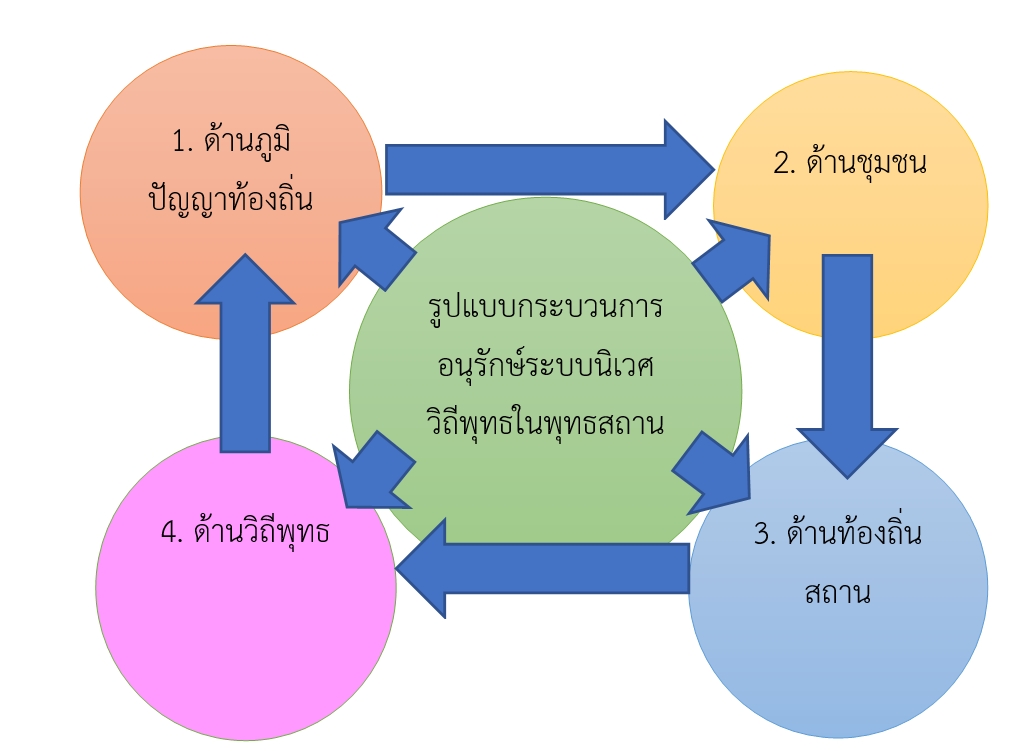
3. The proposed conservation model is divided into four main aspects: 1. Wisdom: Preserving religious and cultural activities through public events, supported by the government and various organizations. 2. Community: Promoting participation through eco-tourism and the local economy, such as herbal products and organic farming. 3. Local Context: Integrating moral principles with environmental care, with monastic sites serving as centers of culture and community products. 4. Buddhist Way of Life: Emphasizing moral precepts (sīla) and the study of Dhamma to sustain Buddhism and foster a peaceful society.
Article Details

This work is licensed under a Creative Commons Attribution-NonCommercial-NoDerivatives 4.0 International License.
เพื่อให้เป็นไปตามกฎหมายลิขสิทธิ์ ผู้นิพนธ์ทุกท่านต้องลงลายมือชื่อในแบบฟอร์มใบมอบลิขสิทธิ์บทความ ให้แก่วารสารฯ พร้อมกับบทความต้นฉบับที่ได้แก้ไขครั้งสุดท้าย นอกจากนี้ ผู้นิพนธ์ทุกท่านต้องยืนยันว่าบทความ ต้นฉบับที่ส่งมาตีพิมพ์นั้น ได้ส่งมาตีพิมพ์เฉพาะในวารสาร วิชาการธรรม ทรรศน์ เพียงแห่งเดียวเท่านั้น หากมีการใช้ ภาพหรือตารางของผู้นิพนธ์อื่นที่ปรากฏในสิ่งตีพิมพ์อื่นมาแล้ว ผู้นิพนธ์ต้องขออนุญาตเจ้าของลิขสิทธิ์ก่อน พร้อมทั้ง แสดงหนังสือที่ได้รับการยินยอมต่อบรรณาธิการ ก่อนที่บทความจะได้รับการตีพิมพ์References
กิตติพงษ์ สุวรรณโชติ. (2560). การอนุรักษ์สิ่งแวดล้อมตามแนวทางพุทธศาสนาในชุมชนไทย. กรุงเทพฯ: มหาวิทยาลัยมหาจุฬาลงกรณราชวิทยาลัย.
นฤมล แซ่ตั้ง. (2561). การฟื้นฟูป่าไม้โดยใช้หลักพุทธธรรม: ศึกษากรณีวัดป่าในภาคตะวันออกเฉียงเหนือของไทย. วารสารวิจัยพุทธศาสตร์, 8(3), 75-92.
บุญวัฒน์ บุญทะวงศ์. (2566). รูปแบบการอนุรักษ์ป่าไม้ตามหลักพุทธจริยศาสตร์ของคณะสงฆ์จังหวัดเลย. (ดุษฎีนิพนธ์พุทธศาสตรดุษฎีบัณฑิต). พระนครศรีอยุธยา: มหาวิทยาลัยมหาจุฬาลงกรณราชวิทยาลัย.
ประยุทธ อินทรสวัสดิ์. (2564). พุทธศาสนาและการสร้างจิตสำนึกในการอนุรักษ์ธรรมชาติ. กรุงเทพฯ: จุฬาลงกรณ์มหาวิทยาลัย.
พระมหาญาณภัทร อติพโล (เทพนม). (2567). โปรแกรมพุทธจิตวิทยาวีถีนิเวศภาวนาเพื่อการอนุรักษ์ป่าไม้อย่างยั่งยืนสำหรับเยาวชน. (ดุษฎีนิพนธ์พุทธศาสตรดุษฎีบัณฑิต). พระนครศรีอยุธยา: มหาวิทยาลัยมหาจุฬาลงกรณราชวิทยาลัย.
สอาด บรรเจิดฤทธิ์. (2568). พระพุทธศาสนากับการจัดการทรัพยากรมนุษย์ในประเทศไทย. วารสารการวิจัยการบริหารการพัฒนา, 15(1), 76-89. https://so01.tci-thaijo.org/index.php/JDAR/article/view/276148
