Guideline of Beliefs, Sacred Objects of Luang Pho Phara Sai and the Life of Communities in Nongkhai Province
Article Sidebar
Main Article Content
Abstract
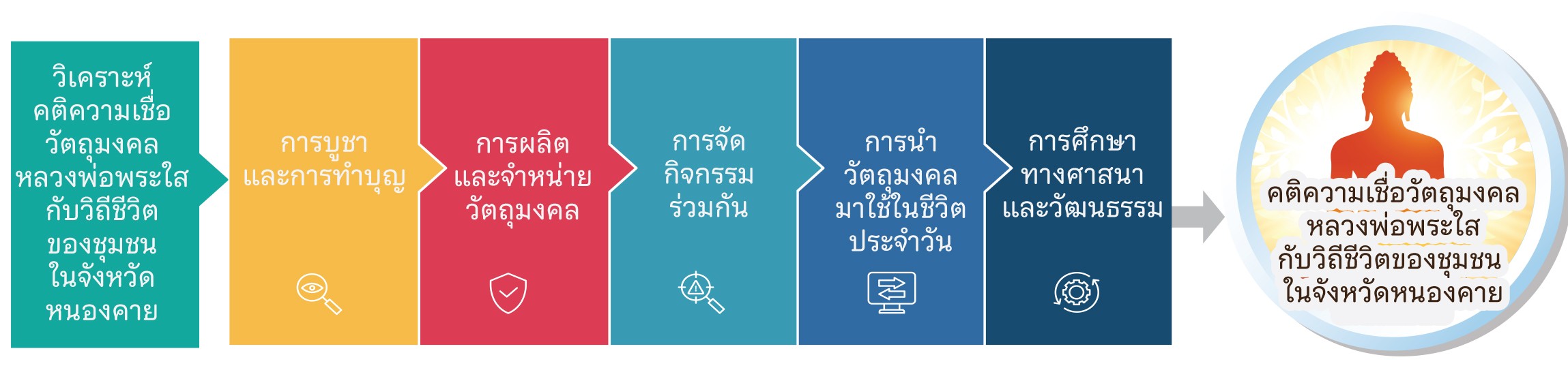
The purposes of this research were: 1) to study the history, artistic value, and Buddhist aesthetics of the sacred amulet of Luang Pho Phra Sai; 2) to examine the beliefs and practices of the Nong Khai community regarding this amulet; and 3) to analyze these beliefs and practices in relation to Buddhist psychology within the community. This qualitative research involved 40 key informants, with data collected through interviews and focus group discussions, followed by descriptive analysis.
The results revealed that:
1. Luang Pho Phra Sai is a revered Buddha statue enshrined at Wat Pho Chai, Nong Khai Province. It dates back to the Lan Xang period and was crafted in the Vientiane artistic style, featuring a beautifully seated Buddha in the Maravijaya posture, cast in radiant gold. Beyond its artistic significance, Luang Pho Phra Sai serves as a focal point of faith and spiritual refuge for the local people. Important ceremonies, such as the annual Songkran water-pouring ritual, reflect the continuity of local traditions and cultural heritage.
2. The community’s beliefs regarding the sacred amulet of Luang Pho Phra Sai emphasize its divine power in offering protection, bringing good fortune, and fostering spiritual stability. Religious ceremonies surrounding this amulet strengthen social bonds within the community. The 2015 "Phra Sai Pha Baramee" (Lightning Strike) edition of the amulet has garnered profound reverence, particularly following a miraculous survival from a lightning strike, further reinforced by its sanctification in a revered Buddhist consecration ceremony.
3. The analysis of its impact reveals that the amulet enhances confidence, alleviates anxiety, strengthens community connections, and preserves traditional practices. Additionally, it contributes to the local economy through religious tourism, amulet rentals, and souvenir sales. These findings highlight that the sacred amulet of Luang Pho Phra Sai is not only a religious artifact but also a cultural and spiritual anchor for the people of Nong Khai.
Article Details

This work is licensed under a Creative Commons Attribution-NonCommercial-NoDerivatives 4.0 International License.
เพื่อให้เป็นไปตามกฎหมายลิขสิทธิ์ ผู้นิพนธ์ทุกท่านต้องลงลายมือชื่อในแบบฟอร์มใบมอบลิขสิทธิ์บทความ ให้แก่วารสารฯ พร้อมกับบทความต้นฉบับที่ได้แก้ไขครั้งสุดท้าย นอกจากนี้ ผู้นิพนธ์ทุกท่านต้องยืนยันว่าบทความ ต้นฉบับที่ส่งมาตีพิมพ์นั้น ได้ส่งมาตีพิมพ์เฉพาะในวารสาร วิชาการธรรม ทรรศน์ เพียงแห่งเดียวเท่านั้น หากมีการใช้ ภาพหรือตารางของผู้นิพนธ์อื่นที่ปรากฏในสิ่งตีพิมพ์อื่นมาแล้ว ผู้นิพนธ์ต้องขออนุญาตเจ้าของลิขสิทธิ์ก่อน พร้อมทั้ง แสดงหนังสือที่ได้รับการยินยอมต่อบรรณาธิการ ก่อนที่บทความจะได้รับการตีพิมพ์References
กรมศิลปากร. (2547). ประวัติและศิลปะพระพุทธรูปสำคัญในประเทศไทย. กรุงเทพฯ: สำนักวรรณกรรมและประวัติศาสตร์.
จิราภรณ์ ศรีสุข. (2560). ความเชื่อและการบูชาวัตถุมงคลในสังคมไทย: ศึกษากรณีพระเครื่องและความศรัทธาของประชาชน. (วิทยานิพนธ์ศิลปศาสตรมหาบัณฑิต). เชียงใหม่: มหาวิทยาลัยเชียงใหม่.
ณัฐพล พรมหา. (2558). หลวงพ่อพระใส: ศรัทธาและพิธีกรรมของชาวหนองคาย. กรุงเทพฯ: มหาวิทยาลัยธรรมศาสตร์.
พระคำฮุ่ง สติปญฺโญ (ตุลาวัน). (2562). ศึกษาคุณค่าของความเชื่อที่ปรากฏในพิธีกรรมการบูชาหลวงพ่อองค์ตื้อ นครหลวงเวียงจันทน์. (วิทยานิพนธ์พุทธศาสตรมหาบัณฑิต). พระนครศรีอยุธยา: มหาวิทยาลัยมหาจุฬาลงกรณราชวิทยาลัย.
พระธรรมปิฎก (ป.อ.ปยุตฺโต). (2550). พุทธศาสนากับสังคมไทย: หลักธรรมและความเชื่อ. กรุงเทพฯ: มูลนิธิพุทธธรรม.
พระภูเมธ สุเมโธ (พูนสุวรรณ). (2553). ความเชื่อและพฤติกรรมของชาวพุทธที่มีต่อพระเจ้าเก้าตื้อ วัดสวนดอก เชียงใหม่. (วิทยานิพนธ์พุทธศาสตรมหาบัณฑิต). พระนครศรีอยุธยา: มหาวิทยาลัยมหาจุฬาลงกรณราชวิทยาลัย.
พระสมุห์วันชัย เกสรธมฺโม (มีมาก). (2554). การศึกษาศรัทธาของประชาชนที่มีต่อพระพุทธชินราช จังหวัดพิษณุโลก ในฐานะสื่อพุทธศิลป์. (วิทยานิพนธ์พุทธศาสตรมหาบัณฑิต). พระนครศรีอยุธยา: มหาวิทยาลัยมหาจุฬาลงกรณราชวิทยาลัย.
สำนักงานพระพุทธศาสนาแห่งชาติ. (2562). พระพุทธศาสนาในบริบทสังคมไทย. กรุงเทพฯ: สำนักงานพระพุทธศาสนาแห่งชาติ.
Smith, B. (2011). Buddhist Amulets and Thai Spirituality: Faith and Practice in Modern Society. Bangkok: Thai Heritage Publishing.
Tambiah, S. J. (1984). The Buddhist Saints of the Forest and the Cult of Amulets: A Study in Charisma, Hagiography, Sectarianism, and Millennial Buddhism. Cambridge: Cambridge University Press.
