Human Value Analysis in Albert Camus Philosophy
Article Sidebar
Main Article Content
Abstract
This research aimed to: 1) study human values from a philosophical perspective, 2) examine the concept of human values in the philosophy of Albert Camus, and 3) analyze and synthesize human values in Albert Camus’ philosophy. This study employed documentary research by collecting data from both primary and secondary sources. The data were analyzed descriptively using an inductive approach. The researcher examined major works of Albert Camus, including The Stranger, A Happy Death, The Fall, and the philosophical essay The Myth of Sisyphus, in order to explain the concept of absurdity and human values.
The findings revealed that:
1. Human values in philosophy are related to freedom, responsibility, rationality, and moral choice, emphasizing that human beings are capable of creating meaning in life through awareness and personal decision-making.
2. Human values in Albert Camus’ philosophy are reflected through the concept of Absurdity, which arises from the conflict between humanity’s search for meaning and a world that cannot provide definite answers. Camus proposed that although life has no inherent meaning, human beings are still able to live with freedom, dignity, and self-created values.
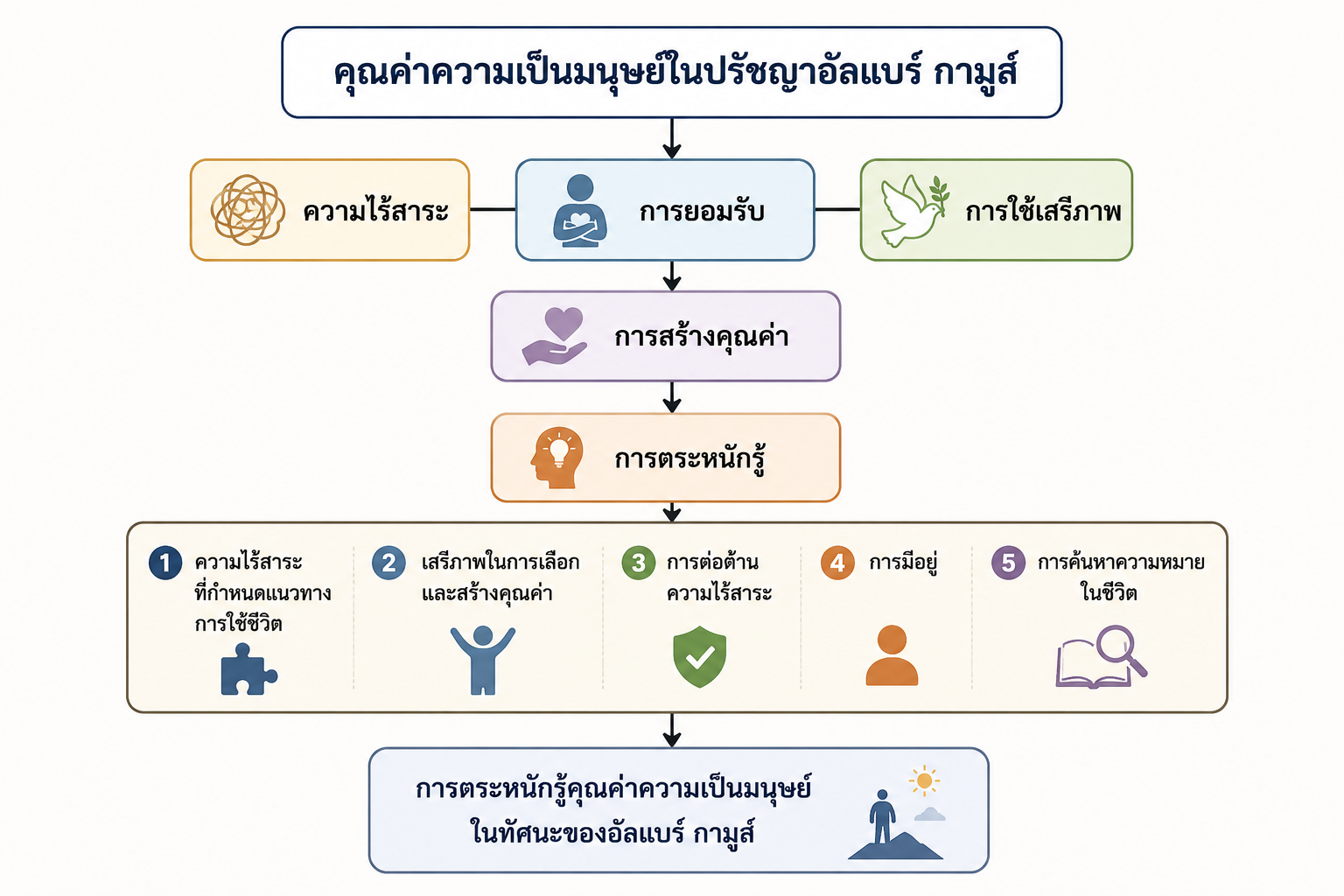
3. The analysis of human values in Albert Camus’ perspective consisted of five major aspects: 1. absurdity as a condition guiding human life, 2. freedom to choose and create values, 3. resistance against absurdity, 4. human existence, and 5. the search for meaning in life. Camus viewed that human beings can create meaning through their choices, actions, and persistence amidst the uncertainty of the world. Therefore, accepting absurdity is not a surrender to life, but an awareness of human freedom and dignity in creating one’s own values.
Article Details

This work is licensed under a Creative Commons Attribution-NonCommercial-NoDerivatives 4.0 International License.
เพื่อให้เป็นไปตามกฎหมายลิขสิทธิ์ ผู้นิพนธ์ทุกท่านต้องลงลายมือชื่อในแบบฟอร์มใบมอบลิขสิทธิ์บทความ ให้แก่วารสารฯ พร้อมกับบทความต้นฉบับที่ได้แก้ไขครั้งสุดท้าย นอกจากนี้ ผู้นิพนธ์ทุกท่านต้องยืนยันว่าบทความ ต้นฉบับที่ส่งมาตีพิมพ์นั้น ได้ส่งมาตีพิมพ์เฉพาะในวารสาร วิชาการธรรม ทรรศน์ เพียงแห่งเดียวเท่านั้น หากมีการใช้ ภาพหรือตารางของผู้นิพนธ์อื่นที่ปรากฏในสิ่งตีพิมพ์อื่นมาแล้ว ผู้นิพนธ์ต้องขออนุญาตเจ้าของลิขสิทธิ์ก่อน พร้อมทั้ง แสดงหนังสือที่ได้รับการยินยอมต่อบรรณาธิการ ก่อนที่บทความจะได้รับการตีพิมพ์References
กีรติ บุญเจือ. (2522). ปรัชญาอัตถิภาวนิยม. กรุงเทพฯ: ไทยวัฒนาพานิช.
เจิด บรรดาศักดิ์. (2551). มโนทัศน์แอบเสิร์ดในปรัชญาของธอมัส เนเกล. (วิทยานิพนธ์อักษรศาสตรมหาบัณฑิต). กรุงเทพฯ: จุฬาลงกรณ์มหาวิทยาลัย.
ชัยณรงค์ ศรีมันตะ. (2563). ธรรมชาติมนุษย์ในปรัชญาของโทมัส ฮอบส์. วารสารวิชาการมนุษยศาสตร์และสังคมศาสตร์ มหาวิทยาลัยบูรพา, 28(1), 48-62.
พระมหาขวัญชัย กิตฺติเมธี (เหมประไพ). (2555). วิจารณ์ความเรียงว่าด้วยต้นกำเนิดและรากฐานแห่งความไม่เท่าเทียมกันของมนุษยชาติ. กรุงเทพฯ: สยามปริทัศน์.
ภมร ชูคันหอม, ชัยณรงค์ ศรีมันตะ และสกุล อ้นมา. (2562). ความไร้สาระของชีวิตมนุษย์ในปรัชญาของอัลแบร์ กามูส์. วารสารวิชาการมนุษยศาสตร์และสังคมศาสตร์ มหาวิทยาลัยบูรพา, 27(55), 135-160.
วันชาติ ชาญวิจิตร และหอมหวล บัวระภา. (2554). เป้าหมายของชีวิตมนุษย์ในทัศนะของอัลแบร์ กามูส์. (รายงานการวิจัย). มหาสารคาม: มหาวิทยาลัยมหาสารคาม.
วิทย์ วิศทเวทย์. (2531). ปรัชญาความรู้ทั่วไป. กรุงเทพฯ: จุฬาลงกรณ์มหาวิทยาลัย.
สิริจิตต์ ปันเงิน. (2542). ความตายในมุมมองของกามูส์. (วิทยานิพนธ์ศิลปศาสตรมหาบัณฑิต). เชียงใหม่: มหาวิทยาลัยเชียงใหม่.
สุพัตรา คำแก้ว. (2554). แนวคิดเรื่องมนุษย์ของอัลแบร์ กามูส์. (วิทยานิพนธ์ศิลปศาสตรมหาบัณฑิต). เชียงใหม่: มหาวิทยาลัยเชียงใหม่.
อัลแบร์ กามูส์. (2522). คนนอก (อำพรรณ โอตระกูล, ผู้แปล). (พิมพ์ครั้งที่ 2). กรุงเทพฯ: ดวงกมล.
_______. (2549). มนุษย์คนแรก (อำพรรณ โอตระกูล, ผู้แปล). กรุงเทพฯ: สามัญชน.
_______. (2558). เทพตำนานซิซีฟัส: Le Mythe de Sisyphe (วิภาดา กิตติโกวิท, ผู้แปล). กรุงเทพฯ: มูลนิธิหนังสือเพื่อสังคม.
_______. (2559). ความตายอันแสนสุข (อำพรรณ โอตระกูล, ผู้แปล). (พิมพ์ครั้งที่ 2). กรุงเทพฯ: สามัญชน.
