Cultural Dimensions, Local Wisdom, and Well-being of a Traditional Dish: A Case Study of Kaeng Hung Lay
Article Sidebar
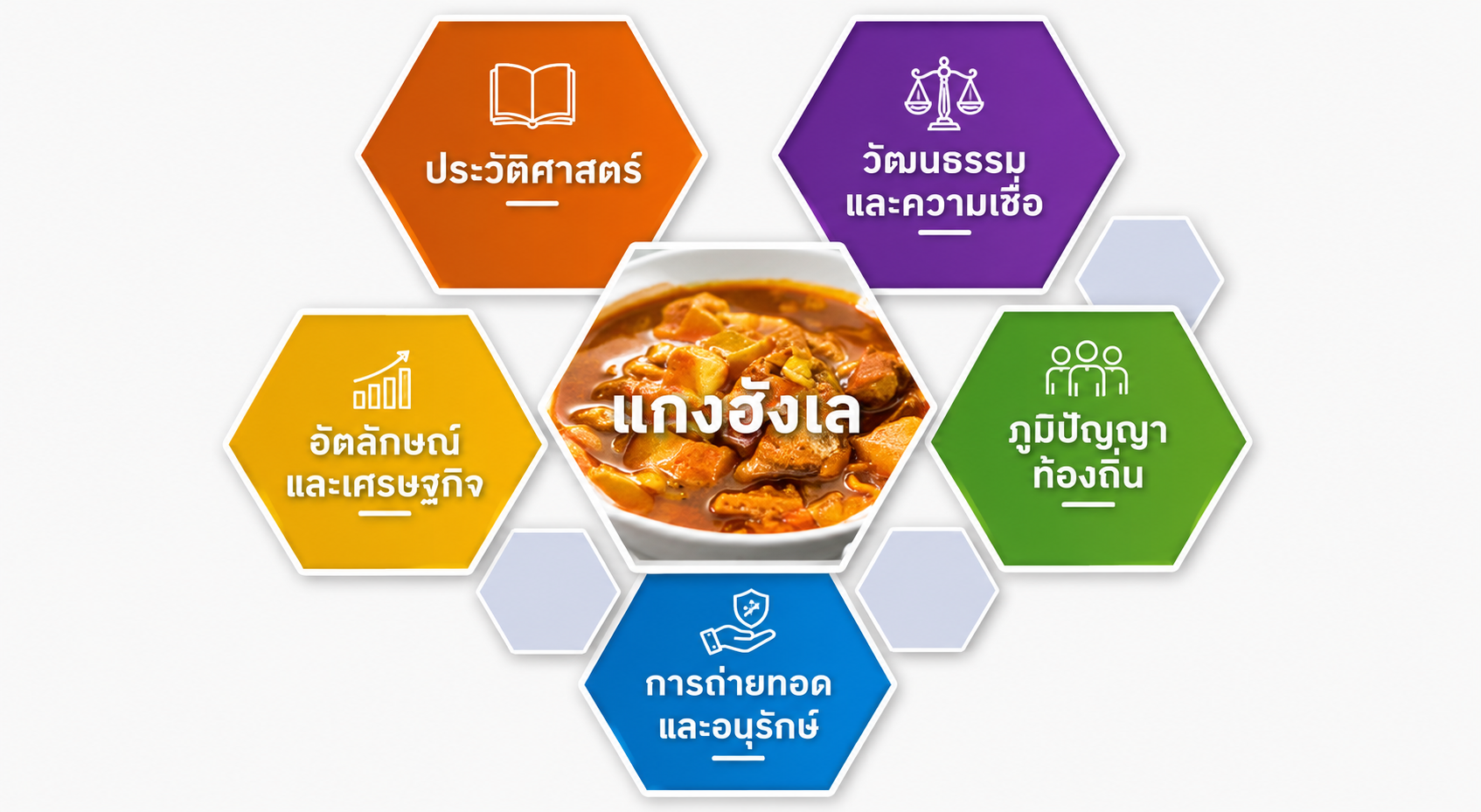
Main Article Content
Abstract
This academic article aims to analyze the cultural dimensions, beliefs, and processes of transmitting local wisdom reflected in the traditional Northern Thai dish, Kaeng Hung Lay. Documentary research and scholarly sources were synthesized as the foundation of the study, complemented by an analysis of the nutritional value and bioactive properties of its herbal ingredients within the framework of “food as medicine.” The findings reveal that Kaeng Hung Lay represents a vital component of both everyday life and religious and ceremonial practices, reflecting Lanna identity and social structure. Its spices and local herbs contain bioactive compounds that promote holistic well-being across physical, mental, and social dimensions. The study further highlights that Kaeng Hung Lay is not merely a traditional dish; it constitutes a cultural asset with the potential to generate economic value for local communities and to serve as a foundation for sustainable cultural and wellness tourism, while preserving local identity and indigenous knowledge.
Article Details

This work is licensed under a Creative Commons Attribution-NonCommercial-NoDerivatives 4.0 International License.
เพื่อให้เป็นไปตามกฎหมายลิขสิทธิ์ ผู้นิพนธ์ทุกท่านต้องลงลายมือชื่อในแบบฟอร์มใบมอบลิขสิทธิ์บทความ ให้แก่วารสารฯ พร้อมกับบทความต้นฉบับที่ได้แก้ไขครั้งสุดท้าย นอกจากนี้ ผู้นิพนธ์ทุกท่านต้องยืนยันว่าบทความ ต้นฉบับที่ส่งมาตีพิมพ์นั้น ได้ส่งมาตีพิมพ์เฉพาะในวารสาร วิชาการธรรม ทรรศน์ เพียงแห่งเดียวเท่านั้น หากมีการใช้ ภาพหรือตารางของผู้นิพนธ์อื่นที่ปรากฏในสิ่งตีพิมพ์อื่นมาแล้ว ผู้นิพนธ์ต้องขออนุญาตเจ้าของลิขสิทธิ์ก่อน พร้อมทั้ง แสดงหนังสือที่ได้รับการยินยอมต่อบรรณาธิการ ก่อนที่บทความจะได้รับการตีพิมพ์References
เกศศิณี ตระกูลทิวากร. (2557). การส่งเสริมการท่องเที่ยวภาคเหนือโดยใช้ภาพลักษณ์ของอาหารท้องถิ่น. กรุงเทพฯ: สำนักงานกองทุนสนับสนุนการวิจัย.
ฐิติวรฎา ใยสำลี, สุรีย์พร ธัญญะกิจ, จุฑารัตน์ ศักดิ์มั่นวงศ์ และนพพร แพทย์รัตน์. (2562). “แกงฮังเล” วัฒนธรรมและความเชื่อ. วารสารวไลยอลงกรณ์ปริทัศน์ (มนุษยศาสตร์และสังคมศาสตร์), 9(2), 172-186.
ทรงสิริ วิชิรานนท์, พจนีย์ บุญนา และจงทิพย์ อธิมุติสรรค์. (2557). วิถีชีวิตและความมั่นคงของอาหารภาคใต้. วารสารวิชาการและวิจัย มทร.พระนคร, 8(1), 94-107.
ทัศนีย์ อารมณ์เกลี้ยง และสุภาพ ฉัตราภรณ์. (2557). เส้นทางการสืบสานภูมิปัญญาอาหารล้านนาสู่ความยั่งยืน. วารสารเกษตรศาสตร์ (สังคม), 35, 189-205.
ประหยัด สายวิเชียร. (2547). อาหาร วัฒนธรรมและสุขภาพ. เชียงใหม่: นพบุรีการพิมพ์.
พัทยา สายหู. (2532). กลไกของสังคม. กรุงเทพฯ: จุฬาลงกรณ์มหาวิทยาลัย.
ยศ สันตสมบัติ. (2543). ความหลากหลายทางชีวภาพและภูมิปัญญาท้องถิ่นเพื่อการพัฒนาอย่างยั่งยืน. กรุงเทพฯ: สำนักงานคณะกรรมการวิจัยแห่งชาติ.
สุธินดา ใจขาน, อัจฉริยา สุริยา และทิวารัตน์ ศรีราตรี. (2557). การศึกษาศักยภาพของอาหารพื้นบ้านกับการท่องเที่ยวของเมืองมรดกโลกหลวงพระบาง เพื่อเตรียมความพร้อมเข้าสู่ประชาคมอาเซียน. ใน การประชุมวิชาการการพัฒนาชนบทที่ยั่งยืน ครั้งที่ 4 ประจำปี 2557: Rethink: Social Development for Sustainability in ASEAN Community (หน้า 650-657). ขอนแก่น: ศูนย์วิจัยและพัฒนาชุมชนอย่างยั่งยืน มหาวิทยาลัยขอนแก่น.
อรอนงค์ ทองมี. (2564). แกงฮังเล. วารสารวัฒนธรรมอาหารไทย, 3(2), 1-6.
Bayan, L., Koulivand, P. H., & Gorji, A. (2014). Garlic: A review of potential therapeutic effects. Avicenna Journal of Phytomedicine, 4(1), 1-14.
Hewlings, S. J., & Kalman, D. S. (2017). Curcumin: A review of its effects on human health. Foods, 6(10), 92. https://doi.org/10.3390/foods6100092
Mashhadi, N. S., Ghiasvand, R., Askani, G., Hariri, M., & Mofid, M.R. (2013). Anti-oxidative and anti-inflammatory effects of ginger in health and physical activity: Review of current evidence. International Journal of Preventive Medicine, 4(Suppl 1), S36-S42.
Mintz, S. W., & Du Bois, C. M. (2002). The anthropology of food and eating. Annual Review of Anthropology, 31, 99-119. https://doi.org/10.1146/annurev.anthro.32.032702.131011
Richards, G. (2012). An overview of food and tourism trends and policies. In OECD (Ed.), Food and the tourism experience: The OECD-Korea workshop. Paris: OECD Publishing.
UNESCO. (2003). Convention for the safeguarding of the intangible cultural heritage. Paris: UNESCO.
Viwatpanich, K. (2012). Consumption and nutritive values of traditional Mon food. ASEAS-Austrian Journal of South-East Asian Studies, 5(1), 152-160.
World Health Organization. (1948). Constitution of the World Health Organization. Geneva: WHO.
