A Study of Problems in Teaching Thai Literature in Higher Education and Learning Management Approaches Based on Critical Theory and the Jurisprudential Inquiry Model with Digital Media to Promote Critical Thinking Skills
Article Sidebar
Main Article Content
Abstract
This study aimed to: (1) examine the problems in teaching Thai literature in higher education, and (2) explore instructional approaches based on critical theory and the Jurisprudential Inquiry Model integrated with digital media to enhance critical thinking skills. This research uses mixed methodologies, incorporating both quantitative and qualitative approaches. The participants consisted of:
(1) six Thai literature instructors from the Thai Language Teaching at Mahachulalongkornrajavidyalaya University in the northern; (2) thirty-five third-year students enrolled in the same program and region; and (3) seven experts in Thai literature instruction at the higher education level. The research instruments included: (1) one interview form on instructional problems, (2) one questionnaire, and (3) one interview form on instructional approaches. Data were analyzed using statistics such as mean (), standard deviation (S.D.), and content analysis.
The findings revealed that:
1. The problems in teaching Thai literature were categorized into two dimensions: (1) Instructor-related problems, which included issues concerning instructional principles, methods, techniques, learning materials and resources, learning activities, assessment and evaluation, the role of the instructor, and the classroom environment; (2) Learner-related problems, which were found to be at a high level ( = 4.12, S.D. = 0.24). The most prominent issue was the lack of learning materials and resources (
= 4.59, S.D. = 0.61), followed by learner-related factors (
= 4.51, S.D. = 0.66), literature content (
= 3.71, S.D. = 1.10), and learning activities (
= 3.68, S.D. = 0.99).
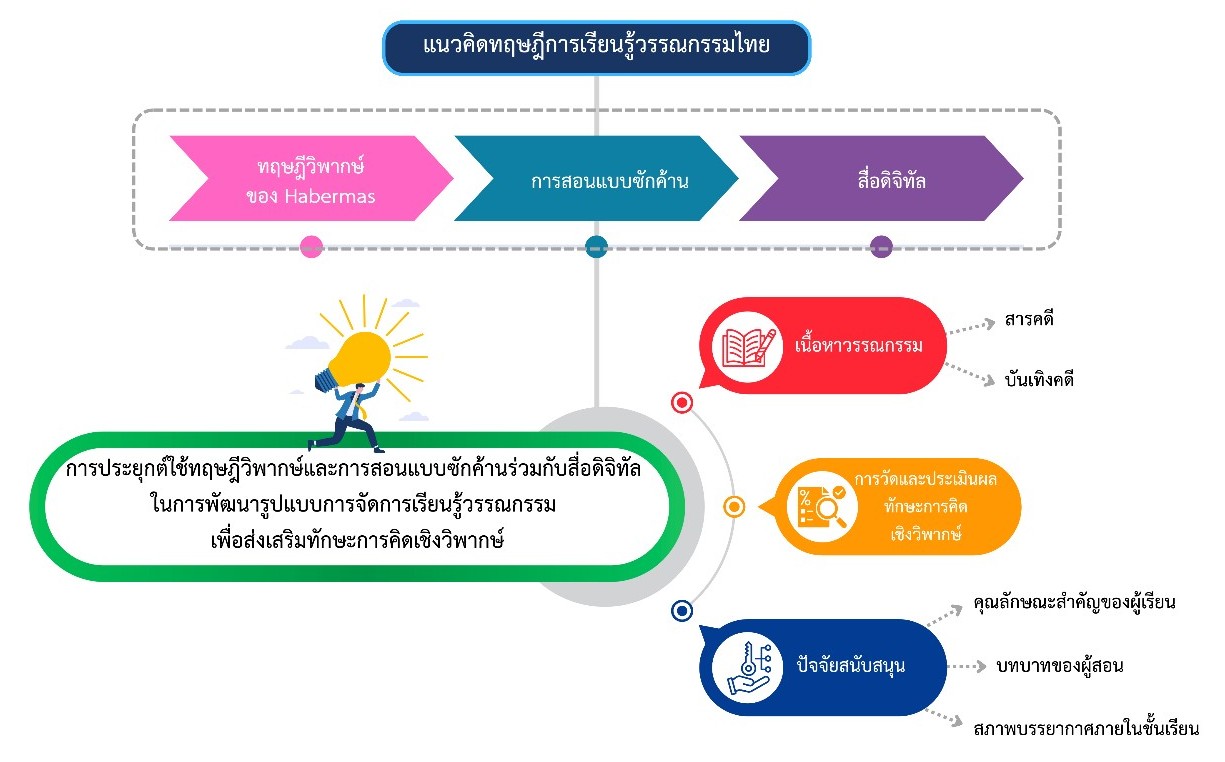
2. The instructional approach based on Habermas’s critical theory and the Jurisprudential Inquiry Model, combined with digital media, was found to be effective in fostering learners’ critical thinking skills. Critical theory and the Jurisprudential Inquiry, value reasoning, and discussion of controversial issues, while digital media support the learning activities. These three components can be integrated into a comprehensive learning management model, which includes the selection of literary content, assessment and evaluation strategies, supportive learning factors, to ensure effective and goal-oriented instruction in Thai literature.
Article Details

This work is licensed under a Creative Commons Attribution-NonCommercial-NoDerivatives 4.0 International License.
เพื่อให้เป็นไปตามกฎหมายลิขสิทธิ์ ผู้นิพนธ์ทุกท่านต้องลงลายมือชื่อในแบบฟอร์มใบมอบลิขสิทธิ์บทความ ให้แก่วารสารฯ พร้อมกับบทความต้นฉบับที่ได้แก้ไขครั้งสุดท้าย นอกจากนี้ ผู้นิพนธ์ทุกท่านต้องยืนยันว่าบทความ ต้นฉบับที่ส่งมาตีพิมพ์นั้น ได้ส่งมาตีพิมพ์เฉพาะในวารสาร วิชาการธรรม ทรรศน์ เพียงแห่งเดียวเท่านั้น หากมีการใช้ ภาพหรือตารางของผู้นิพนธ์อื่นที่ปรากฏในสิ่งตีพิมพ์อื่นมาแล้ว ผู้นิพนธ์ต้องขออนุญาตเจ้าของลิขสิทธิ์ก่อน พร้อมทั้ง แสดงหนังสือที่ได้รับการยินยอมต่อบรรณาธิการ ก่อนที่บทความจะได้รับการตีพิมพ์References
กฤชพร สินพรม และสถิรพร เชาวน์ชัย. (2565). แนวทางส่งเสริมการจัดการเรียนรู้ด้วยสื่อดิจิทัลของครูสังกัดสำนักงานเขตพื้นที่การศึกษาประถมศึกษาเพชรบูรณ์ เขต 3. วารสารศึกษาศาสตร์ มหาวิทยาลัยศิลปากร, 20(1), 159-175. https://so02.tci-thaijo.org/index.php/suedujournal/article/view/253017/173434
กิ่งกาญจน์ บูรณสินวัฒนกูล และพิณพนธ์ คงวิจิตต์. (2566). แนวทางการจัดการเรียนรู้วรรณคดีไทยในยุคดิจิทัล โดยใช้แนวคิด CONNECTIVISM. วารสารบัณฑิตศึกษา มหาวิทยาลัยราชภัฏวไลยอลงกรณ์ ในพระบรมราชูปถัมภ์, 17(1), 232-244. https://so02.tci-thaijo.org/index.php/JournalGradVRU/article/view/248848/175761
กิ่งกาญจน์ บูรณสินวัฒนกูล. (2560). จะสอนวรรณคดีอย่างไรให้ผู้เรียนเกิดมโนทัศน์. วารสาร มจร สังคมศาสตร์ปริทรรศน์, 6(4), 203-213. https://so03.tci-thaijo.org/index.php/jssr/article/view/245638/166174
กิตติพงษ์ แบสิ่ว และยงยุทธ อังคสัญลักษณ์. (2566). เทคนิคการสอนวรรณคดีไทยโดยประยุกต์ใช้แนวคิดการเรียนรู้เชิงรุก: แนวปฏิบัติสู่การพัฒนาการคิด. วารสารศึกษาศาสตร์ มหาวิทยาลัยศิลปากร, 21(1), 60-72. https://so02.tci-thaijo.org/index.php/suedujournal/article/view/260484/176578
ขวัญชนก นัยจรัญ. (2564). การพัฒนาชุดการเรียนรู้ตามรูปแบบการเรียนการสอนแบบตกผลึกเพื่อส่งเสริมความสามารถในการวิจารณ์วรรณกรรมของนักศึกษาระดับปริญญาตรี. วารสารครุศาสตร์ จุฬาลงกรณ์มหาวิทยาลัย, 49(3), 1-13. https://so02.tci-thaijo.org/index.php/EDUCU/article/view/251565/169439
ชลธิชา หอมฟุ้ง, สมพร ร่วมสุข, อธิกมาส มากจุ้ย, กฤษณะ ลำทะแย, ไพรินทร์ พึ่งพงษ์, รจนา คำนึงผล และวันวิสาห์ ปัญญาจิรวุฒิ. (2566). การศึกษาทัศนคติด้านการวิจัยของนักศึกษาระดับปริญญาบัณฑิตกับการสร้างสรรค์เกม. The New Viridian Journal of Arts, Humanities and Social Sciences, 3(1), 16-26. https://so01.tci-thaijo.org/index.php/The_New_Viridian/article/view/262475/173348
ดวงมน จิตร์จํานง. (2556). วรรณคดีวิจารณ์เบื้องต้น. กรุงเทพฯ: ประพันธ์สาส์น.
ธนัญภัสร์ ศรีเนธิยวศิน. (2564). การจัดการเรียนการสอนโดยใช้เกมเป็นฐานที่มีต่อผลสัมฤทธิ์ทางการเรียนของนักศึกษา. วารสาร มจร บาฬีศึกษาพุทธโฆสปริทรรศน์, 7(3), 40-55. https://so05.tcithaijo.org/index.php/Palisueksabuddhaghosa/article/view/253003/173233
ธัญญาลักษณ์ สังข์แก้ว. (2562). การพัฒนารูปแบบการสอนวรรณคดีด้วย ACDEA เพื่อเสริมสร้างทักษะการอ่านอย่างมีวิจารณญาณของนักศึกษาครูภาษาไทย. (วิทยานิพนธ์ปรัชญาดุษฎีบัณฑิต). นครปฐม: มหาวิทยาศิลปากร.
ธีรศักดิ์ จิระตราชู. (2561). ผลการจัดการเรียนการสอนวรรณคดีและวรรณกรรมโดยใช้วงจรการสะท้อนคิดของกิบส์ที่มีต่อการตระหนักรู้ในตนเองของนักเรียนมัธยมศึกษาตอนปลาย. (วิทยานิพนธ์ครุศาสตรมหาบัณฑิต). กรุงเทพฯ: จุฬาลงกรณ์มหาวิทยาลัย.
นงลักษณ์ ยุทธศิลปะเสวี. (2567). การพัฒนาสื่อดิจิทัลเพื่อส่งเสริมทักษะการรู้เท่าทันสื่อและสารสนเทศแก่นักศึกษามหาวิทยาลัยราชภัฏเพชรบูรณ์. Journal of Information Science Research and Practice, 42(1), 99-112. https://so03.tci-thaijo.org/index.php/jiskku/article/view/259591/182429
บุญชม ศรีสะอาด. (2560). การวิจัยเบื้องต้น. (พิมพ์ครั้งที่ 10). กรุงเทพฯ: สุวีริยาสาส์น.
บุษบา บัวสมบูรณ์. (2566). การพัฒนารูปแบบการเรียนการสอนวรรณคดีโดยประยุกต์วิธีเบลมเลส โพสต์มอร์เทิม เพื่อส่งเสริมทักษะการอ่านวิพากษ์และการแก้ปัญหาอย่างสร้างสรรค์ของนักศึกษาระดับปริญญาบัณฑิต. Journal of Modern Learning Development, 8(9), 273-288. https://so06.tci-thaijo.org/index.php/jomld/article/view/267181/179369
ปพิชญา พรหมกันธา. (2565). ผลการสอนโดยใช้เทคนิค STAD เพื่อพัฒนาผลสัมฤทธิ์การอ่านบทอาขยานในรายวิชาวรรณกรรมคัดสรรในหนังสือเรียนของนักศึกษาสาขาวิชาภาษาไทย ชั้นปีที่ 3 คณะครุศาสตร์ มหาวิทยาลัยราชภัฏชัยภูมิ. The New Viridian Journal of Arts, Humanities and Social Sciences, 2(3), 61-74. https://so01.tci-thaijo.org/index.php/The_New_Viridian/article/view/257888/171455
เมธี อนันต์. (2567). การสอนวรรณคดีและวรรณกรรมไทยด้วยแนวคิดทางคติชน: สมรรถนะวรรณคดีและวรรณกรรม. วารสารครุพิบูล คณะครุศาสตร์ มหาวิทยาลัยราชภัฏพิบูลสงคราม, 11(2), 142-158. https://so02.tci-thaijo.org/index.php/edupsru/article/view/272389/183561
ยืน ภู่วรวรรณ. (2558). นวัตกรรมการเรียนการสอนกับการศึกษาระบบ 4.0. วารสารเทคโนโลยีสุรนารี, 9(2), 133-156. https://so05.tci-thaijo.org/index.php/sjss/article/view/45125/37341
สุรีรัตน์ อักษรกาญจน์. (2562). การพัฒนารูปแบบการจัดการเรียนรู้แบบแวดวงวรรณกรรมร่วมกับการใช้คำถามระดับสูงเพื่อพัฒนาความสามารถด้านการคิดวิเคราะห์ของผู้เรียนในระดับอุดมศึกษา. วารสารราชพฤกษ์, 17(3), 52-62. https://so05.tci-thaijo.org/index.php/Ratchaphruekjournal/article/view/185122/154168
หัตถกาญจน์ อารีศิลป. (2567). ร้อยแก้วแนวต่างโลก! (Isekai) ชุบชีวิตวรรณคดีไทยด้วยรูปแบบร่วมสมัยโดนใจคนรุ่นใหม่. เข้าถึงได้จาก https://www.chula.ac.th/highlight/178602/
อดิศา เบญจรัตนานนท์. (2560). การจัดการเรียนการสอนภาษาอังกฤษพื้นฐานมหาวิทยาลัยสงขลานครินทร์ วิทยาเขตปัตตานี: เสียงสะท้อนจากผู้เรียนและผู้สอน. วารสารวิชาการคณะศึกษาศาสตร์ มหาวิทยาลัยศรีนครินทรวิโรฒ, 18(2), 293-315. https://ejournals.swu.ac.th/index.php/jedu/article/view/9900/8415
อรุโณทัย อินทนิด, ภคพล คำหน้อย และกาญจนา วิชญาปกรณ์. (2565). สถานภาพงานวิจัยด้านการเรียนการสอนวรรณคดีไทย ช่วงปี พ.ศ. 2555-2564. วารสารครุพิบูล คณะครุศาสตร์ มหาวิทยาลัยราชภัฏพิบูลสงคราม, 9(2), 337-354. https://so02.tci-thaijo.org/index.php/edupsru/article/view/259654/174702
Habermas, J. (1990). Model Consciousness and Communicative Action. Oxford: Polity Press.
Habermas, J. (2004). Public space and political public sphere: The biographical roots of two motifs in my thought (Commemorative Lecture, Kyoto).
Joyce, B., Weil, M., & Calhoun, E. (2009). Model of teaching. (8th.). London: Allyn and Bacon.
