An Evaluation of Instructional Management for Developing Social Engineering Skills through the Social Engineering Process among Thai Language Major Students, Faculty of Education, Lampang Rajabhat University
Article Sidebar
Main Article Content
Abstract
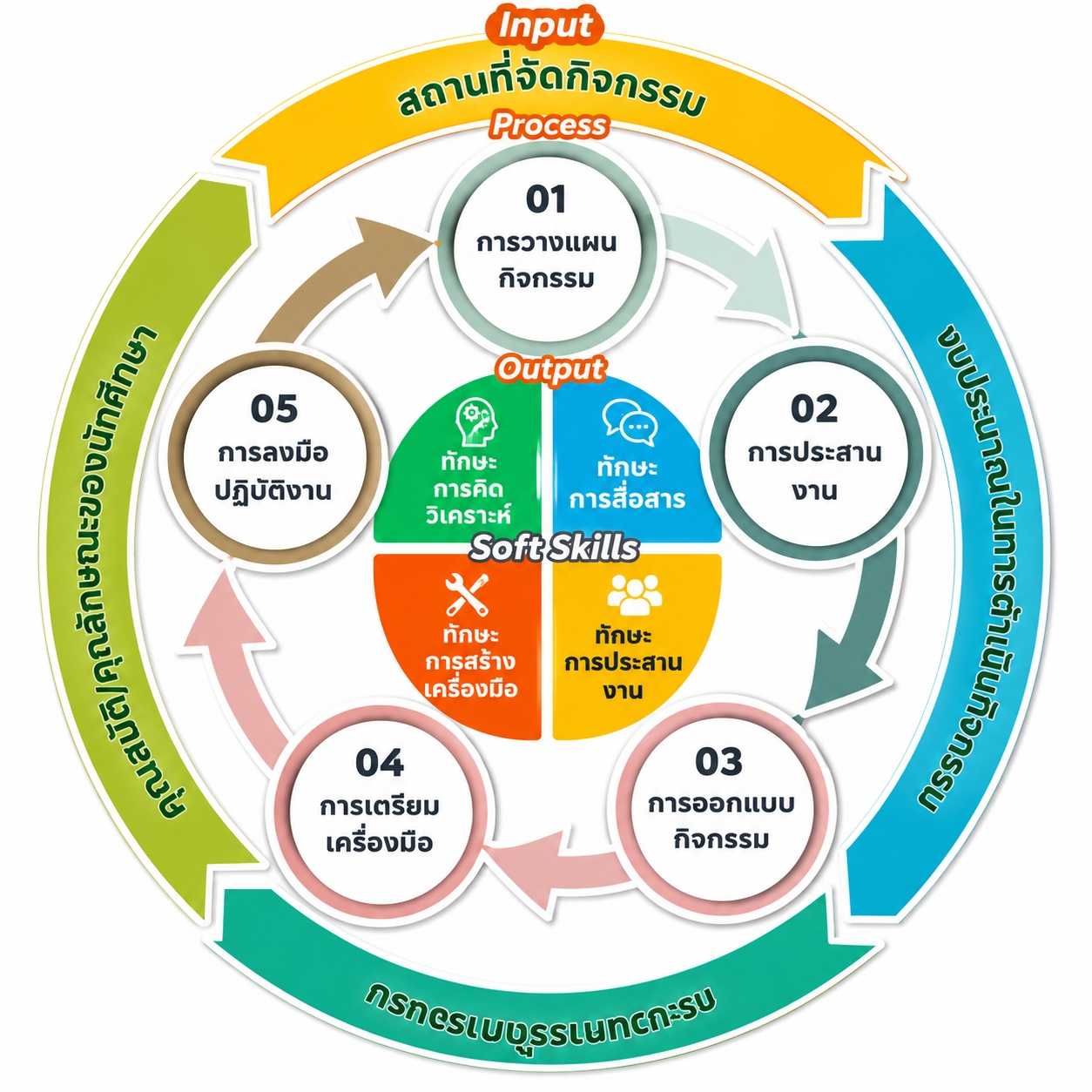
The objectives of this research were: 1) to study the factors related to learning management for developing social engineering skills through the Social Engineering Process among Thai Language Program students, Faculty of Education, Lampang Rajabhat University; and 2) to assess the social engineering skills of these students.The study employed a Mixed Methods Research design. The population consisted of 30 Thai Language Program students at the Faculty of Education, Lampang Rajabhat University, during the 2024 academic year, selected through purposive sampling. The research instruments included a questionnaire and an interview form. Quantitative data were analyzed using mean, standard deviation, t-test and content analysis.
The findings revealed that:
1. The study findings revealed that the factors related to the learning management for social engineer skill development, ranked from the highest to the lowest mean scores, were as follows: student characteristics, budget for activity implementation, training management process, and activity venue, with mean scores of 3.96, 3.89, 3.88, and 3.86, respectively.
2. The assessment of social engineering skills before and after the activities using the Paired-sample t-test showed that the critical t-value (df = 29, α = 0.05) was 2.045, while the calculated t-value was 16.91 This indicates that the learning management process significantly developed the students' social engineering skills at the 0.05 level of statistical significance.
Article Details

This work is licensed under a Creative Commons Attribution-NonCommercial-NoDerivatives 4.0 International License.
เพื่อให้เป็นไปตามกฎหมายลิขสิทธิ์ ผู้นิพนธ์ทุกท่านต้องลงลายมือชื่อในแบบฟอร์มใบมอบลิขสิทธิ์บทความ ให้แก่วารสารฯ พร้อมกับบทความต้นฉบับที่ได้แก้ไขครั้งสุดท้าย นอกจากนี้ ผู้นิพนธ์ทุกท่านต้องยืนยันว่าบทความ ต้นฉบับที่ส่งมาตีพิมพ์นั้น ได้ส่งมาตีพิมพ์เฉพาะในวารสาร วิชาการธรรม ทรรศน์ เพียงแห่งเดียวเท่านั้น หากมีการใช้ ภาพหรือตารางของผู้นิพนธ์อื่นที่ปรากฏในสิ่งตีพิมพ์อื่นมาแล้ว ผู้นิพนธ์ต้องขออนุญาตเจ้าของลิขสิทธิ์ก่อน พร้อมทั้ง แสดงหนังสือที่ได้รับการยินยอมต่อบรรณาธิการ ก่อนที่บทความจะได้รับการตีพิมพ์References
กฤษณะ คำดีตัน. (2567). แนวทางการพัฒนาทักษะวิศวกรสังคมของนักศึกษามหาวิทยาลัยราชภัฏกลุ่มภาคเหนือ. วารสาร มจร. อุบลปริทรรศน์, 9(3), 353-366.
จิตติรัตน์ แสงเลิศอุทัย, ปัญญา ทองนิล, นภาเดช บุญเชิดชู, ชัยยุธ มณีรัตน์, โยธิน ศรีโสภา และมุทิตา ทาคำแสน. (2563). การเรียนรู้จากการปฏิบัติ. วารสารวิชาการมหาวิทยาลัยราชภัฏเพชรบุรี, 10(3), 155-163.
ทัศนีย์ สุขทวี และกัญญ์รัชการย์ นิลวรรณ. (2559). การบริหารจัดการแหล่งเรียนรู้ตามหลักการบริหาร 4M โรงเรียนในสังกัดสำนักงานเขตพื้นที่การศึกษามัธยมศึกษา เขต 22 จังหวัดนครพนม. วารสารบริหารการศึกษา มหาวิทยาลัยศิลปากร, 6(2), 238-244.
นงรัตน์ อิสโร. (2564). พระบรมราโชบายด้านการศึกษากับภารกิจของกลุ่มมหาวิทยาลัยราชภัฏในการเป็นสถาบันอุดมศึกษาเพื่อพัฒนาท้องถิ่นในการเป็นสถาบันอุดมศึกษาเพื่อพัฒนาท้องถิ่น. วารสารทหารพัฒนา, 45(2), 53-63.
ปาริชาติ เปรมวิชัย. (2566). การพัฒนาทรัพยากรมนุษย์ในศตวรรษใหม่. วารสารสหวิทยาการนวัตกรรมปริทรรศน์, 6(4), 196-204.
พระปลัดบุญเจิด สุจิตฺโต (สุนทรสุข). (2561). รูปแบบการบริหารจัดการที่มีประสิทธิภาพของโรงเรียนพระปริยัติธรรมแผนกสามัญศึกษา. (ดุษฎีนิพนธ์พุทธศาสตรดุษฎีบัณฑิต). พระนครศรีอยุธยา: มหาวิทยาลัยมหาจุฬาลงกรณราชวิทยาลัย.
ภูสิทธ์ ภูคำชะโนด. (2567). แนวคิดของวิศวกรสังคม. กรุงเทพฯ: คณะมนุษยศาสตร์และสังคมศาสตร์ มหาวิทยาลัยราชภัฏสวนสุนันทา.
วรรณา ภู่วิจิตร. (2564). กรอบแนวคิดในการประเมินทักษะ Soft Skills ของนักศึกษาในศตวรรษที่ 21. วารสารวิชาการเทคโนโลยีและนวัตกรรมเพื่อการศึกษา, 9(2), 11-24.
ศิริพรรณ แก้วรักษา. (2565). ผลของการจัดกิจกรรมพัฒนาทักษะ Soft Skills โดยใช้ชุมชนเป็นฐานการเรียนรู้. วารสารวิจัยและพัฒนา มหาวิทยาลัยราชภัฏสุราษฎร์ธานี, 19(3), 22-35.
ศิริรัตน์ เช็งเส็ง สุทัศน์ กำมณี และกรัณย์พล วิวรรธมงคล. (2567). แนวทางการสร้างทักษะซอฟต์สกิลด้วยกระบวนการวิศวกรสังคม สำหรับนักศึกษามหาวิทยาลัยราชภัฏกาญจนบุรี. วารสาร มจร กาญจนปริทรรศน์, 4(2), 236-246. https://so05.tci-thaijo.org/index.php/Kanchana-editor/article/view/273722
อรุณี โสภา. (2566). การจัดการเรียนรู้ด้วยกระบวนการวิศวกรสังคมเพื่อพัฒนาทักษะอาชีพของนักศึกษาครู. วารสารครุศาสตร์อุตสาหกรรม, 25(1), 45-59.
Kolb, D. A. (1984). Experiential learning: Experience as the source of learning and development. Englewood Cliffs, NJ: Prentice-Hall.
