PROMOTION MOTIVATION, KNOWLEDGE, ATTITUDES, AND BEHAVIORAL INTENTIONS REGARDING BLOOD DONATION AMONG THE POPULATION IN BANGKOK METROPOLITAN
Article Sidebar
Main Article Content
Abstract
This research aims to: 1) study the promotion of motivation in terms of knowledge, attitude, and behavioral intention toward blood donation among people in the Bangkok metropolitan; 2) examine how the promotion of motivation related to knowledge, attitude, and blood donation influences people’s behavioral intention to donate blood; and 3) propose guidelines to promote motivation in knowledge, attitude, and behavioral intention for blood donation among people in the Bangkok metropolitan. This mixed-method study involved 400 people aged 20 and over, selected by simple random sampling, and 15 key informants chosen purposively. Data were collected using questionnaires and in-depth interviews and analyzed by frequency, percentage, mean, standard deviation, multiple regression, and content analysis.
The findings revealed that
1) Promotion of motivation in knowledge, attitude, and behavioral intention toward blood donation reveals that people who possess knowledge and understanding of the requirements for blood donation, along with a positive attitude of selfless helping, perceive these qualities as valuable and take pride in donating blood. Additionally, promoting accurate information to the public, providing convenient and accessible services, and building a strong donor network through the participation of various sectors are key factors supporting the behavioral intention to donate blood more consistently. These motivational factors reinforce the willingness and commitment of individuals to donate blood, contributing to a sustainable blood donation system.
2) Motivation promotion in knowledge and attitude significantly influences behavioral intention toward blood donation at a 0.01 significance level.
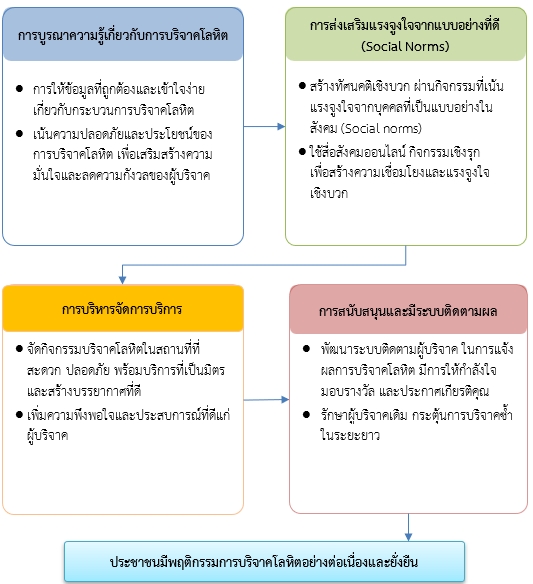
3) Four main promotion strategies are suggested: (1) developing accurate knowledge and standards in donation processes, (2) fostering positive attitudes through good role models, (3) organizing blood donation events at convenient and safe locations, and (4) creating support and follow-up systems.
Article Details

This work is licensed under a Creative Commons Attribution-NonCommercial-NoDerivatives 4.0 International License.
เพื่อให้เป็นไปตามกฎหมายลิขสิทธิ์ ผู้นิพนธ์ทุกท่านต้องลงลายมือชื่อในแบบฟอร์มใบมอบลิขสิทธิ์บทความ ให้แก่วารสารฯ พร้อมกับบทความต้นฉบับที่ได้แก้ไขครั้งสุดท้าย นอกจากนี้ ผู้นิพนธ์ทุกท่านต้องยืนยันว่าบทความ ต้นฉบับที่ส่งมาตีพิมพ์นั้น ได้ส่งมาตีพิมพ์เฉพาะในวารสาร วิชาการธรรม ทรรศน์ เพียงแห่งเดียวเท่านั้น หากมีการใช้ ภาพหรือตารางของผู้นิพนธ์อื่นที่ปรากฏในสิ่งตีพิมพ์อื่นมาแล้ว ผู้นิพนธ์ต้องขออนุญาตเจ้าของลิขสิทธิ์ก่อน พร้อมทั้ง แสดงหนังสือที่ได้รับการยินยอมต่อบรรณาธิการ ก่อนที่บทความจะได้รับการตีพิมพ์References
กรีพล สุตาวงษ์. (2564). การสร้างเครือข่ายผู้บริจาคโลหิตและการติดตามเพื่อให้มีโลหิตเพียงพอในพื้นที่ชายแดนที่ห่างไกล. วารสารวิชาการสาธารณสุข, 30(4), 724-733.
จำเนียร ศิลปะอาชา และปรีชา พันแน่. (2562). กลยุทธ์การรณรงค์บริจาคโลหิตแก่ศูนย์บริการโลหิตแห่งชาติ สภากาชาดไทย. วารสารวิชาการ คณะมนุษยศาสตร์และสังคมศาสตร์ มหาวิทยาลัยราชภัฏนครสวรรค์, 6(2), 130-138.
เจิมขวัญ อินทรคุ้ม วาณิตา สกุลบาราเฮาะ และนัฏฐินี ชัยมาดสิริกุล. (2566). แรงจูงใจในการบริจาคโลหิตของผู้บริจาคโลหิตในจังหวัดภูเก็ต. วารสารโลหิตวิทยาและเวชศาสตร์บริการโลหิต, 33(1), 11-20.
ดุจใจ ชัยวานิชศิริ. (2567). ศูนย์บริการโลหิตฯ ปลุกพลังผู้ให้ทั่วประเทศ บริจาคเลือดทุก 3 เดือน. https://www.hfocus.org/content/2024/01/29595
ประสบศรี อึ้งถาวร. (2563). PLUS 1 เพิ่มจำนวนครั้ง เพิ่มโลหิต เพิ่มชีวิต. https://redcross.or.th/news/information/9669
แผน วรรณเมธี. (2563). PLUS 1 เพิ่มจำนวนครั้ง เพิ่มโลหิต เพิ่มชีวิต. https://redcross.or.th/news/information/9669/
ภาวิณี คุปตวินทุ. (2565). การระบาดของโรคโควิด-19 กับงานบริการโลหิตของประเทศ. กรุงเทพฯ: ศูนย์บริการโลหิตแห่งชาติ สภากาชาดไทย. https://www.tsh.or.th/file_upload/files/02%20Editorial01-22.pdf
ภีราวิชญ์ ชัยมาลา และสิริโฉม พิเชษฐบุญเกียรติ. (2566). การส่งเสริมจิตสํานึกร่วมและจิตสาธารณะของนักศึกษาผ่านโครงการกิจกรรมเพื่อสังคมแบบมีส่วนร่วม. สหวิทยาการและความยั่งยืนปริทรรศน์ไทย, 12(2), 78-90.
วรางคณา โสฬสลิขิต และณัฐวุฒิ ขันทิตย์. (2562). ปัจจัยที่ส่งผลต่อการกลับมาบริจาคโลหิตซ้ำของผู้บริจาคโลหิตในจังหวัดแพร่. Journal of the Phrae Hospital, 27(2), 47-63.
ศุจิมน มังคลรังสี, ปภาดา ประภาตะนันทน์, ชัยรัศศ์ รัตนสายใย, ปวริศา จิวะวิทูรกิจ, พีรวัส โช, ภัค บุญยุบล, และธรรมธรณ์ จํารูญศรี. (2567). ความรู้ และทัศนคติที่มีความสัมพันธ์กับความเต็มใจในการบริจาคโลหิตของกลุ่มนักเรียนนักศึกษาอายุ 17-20 ปี ในเขตกรุงเทพมหานคร. วารสารวิชาการสาธารณสุขชุมชน, 10(3), 10-23.
ศูนย์บริการโลหิตแห่งชาติ สภากาชาดไทย. (2564). คู่มือการรับบริจาคโลหิต. สภากาชาดไทย. https://thaibloodcentre.redcross.or.th/wp-content/uploads/2024/11/คู่มือการรับบริจาคโลหิต-Blood-Donation-Manual-ปี-2564.pdf
สภากาชาดไทย. (2567). รายงานกิจการประจำปีสภากาชาดไทย. ศูนย์บริจาคโลหิต สภากาชาดไทย.
Chen, X., Wu, S. & Guo, X. (2020). Analyses of factors influencing Chinese repeated blood donation behavior: Delivered value theory perspective. Industrial Management & Data Systems, 120(3), 486-507. https://doi.org/10.1108/IMDS-09-2019-0509
Cronbach, L. J. (1970). Essentials of psychological test. (5th ed.). Harper Collins.
Garcia, J. (2019). Global Blood Supply Estimates Show a Significant Unmet Need. Medscape Medical News. https://www.medscape.com/viewarticle/919977?form=fpf
Gedebo, C., Terefe, D., Girma, E., Damtew, M., Woldegeorgis, T. & Tsegaye Shamebo. (2020). Assessment of Knowledge, Attitude and Practice of Voluntary Blood. Donation among Undergraduate Students in Awada Campus, Hawassa University, Southern Ethiopia. Journal of Blood Disorders & Transfusion, 11(431), 1-6.
Harrell, S., Simons, A. M. & Clasen, P. (2022). Promoting blood donation through social media: Evidence from Brazil, India and the USA. Social Science & Medicine, 315, 115485.
Lorena, R. C., Josefa, D. M., & Lucía, M. (2023). Prosocial customer in the public sector: A PLS-SEM analysis applied to blood donation (active donors). Socio-Economic Planning Sciences, 86, 1-19.
Monteiro, T. H., Ferreira, Í. R., Junior. A. C. F. P., Chocair, H. S., & Ferreira, J. D. (2024). Barriers and motivations for blood donation: an integrative review. Scielo Brasil. Hematology, Transfusion and Cell Therapy, 46(3), 283-288.
Rosmidah, Jaafar, J., Hazwani, Kamarudin, N., Hidayu, ZakariaN., and Wooi, Seong, K. (2020). Empowering Humanity Behavior Among University Students Through Blood Donation Activity. Malaysian Journal of Social Sciences and Humanities (MJSSH), 8(1), 1-12.
WHO Expert Group. (2021). Expert consensus statement on achieving self-sufficiency in safe blood and blood products, based on voluntary non-remunerated blood donation (VNRBD). Vox Sang, 103, 337-42.
Yamane, T. (1973). Statistics: an introductory analysis. Harper. & Row.
