Developing the 21st Century Leadership Model Based on Good Governance Principles for Administrators of Schools under the Primary Educational Service Area Office in Inspection Region 12
Article Sidebar
Main Article Content
Abstract
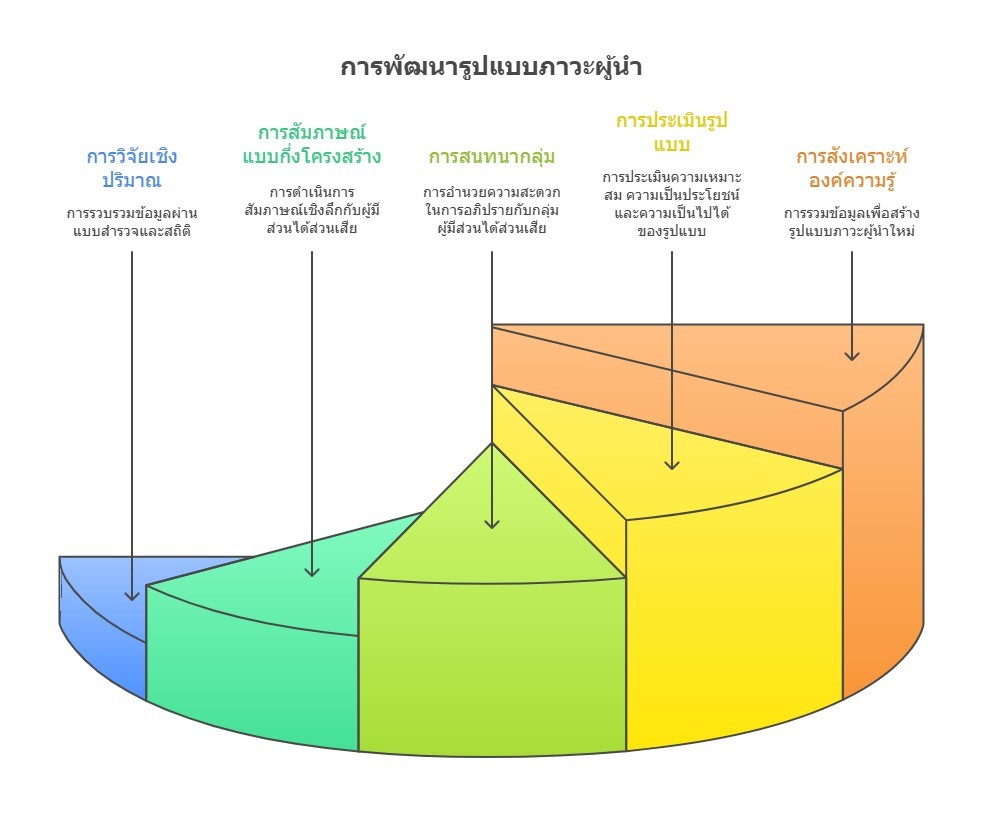
The purposes of this research were to: 1) examine the current conditions, desired conditions, and priority needs for a 21st-century, 2) develop a 21st-century leadership model for these school administrators, and 3) evaluate the effectiveness of the developed leadership model based on good governance principles. The study employed a mixed-methods approach, utilizing questionnaires, semi-structured interviews, model evaluation forms, and satisfaction assessment forms. The sample group consisted of 15 school administrators and 337 teachers, totaling 352 participants. Qualitative data were collected through semi-structured interviews and focus group discussions. Statistical analysis included frequency, percentage, mean, standard deviation, and need assessment index analysis.
The results revealed that:
1. The assessment of the current conditions, desired conditions, and priority needs assessment for the 21st-century leadership model based on good governance principles among school administrators under the Primary Educational Service Area Office in Inspection Region 12 revealed that the current state was at a high level, while the desired state was rated at the highest level. The most critical needs, ranked in order of importance, included (1) consensus building and motivation, (2) technology and communication, (3) collaboration and teamwork skills, (4) visionary leadership, (5) courage in problem-solving, and (6) creativity and innovation.
2. The development of the 21st-century leadership model consists of several key components: (1) the model’s name, (2) its objectives, (3) the principles and conceptual framework, and (4) the content, which includes principles and concepts, objectives, methods and activities, integration with good governance principles, and expected outcomes.
3. The evaluation of the 21st-century leadership model based on good governance principles for school administrators found that it was highly Propriety, feasibility, and Utility, with all aspects mean rated at the highest level.
Article Details

This work is licensed under a Creative Commons Attribution-NonCommercial-NoDerivatives 4.0 International License.
เพื่อให้เป็นไปตามกฎหมายลิขสิทธิ์ ผู้นิพนธ์ทุกท่านต้องลงลายมือชื่อในแบบฟอร์มใบมอบลิขสิทธิ์บทความ ให้แก่วารสารฯ พร้อมกับบทความต้นฉบับที่ได้แก้ไขครั้งสุดท้าย นอกจากนี้ ผู้นิพนธ์ทุกท่านต้องยืนยันว่าบทความ ต้นฉบับที่ส่งมาตีพิมพ์นั้น ได้ส่งมาตีพิมพ์เฉพาะในวารสาร วิชาการธรรม ทรรศน์ เพียงแห่งเดียวเท่านั้น หากมีการใช้ ภาพหรือตารางของผู้นิพนธ์อื่นที่ปรากฏในสิ่งตีพิมพ์อื่นมาแล้ว ผู้นิพนธ์ต้องขออนุญาตเจ้าของลิขสิทธิ์ก่อน พร้อมทั้ง แสดงหนังสือที่ได้รับการยินยอมต่อบรรณาธิการ ก่อนที่บทความจะได้รับการตีพิมพ์References
กระทรวงศึกษาธิการ. (2562). พระราชบัญญัติการศึกษาแห่งชาติ พ.ศ. 2542 และที่แก้ไขเพิ่มเติม (ฉบับที่ 4) พ.ศ. 2562. กรุงเทพฯ: กระทรวงศึกษาธิการ
จินตนา งามเจริญมงคล. (2561). การประยุกต์ใช้วิธีวิทยาคิวในการพัฒนารูปแบบภาวะผู้นำยุค 4.0 สำหรับผู้บริหารสถานศึกษา. (วิทยานิพนธ์ครุศาสตรมหาบัณฑิต). กรุงเทพฯ: มหาวิทยาลัยราชภัฏสวนสุนันทา.
เลอศักดิ์ ตามา. (2564). ภาวะผู้นำยุคดิจิทัลของผู้บริหารสถานศึกษาที่ส่งผลต่อการดำเนินงานระบบประกันคุณภาพการศึกษาของสถานศึกษา สังกัดสำนักงานเขตพื้นที่การศึกษามัธยมศึกษา เขต 22. วารสารรัชต์ภาคย์, 15(38), 224-240.
สำนักงานเลขาธิการสภาการศึกษา. (2563). นโยบายและทิศทางการพัฒนาการศึกษาไทย. กรุงเทพฯ: สำนักงานเลขาธิการสภาการศึกษา.
สำนักงานคณะกรรมการข้าราชการครูและบุคลากรทางการศึกษา. (2561). จรรยาบรรณวิชาชีพทางการศึกษา. กรุงเทพฯ: สำนักงานคณะกรรมการข้าราชการครูและบุคลากรทางการศึกษา.
สำนักงานคณะกรรมการพัฒนาระบบราชการ. (2560). หลักธรรมาภิบาลในการบริหารภาครัฐ. กรุงเทพฯ: สำนักงานคณะกรรมการพัฒนาระบบราชการ.
Fullan, M. (2014). The principal: Three keys to maximizing impact. San Francisco, CA: Jossey-Bass.
Krejcie, R. V., & Morgan, D. W. (1970). Determining sample size for research activities. Educational and Psychological Measurement, 30(3), 607-610. https://doi.org/10.1177/001316447003000308
Northouse, P. G. (2019). Leadership: Theory and practice. (8th ed.). Thousand Oaks, CA: Sage Publications.
OECD. (2015). Public governance and integrity. Paris: OECD Publishing.
