Roles And Responsibilities of Local Administrators in Community Development: A Case Study of Phayu Subdistrict Administrative Organization, Phayu District, Si Sa Ket Province
Article Sidebar
Main Article Content
Abstract
This study aimed to examine the roles of local administrators in community development within the Phayuh Subdistrict Administrative Organization, Phayuh District, Sisaket Province. The specific objectives were: (1) to investigate the responsibilities of local administrators in addressing community issues and promoting sustainable development, and (2) to analyze the challenges and constraints faced during the implementation of community development initiatives. A qualitative research methodology was employed. Data were collected through in-depth interviews, focus group discussions, and the review of relevant documents. The key informants consisted of administrators, staff members, and community representatives, totaling 30 participants selected through purposive sampling. The data were analyzed using content analysis.
The findings revealed the following:
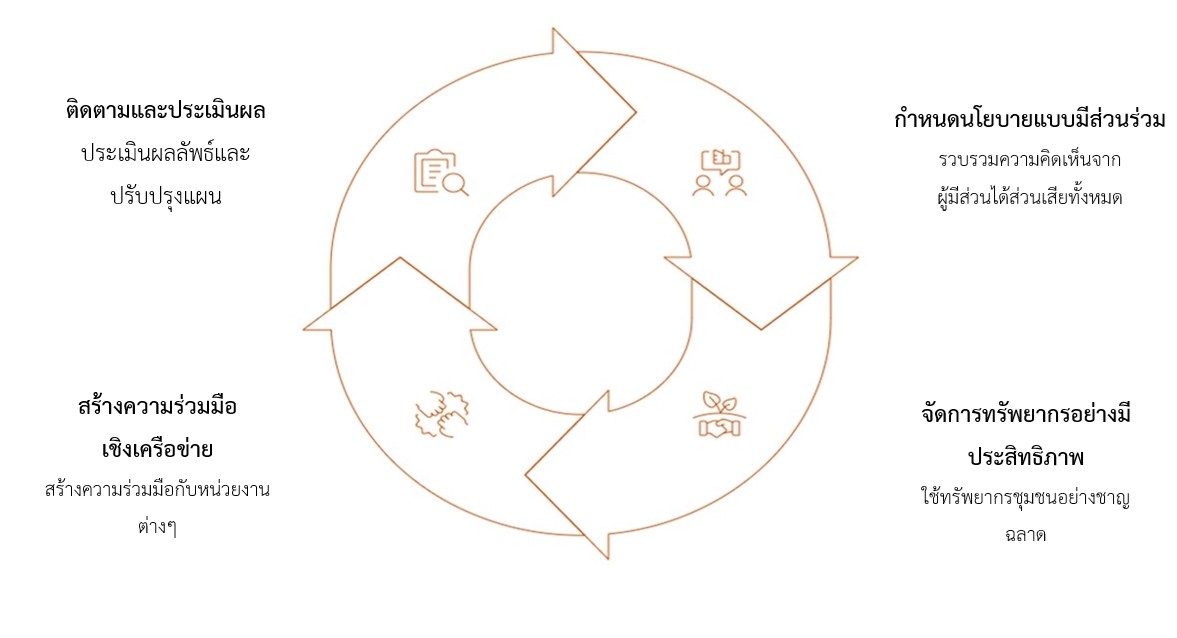
1. General Findings Local administrators play a central role in determining development policies, encouraging community participation, coordinating among various local groups, and managing resources closely to ensure they align with actual community needs. These actions contribute to more responsive and sustainable development outcomes. The community’s involvement in decision-making processes increased noticeably, administrative performance showed improved continuity, and public trust in local governance strengthened as development became more tangible and inclusive.
2. Specific Findings (1) Local administrators are required to adopt a proactive approach. This includes assessing problems in a systematic manner, planning for long-term development, fostering collaboration with multiple stakeholders, and ensuring transparent monitoring and evaluation processes that consistently address community expectations, and (2) However, several challenges persist. These include limited financial resources, complex bureaucratic procedures, insufficient levels of citizen participation, and fluctuating levels of public confidence. Therefore, strengthening communication mechanisms, enhancing transparency, building network partnerships, and expanding resource support systems are necessary strategies to sustain community development efforts effectively.
Article Details

This work is licensed under a Creative Commons Attribution-NonCommercial-NoDerivatives 4.0 International License.
เพื่อให้เป็นไปตามกฎหมายลิขสิทธิ์ ผู้นิพนธ์ทุกท่านต้องลงลายมือชื่อในแบบฟอร์มใบมอบลิขสิทธิ์บทความ ให้แก่วารสารฯ พร้อมกับบทความต้นฉบับที่ได้แก้ไขครั้งสุดท้าย นอกจากนี้ ผู้นิพนธ์ทุกท่านต้องยืนยันว่าบทความ ต้นฉบับที่ส่งมาตีพิมพ์นั้น ได้ส่งมาตีพิมพ์เฉพาะในวารสาร วิชาการธรรม ทรรศน์ เพียงแห่งเดียวเท่านั้น หากมีการใช้ ภาพหรือตารางของผู้นิพนธ์อื่นที่ปรากฏในสิ่งตีพิมพ์อื่นมาแล้ว ผู้นิพนธ์ต้องขออนุญาตเจ้าของลิขสิทธิ์ก่อน พร้อมทั้ง แสดงหนังสือที่ได้รับการยินยอมต่อบรรณาธิการ ก่อนที่บทความจะได้รับการตีพิมพ์References
จักรี ศรีจารุเมธีญาณ และพระถนัด วฑฺฒโน. (2560). ภาวะผู้นำกับการพัฒนาชุมชน. วารสารสันติศึกษาปริทรรศน์ มจร, 6(พิเศษ), 528-540. https://so03.tci-thaijo.org/index.php/journal-peace/article/download/116460/94913/327002
เทวกร แก้วเพ็ญศรี และผิน ปานขาว. (2564). บทบาทการพัฒนาท้องถิ่นขององค์การบริหารส่วนตำบลหนองขาม อำเภอแก้งคร้อ จังหวัดชัยภูมิ. วารสารวิทยาลัยนครราชสีมา สาขามนุษยศาสตร์และสังคมศาสตร์, 15(1), 144-158. https://so03.tci-thaijo.org/index.php/hsjournalnmc/article/view/247361
ธีระชัย เทพนอก. (2565). ภาวะผู้นำและการมีส่วนร่วมของประชาชนที่ส่งผลต่อการพัฒนาท้องถิ่นในจังหวัดนครราชสีมา. วารสารมหาจุฬานาครทรรศน์, 9(8), 309-326. https://so03.tci-thaijo.org/index.php/JMND/article/download/263417/175076/995800
พระศตวรรษ ชินวโร (อุดมศรี). (2561). บทบาทการพัฒนาชุมชนของคณะกรรมการชุมชนเทศบาลเมืองวิเชียรบุรี จังหวัดเพชรบูรณ์. วารสารวิจยวิชาการ, 1(1), 51-67. https://so06.tci-thaijo.org/index.php/jra/article/download/178036/126654/
พิชญ์ณิฐา พรรณศิลป์, สัญญา เคณาภูมิ และเสาวลักษณ์ โกศลกิตติอัมพร. (2558). บทบาทของผู้บริหารท้องถิ่นในศตวรรษที่ 21. วารสารสันติศึกษาปริทรรศน์ มจร, 3(2), 146-161. https://so03.tci-thaijo.org/index.php/journal-peace/article/download/76578/61528/
รัฐบุรุษ คุ้มทรัพย์, พินัย วิถีสวัสดิ์, จิรวรรณ เทพประสิทธิ์, พิเชษฐ์ ภู่เฉลิมตระกูล, อุกฤษณ์ ชาวแพรกน้อย และกุลประภัสสร์ รําพึงจิตต์. (2563). บทบาทขององค์การปกครองส่วนท้องถิ่นในการสนับสนุนกลุ่มอาชีพและวิสาหกิจชุมชนในเขตพื้นที่ตำบลพระยาบันลือและคลองพระยาบันลือ อำเภอลาดบัวหลวง จังหวัดพระนครศรีอยุธยา. วารสารวิจัยทางวิชาการ มหาวิทยาลัยกรุงเทพธนบุรี, 9(2), 85-98.
สมพงษ์ เกษานุช, ธนู ทดแทนคุณ, เบญจรงค์ พื้นสะอาด, สัญญา เคณาภูมิ, ชื่นนภา หนันแดง และเกษฎา ผาทอง. (2562). บทบาทผู้นำกับกระบวนทัศน์ในการพัฒนาชุมชน. วารสารศิลปศาสตร์ราชมงคลสุวรรณภูมิ, 1(3), 293-306. https://so03.tci-thaijo.org/index.php/art/article/download/243243/164742
อรทัย ก๊กผล. (2552). คู่คิด คู่มือการมีส่วนร่วมของประชาชนสำหรับนักบริหารท้องถิ่น. กรุงเทพฯ: สำนักงานกองทุนสนับสนุนการสร้างเสริมสุขภาพ (สสส.).
Berelson, B. (1952). Content analysis in communication research. Glencoe, IL: Free Press.
Gargan, J. J. (Ed.). (2019). Handbook of local government administration. New York, NY: Routledge.
Green, G. P., & Haines, A. (2015). Asset building & community development. (4th ed.). Thousand Oaks, CA: SAGE Publications.
Kenny, S., & Connors, P. (2016). Developing communities for the future. (5th ed.). South Melbourne, VIC: Cengage Learning Australia.
Mouritzen, P. E., & Svara, J. H. (2002). Leadership at the Apex: Politicians and Administrators in Western Local Governments. Pittsburgh, PA: Pittsburgh University Press.
Silverman, D. (2005). Doing qualitative research: A practical handbook. (2nd ed.). London: SAGE Publications.
