An Analysis of the Concept of saṃsāra in Theravāda Buddhist Philosophy
Article Sidebar
Main Article Content
Abstract
This dissertation has the following objectives: To study the concept of saṃsāra in Eastern philosophy; To examine the concept of saṃsāra in Theravāda Buddhist philosophy; To analyze the concept of saṃsāra in Theravāda Buddhist philosophy. This is a Documentary research study conducted through documentary research, utilizing data from the Tipiṭaka, academic literature, and related research. The analysis was performed using descriptive methods based on inductive reasoning.
The research results were as follows :
- The concept of saṃsāra in Eastern philosophies—such as Sikhism, Hinduism, and Jainism—is regarded as a state of suffering arising from karma, avidyā (ignorance), and māyā (illusion), which obscure the ultimate truth or paramārtha-satya. The lack of realization of the true nature of the ātman and the world causes the mind to remain trapped in the endless cycle of rebirth. Liberation, therefore, requires inner realization to free oneself from the bondage of saṃsāra and attain moksha.
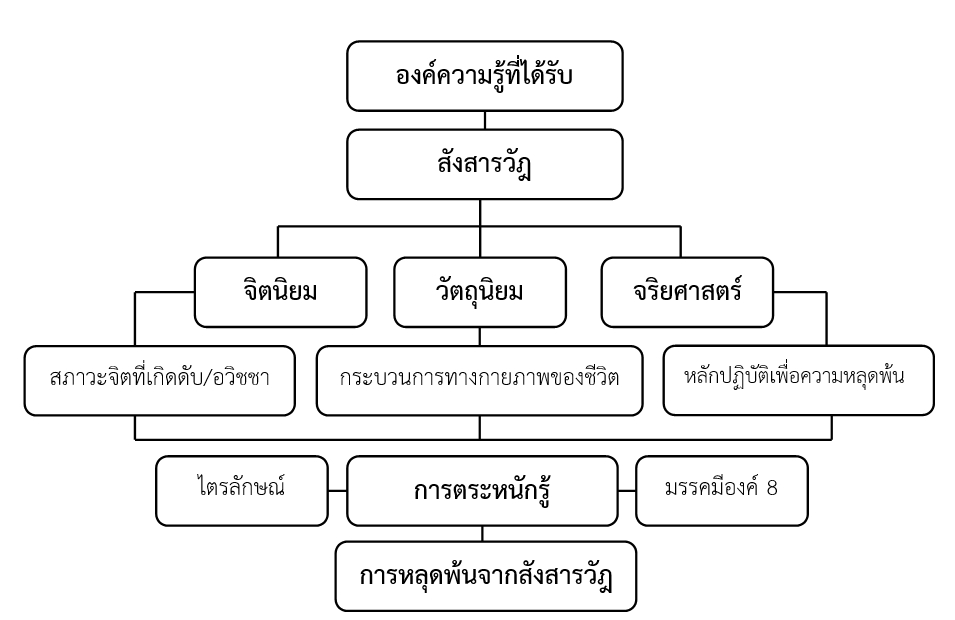
- In Theravāda Buddhist philosophy, saṃsāra refers to the cycle of birth, death, and rebirth of all sentient beings. This is a continuous process driven by ignorance (avijjā), craving (taṇhā), and karma, which are key conditions for existence across different realms. Liberation from saṃsāra necessitates the eradication of defilements—especially ignorance—through the cultivation of vipassanā (insight meditation) to gain profound realization of the three characteristics (tilakkhaṇa), ultimately leading to nibbāna, the cessation of suffering and the end of the cycle of rebirth.
- The analysis of the concept of saṃsāra in Theravāda Buddhist philosophy can be approached from various dimensions, each offering a unique perspective on its nature. The psychological dimension views the stream of consciousness and mental formations as the driving force behind saṃsāra. The materialist perspective interprets saṃsāra through physical causation and environmental conditions. The ethical dimension explores the relationship between karma, morality, and the consequences of actions within the context of saṃsāra. These approaches can be integrated to foster a deeper understanding of the ultimate goal of Buddhist philosophy—liberation from suffering and the cessation of saṃsāra.
Article Details

This work is licensed under a Creative Commons Attribution-NonCommercial-NoDerivatives 4.0 International License.
เพื่อให้เป็นไปตามกฎหมายลิขสิทธิ์ ผู้นิพนธ์ทุกท่านต้องลงลายมือชื่อในแบบฟอร์มใบมอบลิขสิทธิ์บทความ ให้แก่วารสารฯ พร้อมกับบทความต้นฉบับที่ได้แก้ไขครั้งสุดท้าย นอกจากนี้ ผู้นิพนธ์ทุกท่านต้องยืนยันว่าบทความ ต้นฉบับที่ส่งมาตีพิมพ์นั้น ได้ส่งมาตีพิมพ์เฉพาะในวารสาร วิชาการธรรม ทรรศน์ เพียงแห่งเดียวเท่านั้น หากมีการใช้ ภาพหรือตารางของผู้นิพนธ์อื่นที่ปรากฏในสิ่งตีพิมพ์อื่นมาแล้ว ผู้นิพนธ์ต้องขออนุญาตเจ้าของลิขสิทธิ์ก่อน พร้อมทั้ง แสดงหนังสือที่ได้รับการยินยอมต่อบรรณาธิการ ก่อนที่บทความจะได้รับการตีพิมพ์References
ธีรยุทธ บุญมี. (2550). พุทธศาสนากับโลกสมัยใหม่. (พิมพ์ครั้งที่ 2). กรุงเทพฯ: ฟ้าเดียวกัน.
ประมวล เพ็งจันทร์. (2556). พุทธปรัชญาเถรวาท: แนวคิดว่าด้วยการพ้นทุกข์. (พิมพ์ครั้งที่ 2). กรุงเทพฯ: จุฬาลงกรณ์มหาวิทยาลัย.
พระธรรมปิฎก (ป.อ.ปยุตฺโต). (2547). คู่มือพุทธธรรม ฉบับประมวลธรรมเพื่อการศึกษาและปฏิบัติ. (พิมพ์ครั้งที่ 5). กรุงเทพฯ: มหามกุฏราชวิทยาลัย.
พระพรหมคุณาภรณ์ (ป.อ.ปยุตโต). (2560). พจนานุกรมพุทธศาสตร์ ฉบับประมวลศัพท์.(พิมพ์ครั้งที่ 11). กรุงเทพฯ: มหาจุฬาลงกรณราชวิทยาลัย.
_______. (2560). พุทธธรรม ฉบับปรับขยาย. (พิมพ์ครั้งที่ 19). กรุงเทพฯ: มูลนิธิพุทธธรรม.
พระมหาคมคาย สิริปญฺโญ (สิงห์ทอง), พระสุชาติ เชื้อรุ่ง และพระมหาไพฑูรย์ นิวาส. (2565). ความตายในมุมมอง 4 ศาสนา. วารสารปรัชญาปริทรรศน์, 27(2), 284-302. https://so05.tci-thaijo.org/index.php/phiv/article/view/258936
พระวิจิตตะ, พระศรีสัจญาณมุนี และพูนศักดิ์ กมล. (2567). ศึกษาแนวทางปฏิบัติเพื่อข้ามพ้นสังสารวัฏตามหลักพระพุทธศาสนา. วารสารชัยภูมิปริทรรศน์, 7(3), 90-104. https://so02.tci-thaijo.org/index.php/jcr/article/view/272629
พระเอกพจน์ อุตฺตรภทฺโท (ทิพย์คำมี). (2564). การวิเคราะห์สังสารวัฏตามหลักพุทธปรัชญาเถรวาท. (วิทยานิพนธ์พุทธศาสตรมหาบัณฑิต). พระนครศรีอยุธยา: มหาวิทยาลัยมหาจุฬาลงกรณราชวิทยาลัย.
พุทธทาสภิกขุ. (2546). อริยมรรคมีองค์แปดคือทางสายกลาง. (พิมพ์ครั้งที่ 5). กรุงเทพฯ: ธรรมสภา.
_______. (2548). ปฏิจจสมุปบาทคือหัวใจของพระพุทธศาสนา. (พิมพ์ครั้งที่ 9). กรุงเทพฯ: ธรรมสภา.
สมเด็จพระพุทธโฆษาจารย์ (ประยุทธ์ ปยุตฺโต). (2555). ธรรมะกับสังสารวัฏ. (พิมพ์ครั้งที่ 3). กรุงเทพฯ: มูลนิธิพุทธธรรม.
