A Development Model for Educational Supervision Skills Based on the Four Bhāvanā Principles for Pariyatti Supervisors in the Northeastern Monastic Administration Region
Article Sidebar
Main Article Content
Abstract
The purposes of this research were: 1) examine the current state, desirable state, and necessary improvements in educational supervision skills, 2) develop a model for enhancing supervision skills based on the Four Bhāvanā Principles, and 3) evaluate the effectiveness of the developed supervision skills model. This study employed a mixed-methods research approach, combining qualitative and quantitative research methods. The sample consisted of 190 Pariyatti supervisors from the Northeastern Monastic Administration Region. The research instruments included questionnaires, with a reliability coefficient of 0.793 for the current state assessment and 0.814 for the desirable state assessment. Data were analyzed using percentage, mean, standard deviation, and the Priority Needs Index (PNI).
The results revealed that:
1. The current state and desirable state of educational supervision skills based on the Four Bhāvanā Principles among Pariyatti supervisors in the Northeastern Monastic Administration Region were found to be at a high level overall. The average Priority Needs Index (PNI) was 0.24, ranking the necessary skill improvements in the following order: (1) personnel management skills, (2) interpersonal skills, (3) technical and supervisory skills, and (4) evaluation skills.
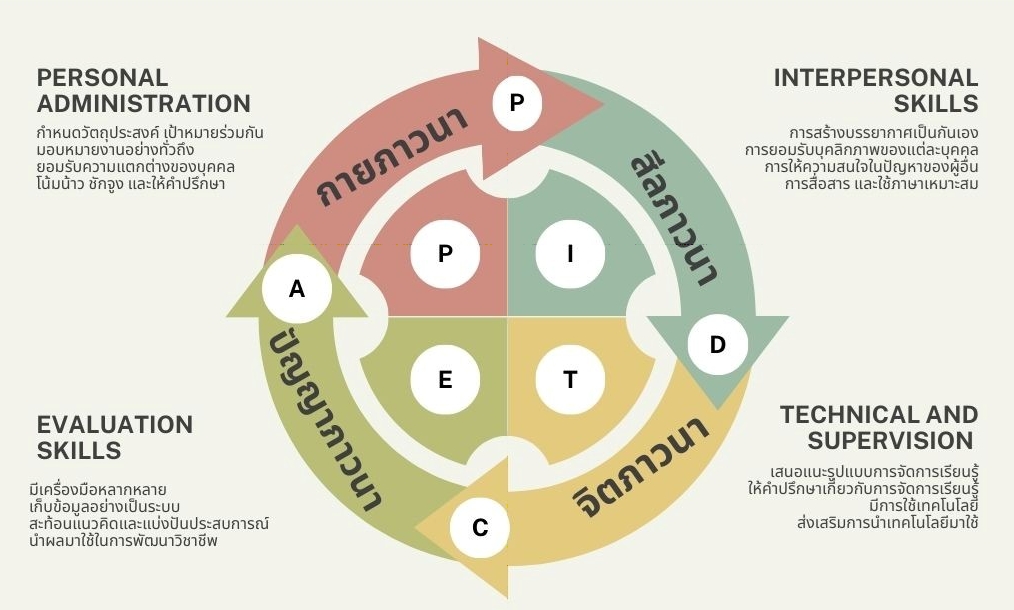
2. The Development Model for Educational Supervision Skills based on the Four Bhāvanā Principles consists of (1) model name, (2) model objectives, (3) principles and conceptual framework, (4) content structure integrating the Four Bhāvanā Principles, and (5) expected outcomes.
3. The evaluation of the developed model in terms of appropriateness, feasibility, and benefits showed that all aspects were rated at a high level overall.
Article Details

This work is licensed under a Creative Commons Attribution-NonCommercial-NoDerivatives 4.0 International License.
เพื่อให้เป็นไปตามกฎหมายลิขสิทธิ์ ผู้นิพนธ์ทุกท่านต้องลงลายมือชื่อในแบบฟอร์มใบมอบลิขสิทธิ์บทความ ให้แก่วารสารฯ พร้อมกับบทความต้นฉบับที่ได้แก้ไขครั้งสุดท้าย นอกจากนี้ ผู้นิพนธ์ทุกท่านต้องยืนยันว่าบทความ ต้นฉบับที่ส่งมาตีพิมพ์นั้น ได้ส่งมาตีพิมพ์เฉพาะในวารสาร วิชาการธรรม ทรรศน์ เพียงแห่งเดียวเท่านั้น หากมีการใช้ ภาพหรือตารางของผู้นิพนธ์อื่นที่ปรากฏในสิ่งตีพิมพ์อื่นมาแล้ว ผู้นิพนธ์ต้องขออนุญาตเจ้าของลิขสิทธิ์ก่อน พร้อมทั้ง แสดงหนังสือที่ได้รับการยินยอมต่อบรรณาธิการ ก่อนที่บทความจะได้รับการตีพิมพ์References
ขชล ไชยเทพ, ศิกานต์ เพียรธัญญกรณ์ และฤทัยทรัพย์ ดอกคำ. (2567). ทักษะการนิเทศของผู้บริหารที่ส่งผลต่อการปฏิบัติงานของครูในโรงเรียน สังกัดสำนักงานเขตพื้นที่การศึกษาประถมศึกษาบึงกาฬ. วารสารการบริหารการศึกษาและภาวะผู้นำ, 12(46), 122-132.
จิตติมา สุนทรรส, พระโสภณพัฒนบัณฑิต, พระครูสุธีคัมภีรญาณ และพระมหาสำรอง สญฺญโต. (2564). รูปแบบการใช้หลักภาวนา 4 เพื่อการจัดการเรียนรู้ในโรงเรียนคุณธรรมของผู้บริหารสถานศึกษา สังกัดสำนักงานเขตพื้นที่การศึกษาประถมศึกษามหาสารคาม เขต 1. Journal of Roi Kaensarn Academi, 6(10), 1-14.
ถวิล อรัญเวศ. (2567). การนิเทศการศึกษา: พุทธวิธีในการนิเทศ. เข้าถึงได้จาก https://www.gotoknow.org/posts/698612
ธนพร ศรีษเกตุ, สาธร ทรัพย์รวงทอง และทีปพิพัฒน์ สันตะวัน. (2568). รูปแบบการนิเทศยุคดิจิทัลของโรงเรียนขนาดเล็ก สำนักงานคณะกรรมการการศึกษาขั้นพื้นฐาน. วารสารศึกษาศาสตร์ มหาวิทยาลัยราชภัฏนครสวรรค์, 8(1), 128-140.
พระราชบัญญัติการศึกษาพระปริยัติธรรม พ.ศ. 2562. (2562). ราชกิจจานุเบกษา, 136(50 ก), 13.
ภาวินี คงฤทธิ์. (2564). ทำความรู้จักโรงเรียนพระปริยัติธรรม แผนกสามัญโอกาสทางการศึกษาใต้ร่มกาสาวพัสตร์. เข้าถึงได้จาก https://www.the101.world/phra-pariyatti-dhamma-general-education-schools/
ภาษิต สุขวรรณดี. (2559). การพัฒนามนุษย์ตามแนวภาวนา 4. วารสารสิรินทรปริทรรศน์, 17(1), 18-33.
วรพล ศรีเทพ และพงพัฒน์ รักด้วง. (2567). การนิเทศชั้นเรียนแนวใหม่: ปลดปล่อยศักยภาพการเรียนรู้เชิงรุก. วารสารวิชาการนอร์ทเทิร์น, 11(2), 1-20. https://so09.tci-thaijo.org/index.php/AJntc/article/view/4764
สุวิมล ติรกานนท์. (2557). ระเบียบวิธีการวิจัยทางสังคมศาสตร์: แนวทางสู่การปฏิบัติ. (พิมพ์ครั้งที่ 12). กรุงเทพฯ: จุฬาลงกรณ์มหาวิทยาลัย.
อรอุมา ด้วงช้าง. (2566). รูปแบบการพัฒนาทักษะการนิเทศการศึกษาของผู้บริหารสถานศึกษา สังกัดสำนักงานเขตพื้นที่การศึกษามัธยมศึกษามหาสารคาม. Journal of Roi Kaensarn Academi, 8(4), 322-342.
