The Lifelong Learning Model Based on the Buddha’s Teaching Methods as Presented in the Dhammapada Commentary
Article Sidebar
Main Article Content
Abstract
This research aimed to: 1) study the concept of lifelong learning; 2) examine the model of lifelong learning based on the Buddhist teaching methods appearing in the Dhammapada Commentary (Dhammapadatthakatha); and 3) analyze and synthesize the lifelong learning model based on the Buddhist teaching approach. This study employed a qualitative research methodology. The data were collected from the Dhammapada Commentary (translated volumes 1–8) published by Mahamakut Buddhist University, relevant academic documents and research studies, and in-depth interviews with 20 experts in lifelong learning. The data were analyzed using descriptive analysis and inductive analysis.
The research findings revealed that:
1. Lifelong learning is a continuous process of developing human wisdom throughout the entire lifespan. It involves non-formal education, informal learning, and experiential learning through self-practice.
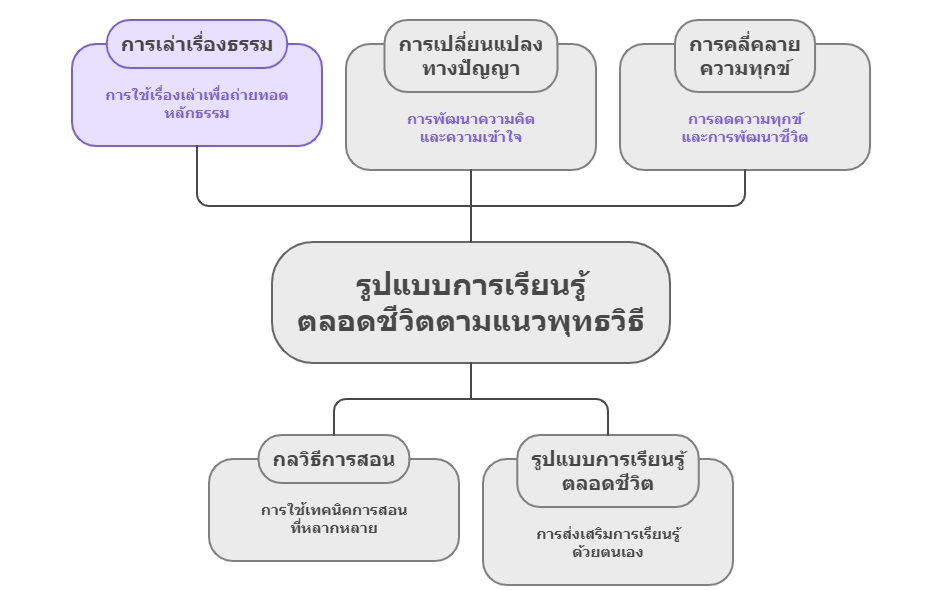
2. The Buddhist teaching methods found in the Dhammapada Commentary can be synthesized into seven models of lifelong learning: (1) teaching with consideration of individual differences; (2) adapting teaching methods to suit learners; (3) considering learners’ readiness; (4) encouraging learners to practice by themselves; (5) promoting learner participation; (6) providing individual attention to learners; and (7) assisting learners with special problems.
3. From the perspective of educational philosophy, the study found that the Buddha’s learning approach aims to develop learners’ wisdom through self-realization by adjusting teaching methods in accordance with each individual’s character, disposition, and level of spiritual maturity. This approach reflects principles of learning that promote continuous human development and forms a fundamental basis for lifelong learning.
Article Details

This work is licensed under a Creative Commons Attribution-NonCommercial-NoDerivatives 4.0 International License.
เพื่อให้เป็นไปตามกฎหมายลิขสิทธิ์ ผู้นิพนธ์ทุกท่านต้องลงลายมือชื่อในแบบฟอร์มใบมอบลิขสิทธิ์บทความ ให้แก่วารสารฯ พร้อมกับบทความต้นฉบับที่ได้แก้ไขครั้งสุดท้าย นอกจากนี้ ผู้นิพนธ์ทุกท่านต้องยืนยันว่าบทความ ต้นฉบับที่ส่งมาตีพิมพ์นั้น ได้ส่งมาตีพิมพ์เฉพาะในวารสาร วิชาการธรรม ทรรศน์ เพียงแห่งเดียวเท่านั้น หากมีการใช้ ภาพหรือตารางของผู้นิพนธ์อื่นที่ปรากฏในสิ่งตีพิมพ์อื่นมาแล้ว ผู้นิพนธ์ต้องขออนุญาตเจ้าของลิขสิทธิ์ก่อน พร้อมทั้ง แสดงหนังสือที่ได้รับการยินยอมต่อบรรณาธิการ ก่อนที่บทความจะได้รับการตีพิมพ์References
โกวิท วรพิพัฒน์. (2523). การจัดการศึกษาตลอดชีวิตเพื่อส่งเสริมความเป็นประชาธิปไตย. (รายงานการวิจัย). กรุงเทพฯ: จุฬาลงกรณ์มหาวิทยาลัย.
บุศรา นิยมเวช. (2563). ทฤษฎีการเรียนรู้ด้านการศึกษาและการศึกษาตลอดชีวิต. กรุงเทพฯ: มหาวิทยาลัยรามคำแหง.
ปิยะ ศักดิ์เจริญ. (2558). ทฤษฎีการเรียนรู้ผู้ใหญ่และแนวคิดการเรียนรู้ด้วยการชี้นำตนเอง: กระบวนการเรียนรู้เพื่อการส่งเสริมการเรียนรู้ตลอดชีวิต. วารสารพยาบาลทหารบก, 16(1), 8-13.
ปิยากร หวังมหาพร. (2551). นวัตกรรมการเรียนรู้ตลอดชีวิตของสหภาพยุโรป. กรุงเทพฯ: จุฬาลงกรณ์มหาวิทยาลัย.
พงษ์พันธ์ พงษ์โสภา. (2543). ทฤษฎีและเทคนิคการให้คำปรึกษา. (พิมพ์ครั้งที่ 2). กรุงเทพฯ: พัฒนาศึกษา.
พนม ลิ้มอารีย์. (2533). การแนะแนวเบื้องต้น. กรุงเทพฯ: โอเดียนสโตร์.
พระมหาสมเดช ศรีลางัด. (2544). การศึกษาเปรียบเทียบแนวความคิดทางการปกครองของพระพุทธศาสนาและของอริสโตเติล. (วิทยานิพนธ์อักษรศาสตรมหาบัณฑิต). กรุงเทพฯ: มหาวิทยาลัยมหิดล.
พระวิวัฒน์ อตฺตเปโม (เอี่ยมเปรมจิต). (2553). การศึกษาวิเคราะห์หลักกรรม และการให้ผลของกรรมในคัมภีร์อรรถกถาธรรมบท. (วิทยานิพนธ์พุทธศาสตรมหาบัณฑิต). พระนครศรีอยุธยา: มหาวิทยาลัยมหาจุฬาลงกรณราชวิทยาลัย.
ราชบัณฑิตยสถาน. (2538). พระธรรมบทจตุรภาค ฉบับราชบัณฑิตยสถาน. (พิมพ์ครั้งที่ 3). กรุงเทพฯ: อรุณการพิมพ์.
สุมณฑา พรหมบุญ และอรพรรณ พรสีมา. (2540). การเรียนรู้แบบมีส่วนร่วม. Journal of Education Studies, 26(1), 23-34.
สุมาลี สังข์ศรี. (2544). การศึกษาตลอดชีวิตเพื่อสังคมไทยในศตวรรษที่ 21. (รายงานการวิจัย). กรุงเทพฯ: สำนักงานคณะกรรมการการศึกษาแห่งชาติ สำนักนายกรัฐมนตรี.
แสง จันทร์งาม. (2540). วิธีสอนของพระพุทธเจ้า. กรุงเทพฯ: มหามกุฏราชวิทยาลัย.
อุทิศ ศิริวรรณ. (2530). ธรรมบทภาคที่ 1 แปลโดยพยัญชนะ. (พิมพ์ครั้งที่ 3). กรุงเทพฯ: เลี่ยงเชียง.
