A Cultural Model of Bun Bang Fai According to E-San Belief
Article Sidebar
Main Article Content
Abstract
This study aims to: 1) examine the cultural characteristics of the Bun Bang Fai festival as practiced in Isan society, 2) investigate the beliefs associated with the Bun Bang Fai tradition among the Isan people, and 3) analyze the cultural patterns of the Bun Bang Fai festival in accordance with Isan beliefs within the context of Ban Meng community. This research adopts a qualitative approach by reviewing data from the Tripitaka, Buddhist scriptures, academic documents, and related studies. Field data were collected through in-depth interviews with twenty key informants, including monks, local sages, teachers, community leaders, and representatives of local administrative organizations. The data were analyzed using inductive content analysis.
The study reveals the following findings:
1. The general cultural characteristics of the Bun Bang Fai festival indicate that it is an important tradition of the Isan people, annually organized in the sixth lunar month to invoke rainfall for agricultural activities. The festival reflects the relationship between humans, nature, and supernatural beliefs through ritual practices and various cultural activities. Such practices function as a social mechanism that strengthens community solidarity and facilitates the transmission of local wisdom.
2. Beliefs associated with the Bun Bang Fai tradition are rooted in Isan folk literature, particularly the legends of Phaya Khan Khak and Pha Daeng–Nang Ai. These narratives represent the belief in appealing for rain from Phaya Thaen, the celestial deity. The launching of rockets symbolically represents communication between humans and heavenly beings. Such beliefs reflect a synthesis between indigenous cosmology and Buddhist traditions, which continue to influence the worldview and way of life of the Isan people.
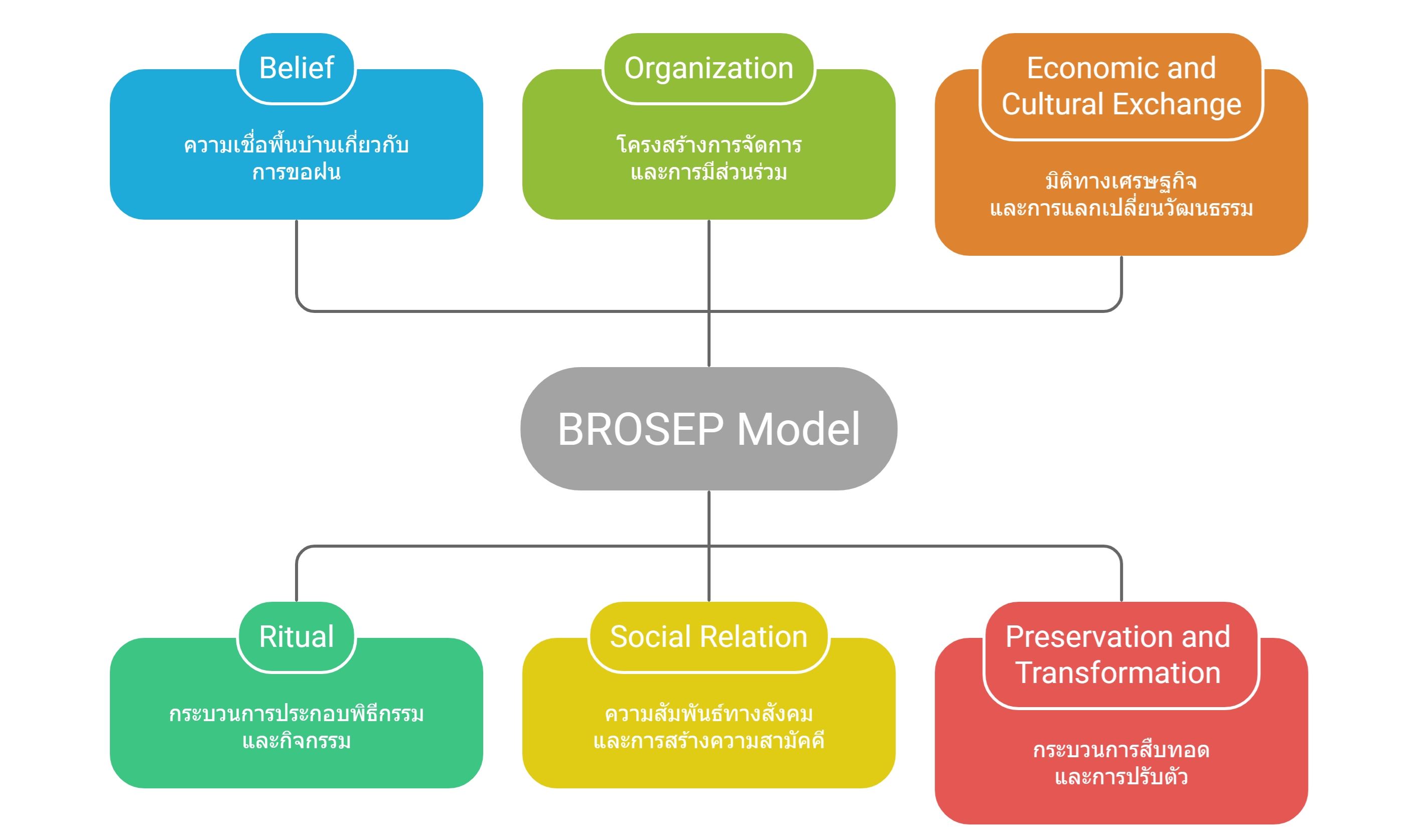
3. The cultural patterns of the Bun Bang Fai festival in Ban Meng community demonstrate a significant transformation. While the tradition originally emphasized sacred rituals, it has gradually expanded into cultural activities characterized by entertainment, competition, and local tourism promotion. At the same time, the festival serves as a cultural space for fostering social relationships, preserving community identity, and reflecting the dynamic transformation of Isan culture in contemporary society.
Article Details

This work is licensed under a Creative Commons Attribution-NonCommercial-NoDerivatives 4.0 International License.
เพื่อให้เป็นไปตามกฎหมายลิขสิทธิ์ ผู้นิพนธ์ทุกท่านต้องลงลายมือชื่อในแบบฟอร์มใบมอบลิขสิทธิ์บทความ ให้แก่วารสารฯ พร้อมกับบทความต้นฉบับที่ได้แก้ไขครั้งสุดท้าย นอกจากนี้ ผู้นิพนธ์ทุกท่านต้องยืนยันว่าบทความ ต้นฉบับที่ส่งมาตีพิมพ์นั้น ได้ส่งมาตีพิมพ์เฉพาะในวารสาร วิชาการธรรม ทรรศน์ เพียงแห่งเดียวเท่านั้น หากมีการใช้ ภาพหรือตารางของผู้นิพนธ์อื่นที่ปรากฏในสิ่งตีพิมพ์อื่นมาแล้ว ผู้นิพนธ์ต้องขออนุญาตเจ้าของลิขสิทธิ์ก่อน พร้อมทั้ง แสดงหนังสือที่ได้รับการยินยอมต่อบรรณาธิการ ก่อนที่บทความจะได้รับการตีพิมพ์References
จารุวรรณ ธรรมวัตร. (ม.ป.ป.). พงศาวดารแห่งประเทศลาว. มหาสารคาม: สถาบันวิจัยศิลปะและวัฒนธรรมอีสาน มหาวิทยาลัยศรีนครินทรวิโรฒ มหาสารคาม.
ทศนวรรณ โพธิ์ศรีเรือง. (2553). การจัดการความรู้เรื่องประเพณีบุญบั้งไฟ ของอำเภอโนนสังจังหวัดหนองบัวลำภู. (ปริญญาโทโครงการพิเศษ). ขอนแก่น: วิทยาลัยการปกครองท้องถิ่น มหาวิทยาลัยขอนแก่น.
ธิดา สาระยา. (2535). ตำนานและตำนานประวัติศาสตร์กับการศึกษาประวัติศาสตร์ท้องถิ่น. กรุงเทพฯ: พิทักษ์อักษร.
เบญจมาส เกตุแก้ว. (2521). ประเพณีบุญบั้งไฟ. กรุงเทพฯ: กรมศิลปากร.
พระครูวิจิตรวนสาร (บุญสวย สุจิตฺโต, แก้วหานาม). (2556). การศึกษาหลักพุทธธรรมที่ปรากฏในพิธีกรรม การทำบุญบั้งไฟของชาวบ้านหนองเขื่อนช้าง ตำบลท่าสองคอน อำเภอเมือง จังหวัดมหาสารคาม. (วิทยานิพนธ์พุทธศาสตรมหาบัณฑิต). พระนครศรีอยุธยา: มหาวิทยาลัยมหาจุฬาลงกรณราชวิทยาลัย.
ยูร กมลเสรีรัตน์. (2546). บุญบั้งไฟยโสธร ประเพณีขอฝนที่ยิ่งใหญ่ที่สุดในภาคอีสาน. กรุงเทพฯ: ที เจ เจ จำกัด.
สุคนธา สายเชื้อ. (2524). ประเพณีบุญบั้งไฟของชาวอำเภออาจสามารถ. มหาสารคาม: มหาวิทยาลัยศรีนครินทรวิโรฒ.
สุริยา สมุทคุปติ์. (2533). สัญลักษณ์สำคัญในบุญบั้งไฟ: การวิเคราะห์และตีความหมายทางมานุษยวิทยา. ขอนแก่น: ภาควิชาสังคมวิทยาและมานุษยวิทยา มหาวิทยาลัยขอนแก่น.
แสงอรุณ กนกพงศ์ชัย. (2548). วัฒนธรรมในสังคมไทย. กรุงเทพฯ: จุฬาลงกรณ์มหาวิทยาลัย.
Viravong, M. S. (1964). History of Laos. New York: Paragon Book Reprint Corp.
