Civilized Society: The Process of Social Transformation According to the Kūtadanta Sutta
Article Sidebar
Main Article Content
Abstract
This research aimed to: (1) examine the process of social strengthening; (2) study the principles found in the Kūṭadanta Sutta; (3) integrate the process of social strengthening in accordance with the Kūṭadanta Sutta; and (4) propose a model of a civilized social way of life based on the Kūṭadanta Sutta. This study employed a qualitative research approach, utilizing documentary research from the Tipiṭaka, commentaries, academic texts, and related research, together with in-depth interviews with key informants. The collected data were then analyzed through content analysis and synthesized using a descriptive method.
The findings revealed that:
1. The process of social strengthening refers to the process associated with human coexistence within social structures and institutions, characterized by relationships and mutual interdependence. Its essential components include attitudes, morality, culture, and social norms. Effective social strengthening requires the development of both ways of thinking and practical actions in a consistent manner in order to promote peaceful and sustainable coexistence.
2. The Kūṭadanta Sutta is an important discourse in the Tipiṭaka concerning social development and governance. It emphasizes addressing problems at their root causes, promoting the occupations and economic well-being of the people, supporting the effective performance of public officials, and encouraging a way of life grounded in moral principles.
3. The integration of the social strengthening process in accordance with the Kūṭadanta Sutta indicates that the creation of a civilized social way of life should focus on developing individuals with both moral discipline and wisdom alongside national development. It places importance on solving problems at their root causes, fostering social harmony, and improving the quality of life of the people in order to achieve social stability and sustainability.
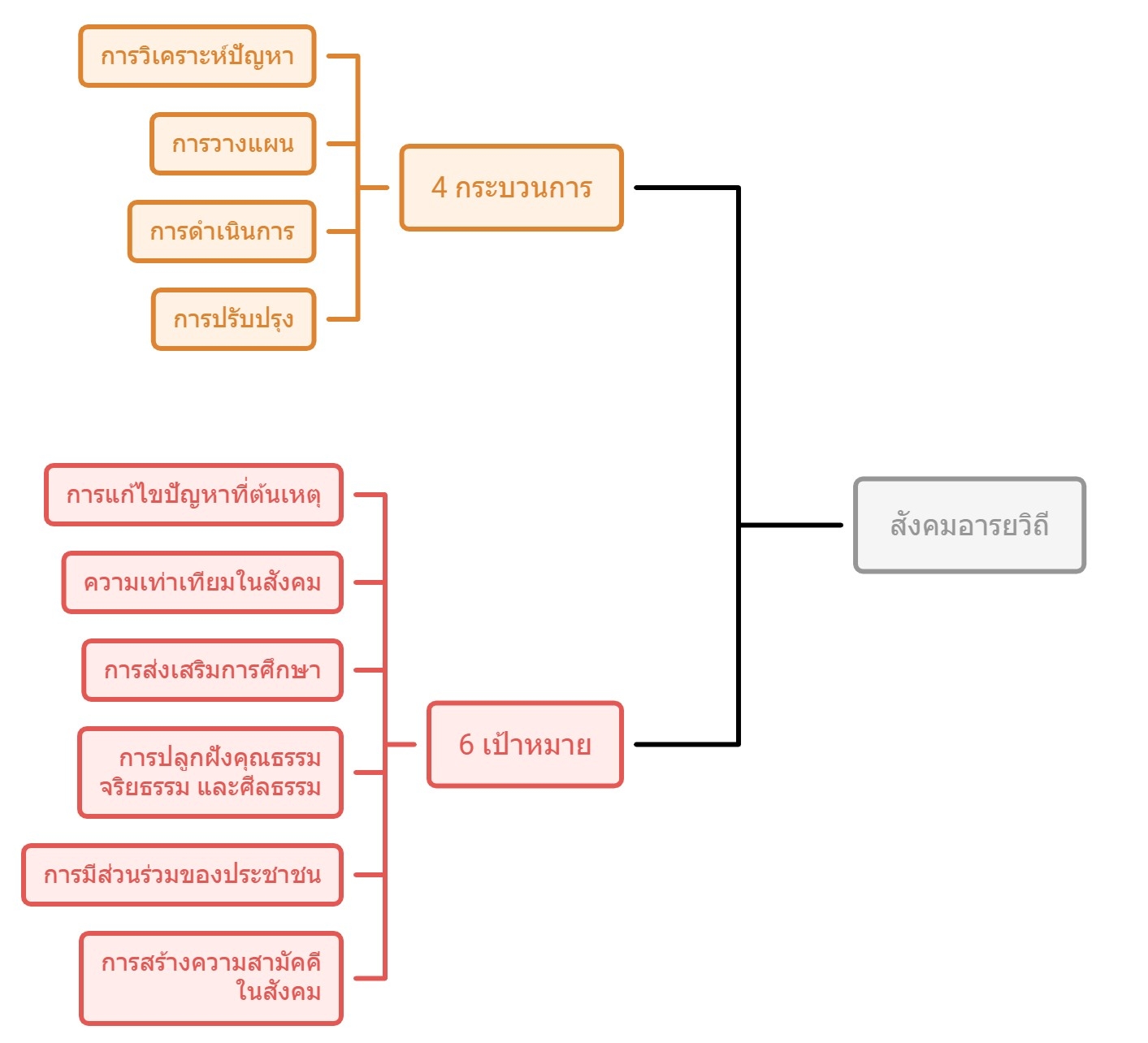
4. The proposed model of a civilized social way of life based on the Kūṭadanta Sutta can be synthesized into a new body of knowledge described as the “4 Creation Processes and 6 Goals”. The four processes consist of problem analysis, planning, implementation, and improvement. The six goals include addressing problems at their root causes, equality, the promotion of education, the cultivation of morality, public participation, and social harmony. This model can be applied to the development of communities, organizations, and society in order to promote stability and sustainability.
Article Details

This work is licensed under a Creative Commons Attribution-NonCommercial-NoDerivatives 4.0 International License.
เพื่อให้เป็นไปตามกฎหมายลิขสิทธิ์ ผู้นิพนธ์ทุกท่านต้องลงลายมือชื่อในแบบฟอร์มใบมอบลิขสิทธิ์บทความ ให้แก่วารสารฯ พร้อมกับบทความต้นฉบับที่ได้แก้ไขครั้งสุดท้าย นอกจากนี้ ผู้นิพนธ์ทุกท่านต้องยืนยันว่าบทความ ต้นฉบับที่ส่งมาตีพิมพ์นั้น ได้ส่งมาตีพิมพ์เฉพาะในวารสาร วิชาการธรรม ทรรศน์ เพียงแห่งเดียวเท่านั้น หากมีการใช้ ภาพหรือตารางของผู้นิพนธ์อื่นที่ปรากฏในสิ่งตีพิมพ์อื่นมาแล้ว ผู้นิพนธ์ต้องขออนุญาตเจ้าของลิขสิทธิ์ก่อน พร้อมทั้ง แสดงหนังสือที่ได้รับการยินยอมต่อบรรณาธิการ ก่อนที่บทความจะได้รับการตีพิมพ์References
โกวิทย์ พวงงาม. (2558). การจัดการตนเองของชุมชนและท้องถิ่น. กรุงเทพฯ: บพิธการพิมพ์.
ชัยอนันต์ สมุทวณิช. (2556). รัฐ การเมือง และสังคมไทย. กรุงเทพฯ: จุฬาลงกรณ์มหาวิทยาลัย.
ประเวศ วะสี. (2557). สังคมสมานุภาพและวิถีสังคมไทย. กรุงเทพฯ: หมอชาวบ้าน.
พระครูเกษมธรรมสุนทร และพระครูสุธีคัมภีรญาณ. (2562). การพัฒนาเศรษฐกิจชุมชนตามแนวกูฏทันตสูตร. วารสารบัณฑิตศึกษามหาจุฬาขอนแก่น, 6(4), 418-420.
พระธรรมปิฎก (ป.อ. ปยุตฺโต). (2546). ธรรมาธิปไตย: หลักการบริหารและการพัฒนาสังคม. กรุงเทพฯ: ธรรมสภา.
พระพรหมคุณาภรณ์ (ป.อ. ปยุตฺโต). (2559). พุทธธรรม (ฉบับปรับขยาย). กรุงเทพฯ: มหาวิทยาลัยมหาจุฬาลงกรณราชวิทยาลัย.
พระภูมิพัฒน์ โสภณสีโล, พรหมเรศ แก้วโมลา และพระมหาสิทธิชัย ชยสิทฺธิ. (2567). วิเคราะห์รูปแบบการแก้ปัญหาเศรษฐกิจ-สังคม: กรณีศึกษากูฏทันตสูตร. วารสาร มจร โกศัยปริทรรศน์, 2(2), 10-23.
มหาจุฬาลงกรณ์ราชวิทยาลัย. (2539). พระไตรปิฎกภาษาไทย ฉบับมหาจุฬาลงกรณราชวิทยาลัย. กรุงเทพฯ: มหาจุฬาลงกรณราชวิทยาลัย.
ศันสนีย์ ชุมพลบัญชร. (2559). กูฏทันตสูตรกับการจัดการเศรษฐศาสตร์มหภาค. วารสารธรรมธารา, 2(2), 109-165.
สำนักงานสภาพัฒนาการเศรษฐกิจและสังคมแห่งชาติ. (2565). แผนพัฒนาเศรษฐกิจและสังคมแห่งชาติ ฉบับที่ 13 (พ.ศ. 2566-2570). กรุงเทพฯ: สำนักงานสภาพัฒนาการเศรษฐกิจและสังคมแห่งชาติ.
สุพัตรา สุภาพ. (2558). สังคมและวัฒนธรรมไทย. กรุงเทพฯ: ไทยวัฒนาพานิช.
