Development of Self-Study E-learning Courseware on Educational Philosophy for Graduate Students in Faculty of Education
Article Sidebar
Main Article Content
Abstract
The research findings are as follows:
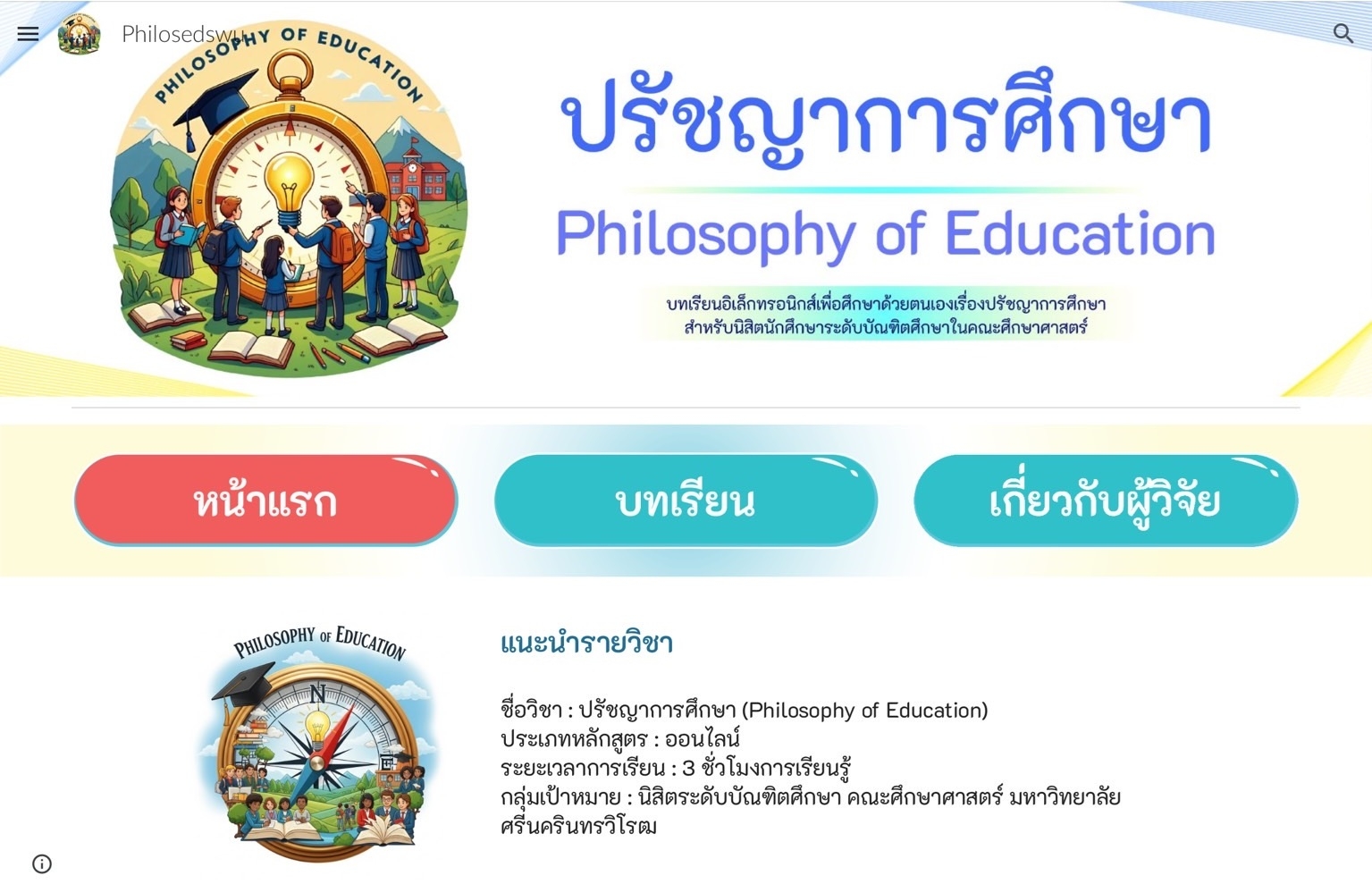
1. Overall, the Self-Study E-learning Courseware on Educational Philosophy for graduate students in the Faculty of Education was found to be easy to use, uncomplicated, and user-friendly. However, certain aspects of the website need improvement, including: (1) checking the font styles to ensure they are compatible with all devices, (2) adding instructions recommending a horizontal display, (3) reducing the size of images within the e-learning Courseware, (4) changing the top menu bar buttons from English to Thai, and (5) adding buttons, numbers, examples, and internal links within the website.
2. The sample group's post-test scores (Mean = 23.82, S.D. = 1.49) were higher than their pre-test scores (Mean = 11.20, S.D. = 3.66). The t-test confirmed statistically significant differences at the .05 level, demonstrating the effectiveness of the Self-Study E-learning Courseware enhanced the graduate students' knowledge of Educational Philosophy
Article Details

This work is licensed under a Creative Commons Attribution-NonCommercial-NoDerivatives 4.0 International License.
เพื่อให้เป็นไปตามกฎหมายลิขสิทธิ์ ผู้นิพนธ์ทุกท่านต้องลงลายมือชื่อในแบบฟอร์มใบมอบลิขสิทธิ์บทความ ให้แก่วารสารฯ พร้อมกับบทความต้นฉบับที่ได้แก้ไขครั้งสุดท้าย นอกจากนี้ ผู้นิพนธ์ทุกท่านต้องยืนยันว่าบทความ ต้นฉบับที่ส่งมาตีพิมพ์นั้น ได้ส่งมาตีพิมพ์เฉพาะในวารสาร วิชาการธรรม ทรรศน์ เพียงแห่งเดียวเท่านั้น หากมีการใช้ ภาพหรือตารางของผู้นิพนธ์อื่นที่ปรากฏในสิ่งตีพิมพ์อื่นมาแล้ว ผู้นิพนธ์ต้องขออนุญาตเจ้าของลิขสิทธิ์ก่อน พร้อมทั้ง แสดงหนังสือที่ได้รับการยินยอมต่อบรรณาธิการ ก่อนที่บทความจะได้รับการตีพิมพ์References
ขวัญชัย ขัวนา และธารทิพย์ ขัวนา. (2563). การพัฒนาบทเรียนออนไลน์ (E-Learning) รายวิชาการจัดการเรียนรู้สำหรับนักศึกษาหลักสูตรครุศาสตรบัณฑิต ชั้นปีที่ 3 คณะครุศาสตร์ มหาวิทยาลัยราชภัฏกำแพงเพชร. วารสารมหาจุฬานาครทรรศน์, 7(12), 295-306.
คณารักษ์ ศรีสมบูรณ์. (2563). การพัฒนาบทเรียนอิเล็กทรอนิกส์ รายวิชามนุษย์กับสิ่งแวดล้อม สำหรับนักศึกษาระดับปริญญาบัณฑิต. วารสารสังคมศาสตร์วิจัย, 11(2), 127-146.
เจษฎา บุญมาโฮม, มารุต คลองแคล้ว, จีรารัตน์ ชิรวาที, วรรณีย์ เล็กมณี และดรุณี โกเมนเอก. (2562). การพัฒนาบทเรียนออนไลน์แบบปฏิสัมพันธ์เรื่องทฤษฎีการเรียนรู้ รายวิชาจิตวิทยาการเรียนรู้เพื่อการออกแบบสื่อ. วารสารสังคมศาสตร์วิจัย, 10(2), 34-47.
ชนันภรณ์ อารีกุล และเอกภูมิ เจียมวิทยานุกูล. (2567). การพัฒนาบทเรียนอิเล็กทรอนิกส์เกี่ยวกับเป้าหมายการพัฒนาที่ยั่งยืนโดยใช้ปัญหาเป็นฐานสำหรับนิสิตนักศึกษาระดับบัณฑิตศึกษา. วารสาร มจร พุทธปัญญาปริทรรศน์, 9(6), 100-113.
บัณฑิตวิทยาลัย มหาวิทยาลัยศรีนครินทรวิโรฒ. (2567). เกี่ยวกับบัณฑิตวิทยาลัย. เข้าถึงได้จาก http://grad.swu.ac.th/TH/Contents/เกี่ยวกับบัณฑิตวิทยาลัย
ปิยะ ศักดิ์เจริญ. (2558). ทฤษฎีการเรียนรู้ผู้ใหญ่และแนวคิดการเรียนรู้ด้วยการชี้นำตนเอง: กระบวนการเรียนรู้เพื่อการส่งเสริมการเรียนรู้ตลอดชีวิต. วารสารพยาบาลทหารบก, 16(1), 8-13.
พระมหาไพจิตร อุตฺตมธมฺโม, พระมหากรธัช กมฺพุวณฺโณ, พระมหาทศพร สุมุทุโก และพระมหาณัฐวุฒิ ณฎฺฐวุฑฺฒิโก. (2564). การพัฒนารูปแบบการเรียนการสอนระบบ e-Learning สาขาวิชาปรัชญาศาสนาและวัฒนธรรม มหาวิทยาลัยมหามกุฏราชวิทยาลัย วิทยาเขตมหาวชิราลงกรณราชวิทยาลัย. วารสาร มจร สังคมศาสตร์ปริทรรศน์, 10(3), 292-305.
มหาวิทยาลัยศรีนครินทรวิโรฒ. (2565). กรอบแผนยุทธศาสตร์ 20 ปี มหาวิทยาลัยศรีนครินทรวิโรฒ พ.ศ. 2565-2580. กรุงเทพฯ: มหาวิทยาลัยศรีนครินทรวิโรฒ.
เริงรณ ล้อมลาย และพิมพ์พรรณ เทพสุเมธานนท์. (2560). แนวคิดทางปรัชญาการศึกษาในบริบทของการศึกษาไทย. (รายงานการวิจัย). กรุงเทพฯ: คณะศึกษาศาสตร์ มหาวิทยาลัยรามคำแหง.
เริงรณ ล้อมลาย และสุการต์พิชา ปิยะธรรมวรากุล. (2563). แนวคิดทางปรัชญาการศึกษาในบริบทของการศึกษาไทยระดับอุดมศึกษา. วารสารสหวิทยาการมนุษยศาสตร์และสังคมศาสตร์, 3(3), 357-366.
วรางคณา โตโพธิ์ไทย. (2566). การพัฒนาบทเรียนอิเล็กทรอนิกส์ออนไลน์ เรื่อง การเขียนรายงานการวิจัย สำหรับนักศึกษาระดับบัณฑิตศึกษา มหาวิทยาลัยสุโขทัยธรรมาธิราช. วารสารเทคโนโลยีและสื่อสารการศึกษา, 18(25), 1-15.
วิทย์ วิศทเวทย์. (2555). ปรัชญาการศึกษา. กรุงเทพฯ: โครงการเผยแพร่ผลงานวิชาการ คณะอักษรศาสตร์ จุฬาลงกรณ์มหาวิทยาลัย.
สหรัฐ ทองยัง และจุฑามาศ ชัญญะพิเชฏฐ์. (2561). การพัฒนาบทเรียนออนไลน์ เรื่อง ระบบลงทะเบียนการศึกษาของนักศึกษาระดับปริญญาตรีชั้นปีที่ 1 มหาวิทยาลัยราชภัฏพิบูลสงคราม. (รายงานการวิจัย). พิษณุโลก: มหาวิทยาลัยราชภัฏพิบูลสงคราม.
สายใจ ทองเนียม. (2560). การพัฒนาสื่อบทเรียนอิเล็กทรอนิกส์ (E-Learning) วิชาภาษาวรรณคดี (THA 234). วารสารมนุษยศาสตร์และสังคมศาสตร์ มหาวิทยาลัยรังสิต, 13(1), 25-40.
สุวรรณ ขันตี, ประสาน ประวัติรุ่งเรือง และปราจีน ปีบไธสง. (2561). ความสัมพันธ์ระหว่างปรัชญาการศึกษากับการจัดการเรียนการสอนที่เน้นผู้เรียนเป็นสำคัญของสถานศึกษา สังกัดสำนักงานเขตพื้นที่การศึกษามัธยมศึกษากรุงเทพมหานคร เขต 2. (รายงานการวิจัย). กรุงเทพฯ: คณะศิลปศาสตร์ มหาวิทยาลัยนอร์ทกรุงเทพ.
โสภิดา ท้วมมี และหทัยรัตน์ เกตุมณีชัยรัตน์. (2559). การพัฒนาสื่อบทเรียนอิเล็กทรอนิกส์ วิชาการจัดการวิศวกรรมและเทคโนโลยี สำหรับนักศึกษามหาวิทยาลัยเทคโนโลยีพระจอมเกล้าพระนครเหนือ. วารสารบัณฑิตศึกษา มหาวิทยาลัยราชภัฏวไลยอลงกรณ์ ในพระบรมราชูปถัมภ์, 10(3), 192-204.
อภิญญา สุขช่วย. (2561). แนวทางการหล่อหลอมความเชื่อเชิงปรัชญาการศึกษาของนิสิตนักศึกษาครู สาขาวิชาประถมศึกษา. (วิทยานิพนธ์ครุศาสตรมหาบัณฑิต). กรุงเทพฯ: จุฬาลงกรณ์มหาวิทยาลัย.
อรรคเดช สุนทรพงศ์. (2559). การพัฒนาสื่อการเรียนรู้ด้วยตนเองผ่านทางสื่ออิเล็กทรอนิกส์ของรายวิชาออกแบบเครื่องเรือนและการประมาณราคา รหัสวิชา 554341. วารสารชุมชนวิจัยและพัฒนาสังคม, 10(1), 20-28.
Encarnacion, R. E., Galang, A. D., & Hallar, B. A. (2021). The impact and effectiveness of E-Learning on teaching and learning. International Journal of Computing Sciences Research, 5(1), 383-397.
Feder, M. (2024). Adult learning theory and the principles of andragogy. Retrieved from https://www.phoenix.edu/articles/education/adult-learning-theory-and-the-principles-of-andragogy.html
Wisdom Max Center. (2558). การเรียนรู้แบบผู้ใหญ่ (Adult learning) คืออะไร มีหลักการอย่างไร. เข้าถึงได้จาก https://www.wisdommaxcenter.com/home
