A Sustainable Leadership Development Model for Private School Administrators
Article Sidebar
Main Article Content
Abstract
The results revealed that:
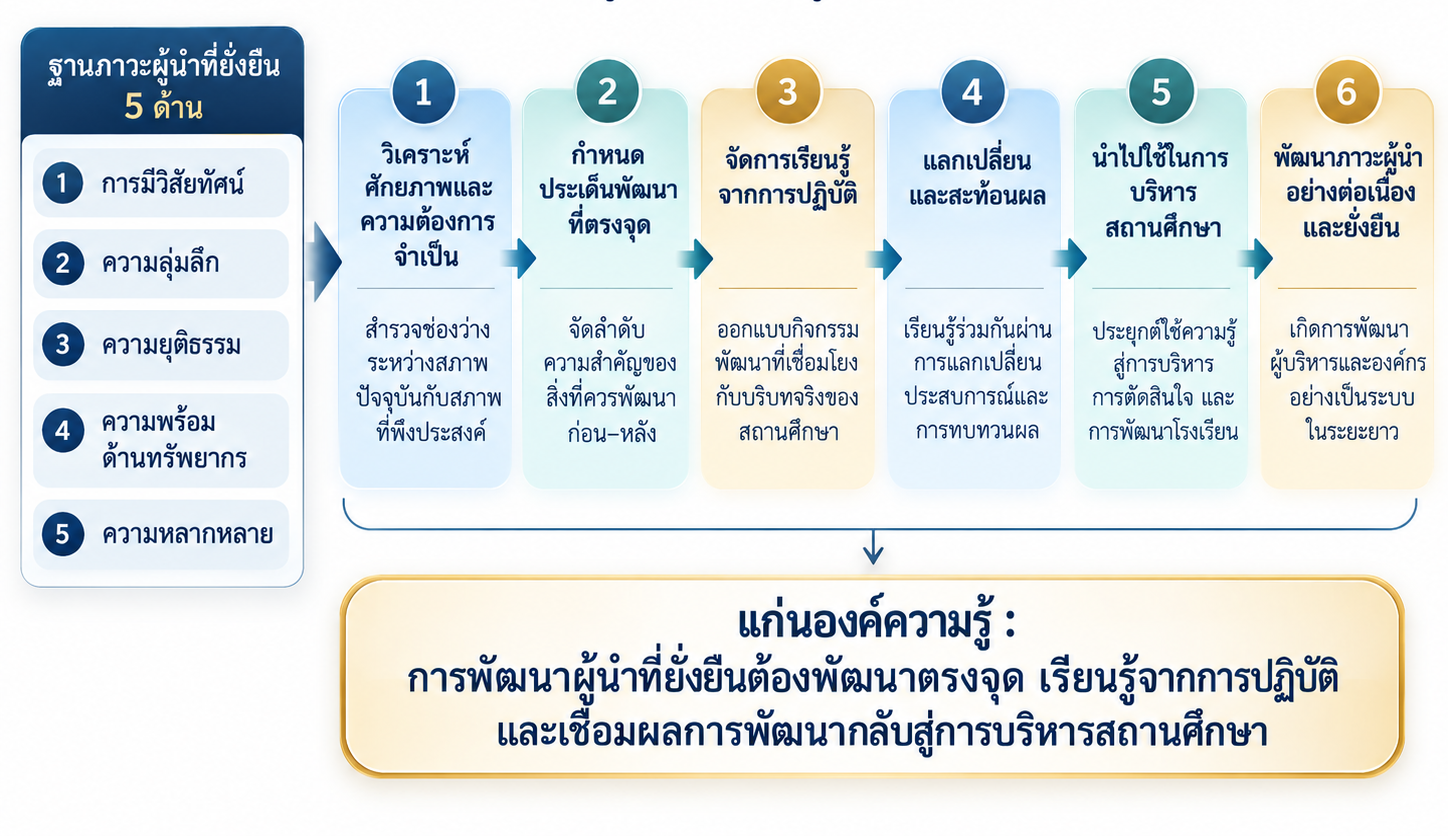
1. Sustainable leadership comprised five components and 17 indicators: vision, depth, justice, resource availability, and diversity.
2. The overall current condition was moderate (x̄ = 3.38), whereas the desired condition was at the highest level (x̄ = 4.68). Depth had the highest priority need (PNI modified = 0.50).
3. The model comprised six elements: principles and concepts, objectives, content, development procedures, media and learning resources, and measurement and evaluation. Five learning units corresponding to the leadership components totaled 50 hours, with more time allocated to depth and diversity in line with their priority needs.
4. The 12 participants had a higher descriptive mean after development (x̄ = 4.69) than before development (x̄ = 3.34). The trial involved volunteers and did not establish a causal effect.
Article Details

This work is licensed under a Creative Commons Attribution-NonCommercial-NoDerivatives 4.0 International License.
เพื่อให้เป็นไปตามกฎหมายลิขสิทธิ์ ผู้นิพนธ์ทุกท่านต้องลงลายมือชื่อในแบบฟอร์มใบมอบลิขสิทธิ์บทความ ให้แก่วารสารฯ พร้อมกับบทความต้นฉบับที่ได้แก้ไขครั้งสุดท้าย นอกจากนี้ ผู้นิพนธ์ทุกท่านต้องยืนยันว่าบทความ ต้นฉบับที่ส่งมาตีพิมพ์นั้น ได้ส่งมาตีพิมพ์เฉพาะในวารสาร วิชาการธรรม ทรรศน์ เพียงแห่งเดียวเท่านั้น หากมีการใช้ ภาพหรือตารางของผู้นิพนธ์อื่นที่ปรากฏในสิ่งตีพิมพ์อื่นมาแล้ว ผู้นิพนธ์ต้องขออนุญาตเจ้าของลิขสิทธิ์ก่อน พร้อมทั้ง แสดงหนังสือที่ได้รับการยินยอมต่อบรรณาธิการ ก่อนที่บทความจะได้รับการตีพิมพ์References
สำนักงานคณะกรรมการส่งเสริมการศึกษาเอกชน. (2560). แผนพัฒนาการศึกษาเอกชน พ.ศ. 2560-2564. กรุงเทพฯ: สำนักงานคณะกรรมการส่งเสริมการศึกษาเอกชน.
สุนทรีพร อำพลพร, อรสา จรูญธรรม และชาญชัย วงศ์สิรสวัสดิ์. (2564). สังเคราะห์องค์ประกอบภาวะผู้นำที่ยั่งยืนของผู้บริหารสถานศึกษา. วารสาร มจร บาฬีศึกษาพุทธโฆสปริทรรศน์, 7(3), 174-207.
สุวิมล ว่องวาณิช. (2562). การวิจัยประเมินความต้องการจำเป็น. (พิมพ์ครั้งที่ 4 ฉบับปรับปรุง). กรุงเทพฯ: จุฬาลงกรณ์มหาวิทยาลัย.
Hargreaves, A., & Fink, D. (2006). Sustainable leadership. San Francisco, CA: Jossey-Bass.
Leithwood, K., & Jantzi, D. (2006). Transformational school leadership: Its effects on students, teachers and their classroom practices. School Effectiveness and School Improvement, 17(2), 201-227. https://doi.org/10.1080/09243450600565829
Senge, P. M. (2006). The fifth discipline: The art and practice of the learning organization. (Rev. ed.). New York, NY: Doubleday.
