The Integration of The Temples Management According to Theravada Buddhist Philosophy in Yasothon Province
Article Sidebar
Main Article Content
Abstract
The purposes of this research were: 1) to study the concept of temple management theory in Thai society, 2) to examine the principles of Theravāda Buddhist philosophy regarding temple management in Yasothon Province, and 3) to integrate temple management practices with the principles of Theravāda Buddhist philosophy in Yasothon Province. This qualitative research was conducted through the study of the Tripiṭaka and academic documents on Buddhism. Key informants included 15 individuals comprising organizational leaders, Buddhist leaders, community leaders, and members of the general public. The research instrument used was in-depth interviews, and the findings were presented using analytical descriptive methods.
The results revealed the following:
1. The concept of temple management theory in Thai society encompasses five key functions: planning, organizing, staffing, directing, and controlling.
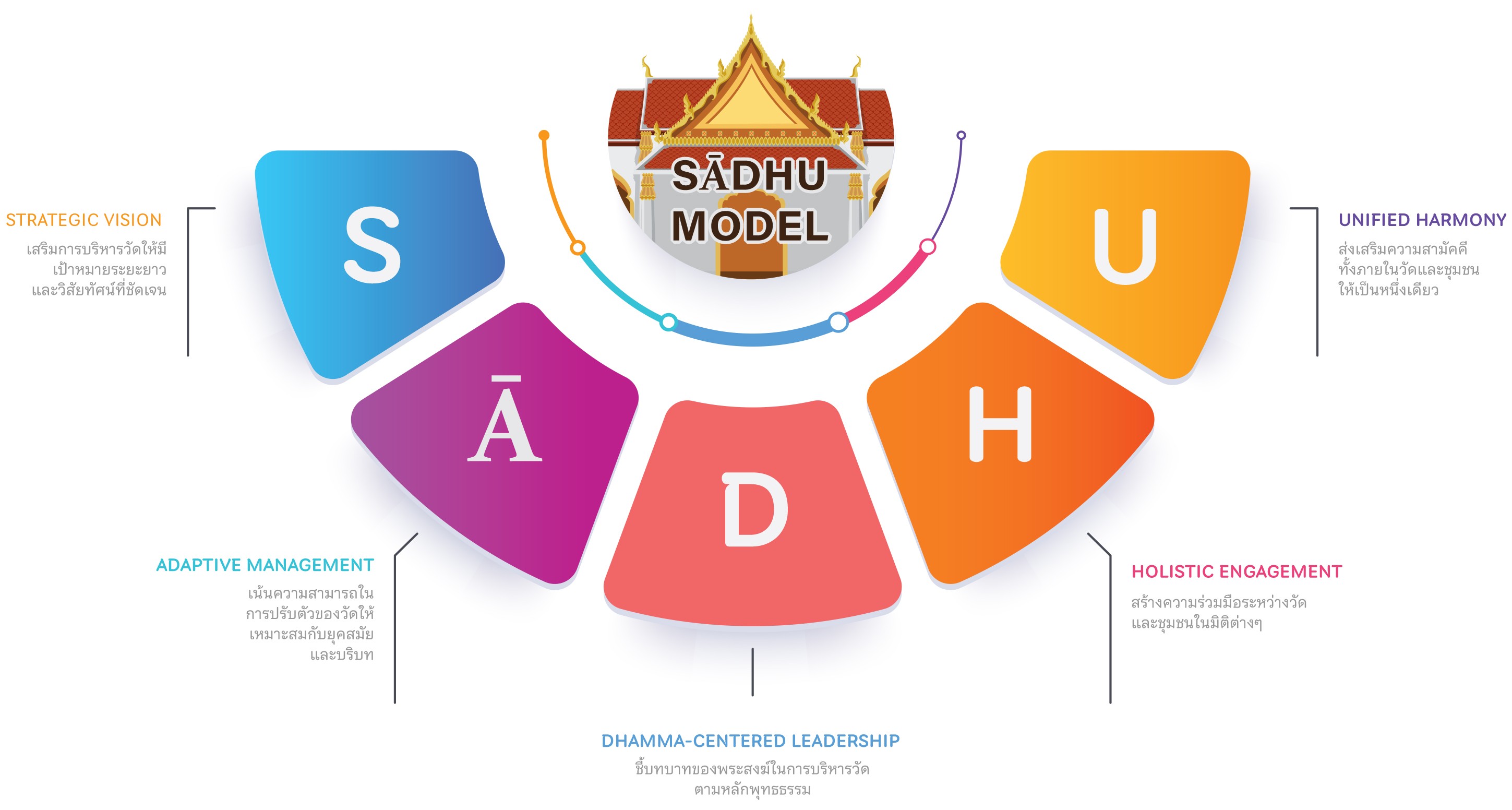
2. The principles of Theravāda Buddhist philosophy applied to temple management in Yasothon Province include three core principles: 1) Sappāya – managing the environment, buildings, personnel, and activities in accordance with Dhamma to promote spiritual and community development; 2) Paññāniya-dhamma – the presence of vision and insight in administration; 3) Sāraṇīya-dhamma – fostering cooperation and unity within the Sangha and the wider community.
3. The integration of temple administration based on Theravāda Buddhist philosophy emphasizes the Paññāniya-dhamma principle, involving visionary leadership and administrative capability, along with effective coordination. Successful temple administration also depends on the Sappāya principle—managing the physical and human environment—and the application of the Sāraṇīya-dhamma principle to cultivate harmony and collaboration within the Sangha and the community.
Article Details

This work is licensed under a Creative Commons Attribution-NonCommercial-NoDerivatives 4.0 International License.
เพื่อให้เป็นไปตามกฎหมายลิขสิทธิ์ ผู้นิพนธ์ทุกท่านต้องลงลายมือชื่อในแบบฟอร์มใบมอบลิขสิทธิ์บทความ ให้แก่วารสารฯ พร้อมกับบทความต้นฉบับที่ได้แก้ไขครั้งสุดท้าย นอกจากนี้ ผู้นิพนธ์ทุกท่านต้องยืนยันว่าบทความ ต้นฉบับที่ส่งมาตีพิมพ์นั้น ได้ส่งมาตีพิมพ์เฉพาะในวารสาร วิชาการธรรม ทรรศน์ เพียงแห่งเดียวเท่านั้น หากมีการใช้ ภาพหรือตารางของผู้นิพนธ์อื่นที่ปรากฏในสิ่งตีพิมพ์อื่นมาแล้ว ผู้นิพนธ์ต้องขออนุญาตเจ้าของลิขสิทธิ์ก่อน พร้อมทั้ง แสดงหนังสือที่ได้รับการยินยอมต่อบรรณาธิการ ก่อนที่บทความจะได้รับการตีพิมพ์References
กองพุทธศาสนสถาน. (2553). คู่มือการพัฒนาวัดสู่ความเป็นมาตรฐาน. นครปฐม: กองพุทธศาสนสถาน สำนักงานพระพุทธศาสนาแห่งชาติ.
ฐิติวัสส์ สุขป้อม, ณัฏฐกรณ์ ปะพาน, ณัฐพัชร สายเสนา, อภิชาติ หาจัตุรัส, สิรินพร หาจัตุรัส, เอนก เทียนบูชา, เริงวิชญ์ นิลโคตร และวริยาพัชร วรภัสร์สรกุล. (2566). หลักพุทธธรรมกับการเสริมสร้างการเป็นองค์กรแห่งการเรียนรู้ มิติการสร้างการเรียนรู้และการพัฒนาทีมสำหรับผู้บริหาร. วารสารบัณฑิตวิทยาลัย มหาวิทยาลัยราชภัฏจันทรเกษม, 18(2), 21-32. https://so01.tci-thaijo.org/index.php/journalgrdcru/article/view/267557/176631
ทองดี ปาโส. (2566). ภาวะผู้นำตามหลักปาปณิกธรรมของการบริหารองค์กรในยุคชีวิตวิถีใหม่. วารสารสหวิทยาการนวัตกรรมปริทรรศน์, 6(4), 145-157. https://so04.tci-thaijo.org/index.php/jidir/article/view/260237
ปาลิดา นามเสนาะ, พระมหาพงษ์เทพ ปภากโร และปณิดา สร้อยสาย. (2566). การบริหารแบบมีส่วนร่วมตามหลักสาราณียธรรม 6 สำหรับผู้บริหารสถานศึกษา. วารสาร มจร บาฬีศึกษาพุทธโฆสปริทรรศน์, 9(1), 197-207. https://so05.tci-thaijo.org/index.php/Palisueksabuddhaghosa/article/view/259413
พระครูอาทรยติกิจ (ชื้น ปญฺญากาโม), พระสุธีวีรบัณฑิต และบุษกร วัฒนบุตร. (2560). ประสิทธิผลการบริหารงานของเจ้าอาวาสในอำเภอศรีประจันต์ จังหวัดสุพรรณบุรี. วารสาร มจร สังคมศาสตร์ปริทรรศน์, 6(2, ฉบับพิเศษ), 475-490. https://so03.tci-thaijo.org/index.php/jssr/article/view/242563
พระธรรมโกศาจารย์ (ประยูร ธมฺมจิตฺโต). (2549). พุทธวิธีบริหาร. (พิมพ์ครั้งที่ 5). กรุงเทพฯ: มหาจุฬาลงกรณราชวิทยาลัย.
พระพุทธโฆษาจารย์. (2548). คัมภีร์วิสุทธิมรรค (สมเด็จพระพุฒาจารย์ (อาจ อาสภมหาเถร), ผู้แปล). (พิมพ์ครั้งที่ 6). กรุงเทพฯ: ประยูรวงศ์พริ้นติ้ง.
พระอุดมสิทธินายก (กําพล คุณงฺกโร), สมบัติ อรรถพิมล และพระมหากิตติกร กิตฺติรกฺโข. (2567). การจัดการเชิงพุทธสมัยใหม่กับการจัดการองค์การสงฆ์. วารสารบัณฑิตศึกษาวิชาการ, 2(3), 54-64. https://so18.tci-thaijo.org/index.php/A_GJ/article/view/390/311
มหาวิทยาลัยมหาจุฬาลงกรณราชวิทยาลัย. (2539). พระไตรปิฎกภาษาไทย ฉบับมหาจุฬาลงกรณราชวิทยาลัย. กรุงเทพฯ: มหาจุฬาลงกรณราชวิทยาลัย.
สำนักงานพระพุทธศาสนาจังหวัดยโสธร. (2565). จำนวนวัดและจำนวนพระภิกษุสามเณรจังหวัดยโสธร. ยโสธร: สำนักงานพระพุทธศาสนาจังหวัดยโสธร.
สุรางคณา สุริยะ. (2566). การประยุกต์ใช้หลักสาราณียธรรมในการสร้างองค์กรแห่ความสุข. วารสารศาสตร์แห่งพุทธ, 2(1), 41-54. https://so10.tci-thaijo.org/index.php/JNBS/article/view/1855/1217
