Development of a Growth Mindset and Problem-Based Learning Model to Enhance Public Speaking Skills of Undergraduate Students
Article Sidebar
Main Article Content
Abstract
This research aims to 1) synthesize and evaluate the growth mindset and problem-based learning model to enhance public speaking skills of undergraduate students, and 2) evaluate the effectiveness of the developed learning model. This study used the purposive sampling method, and the sample group consisted of 160 first-year undergraduate students who registered for the Speaking and Presentation for Careers. The research instruments were 1) a growth mindset and problem-based learning model, 2) a public speaking skills assessment form, and 3) a semi-structured interview form. The statistics used were mean, standard deviation, t-test (dependent), and content analysis.
The research results are as follows:
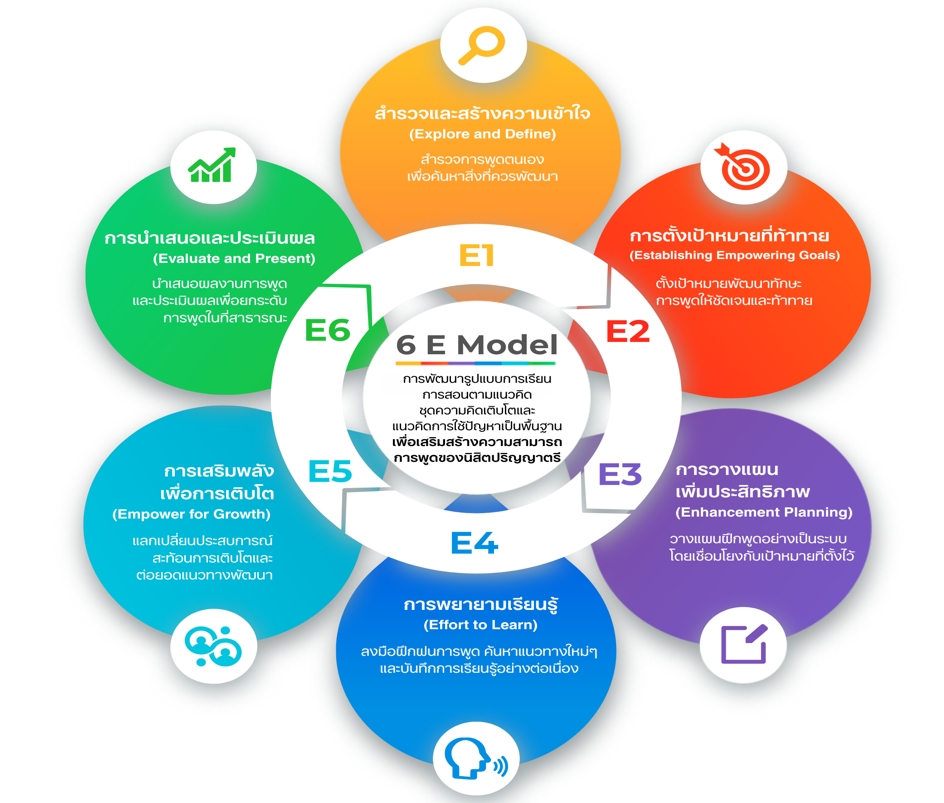
1. The teaching and learning model consisted of 6 steps (6E Model). Step 1: Explore and Define; Step 2: Establishing Empowering Goals; Step 3: Enhancement Planning; Step 4: Effort to Learn; Step 5: Empower for Growth; Step 6: Evaluate and Present). The efficiency of the model was found to be at the highest level of appropriateness by experts ( = 4.93, S.D. = 0.10).
2. With regard to the effectiveness of the model, it was found that 1) the experimental group had a higher public speaking ability than the control group after they had been taught with the improved teaching model, and the difference was statistically significance at .05. 2) The students in the experimental group had a higher public speaking ability after they had been taught with the improved teaching model, with statistical significance at .05.
Article Details

This work is licensed under a Creative Commons Attribution-NonCommercial-NoDerivatives 4.0 International License.
เพื่อให้เป็นไปตามกฎหมายลิขสิทธิ์ ผู้นิพนธ์ทุกท่านต้องลงลายมือชื่อในแบบฟอร์มใบมอบลิขสิทธิ์บทความ ให้แก่วารสารฯ พร้อมกับบทความต้นฉบับที่ได้แก้ไขครั้งสุดท้าย นอกจากนี้ ผู้นิพนธ์ทุกท่านต้องยืนยันว่าบทความ ต้นฉบับที่ส่งมาตีพิมพ์นั้น ได้ส่งมาตีพิมพ์เฉพาะในวารสาร วิชาการธรรม ทรรศน์ เพียงแห่งเดียวเท่านั้น หากมีการใช้ ภาพหรือตารางของผู้นิพนธ์อื่นที่ปรากฏในสิ่งตีพิมพ์อื่นมาแล้ว ผู้นิพนธ์ต้องขออนุญาตเจ้าของลิขสิทธิ์ก่อน พร้อมทั้ง แสดงหนังสือที่ได้รับการยินยอมต่อบรรณาธิการ ก่อนที่บทความจะได้รับการตีพิมพ์References
ณัชชา อ่อนสัมพันธ์ และสุนีตา โฆษิตชัยวัฒน์. (2563). ผลการจัดการเรียนรู้แบบปัญหาเป็นฐานที่มีต่อทักษะการพูดภาษาอังกฤษเพื่อการสื่อสารสำหรับนักศึกษาระดับปริญญาบัณฑิต. วารสารการบริหารการศึกษา มหาวิทยาลัยศิลปากร, 11(1), 34-50. https://so02.tci-thaijo.org/index.php/EdAd/article/view/241645
ทินวัฒน์ สร้อยกุดเรือ. (2564). การพูดเพื่อการสื่อสารทางธุรกิจ. ขอนแก่น: สาขาวิชาภาษาไทย คณะมนุษยศาสตร์และสังคมศาสตร์ มหาวิทยาลัยขอนแก่น.
ธนัช สุขสมบูรณ์. (2566). การพัฒนาความสามารถในการพูดและความกล้าแสดงออก. (วิทยานิพนธ์ศึกษาศาสตรมหาบัณฑิต). กรุงเทพฯ: มหาวิทยาลัยศิลปากร.
ปวีณา สายทองสุข และมณีรัตน์ เอกโยคยะ. (2561). การพัฒนาความสามารถในการพูดภาษาอังกฤษผ่านการทำซ้ำโดยใช้เทคนิค 4/3/2 ในกิจกรรมการพูดในที่สาธารณะ. วารสารครุศาสตร์ จุฬาลงกรณ์มหาวิทยาลัย, 46(1), 130-145. https://so01.tci-thaijo.org/index.php/OJED/article/view/247820
ปิยรัตน์ บุญยรัตนกลิน. (2568). การพัฒนารูปแบบทักษะการพูดภาษาฝรั่งเศสโดยกลวิธีเสริมต่อการเรียนรู้ร่วมกับการเสริมสร้างกรอบความคิดแบบเติบโตของผู้เรียน. วารสารศาสตร์การศึกษาและการพัฒนามนุษย์, 9(2), 134-159. https://kuojs.lib.ku.ac.th/index.php/jehds/article/view/5828
พรรณภา ส่งแสงแก้ว. (2562). การพัฒนากรอบความคิดแบบเติบโตในทักษะการสื่อสารด้านการพูดเพื่อการนำเสนอ. (รายงานการวิจัย). ขอนแก่น: มหาวิทยาลัยศรีปทุม วิทยาเขตขอนแก่น.
วีซานา อับดุลเลาะ และวุฒิชัย เนียมเทศ. (2563). การจัดสภาพแวดล้อมการเรียนรู้เพื่อส่งเสริมทักษะการเรียนรู้ในศตวรรษที่ 21 “แนวคิด ทฤษฎี และแนวทางปฏิบัติ”. วารสารมหาวิทยาลัยนราธิวาสราชนครินทร์ สาขามนุษยศาสตร์และสังคมศาสตร์, 7(2), 227-246. https://so05.tci-thaijo.org/index.php/pnuhuso/article/view/240095
สรรรัชต์ ห่อไพศาล. (2552). การพัฒนาประสิทธิภาพการเรียนการสอนวิชาศึกษาทั่วไปด้วยการเรียนการสอนผ่านเว็บ. กรุงเทพฯ: มหาวิทยาลัยศรีปทุม.
สรวชญ สมณวัฒนา. (2564). การพัฒนาความสามารถด้านการพูดของนักเรียนชั้นมัธยมศึกษาปีที่ 4 ด้วยการจัดการเรียนรู้แบบร่วมมือร่วมกับข้อมูลท้องถิ่น. (วิทยานิพนธ์ศึกษาศาสตรมหาบัณฑิต). กรุงเทพฯ: มหาวิทยาลัยศิลปากร.
สุริยะ หาญพิชัย. (2562). การพัฒนาผลสัมฤทธิ์ทางการเรียนในรายวิชาท้องถิ่นศึกษาโดยใช้การเรียนรู้แบบลงมือทำ. Lawarath Social E-Journal, 1(3), 51-63. https://so04.tci-thaijo.org/index.php/lawarathjo/article/view/246794
Bostock, S. J. (1998). Constructivism in mass higher education: A case study. British Journal of Educational Technology, 29(3), 225-240.
Cherry, K. (2021). What is a mindset and why it matters. Skills You Need. Retrieved from https://www.skillsyouneed.com/ps/mindsets.html
Grant, H., & Dweck, C. (2003). Clarifying Achievement Goals and Their Impact. Journal of Personality and Social Psychology, 85(3), 541-553. https://doi.org/10.1037/0022-3514.85.3.541
Likert, R. (1967). The Human Organization: Its Management and Value. New York: McGraw-Hill.
