
Yao Pai Mobility and Listening Modality of Rot Hae
Article Sidebar
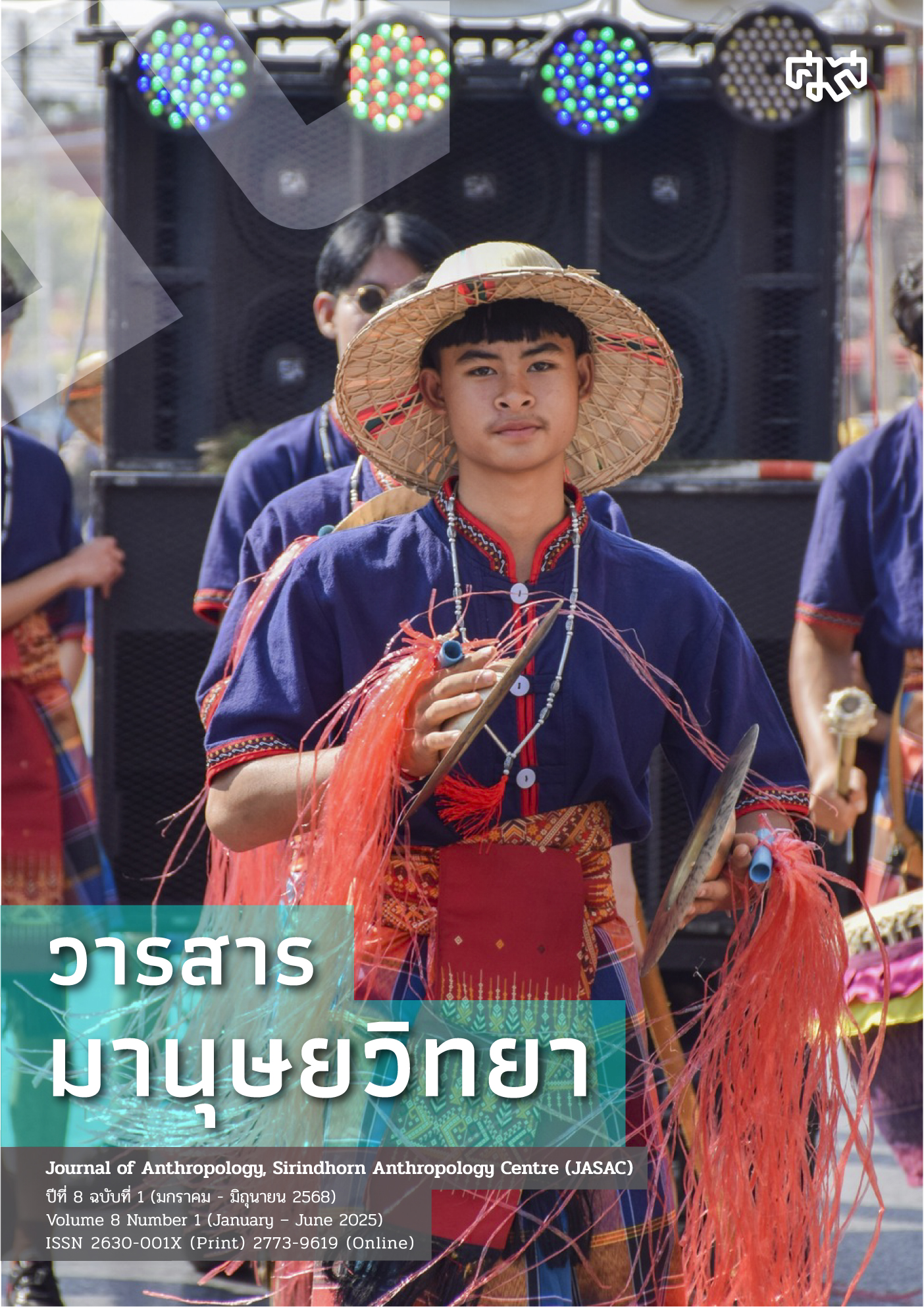
Main Article Content
Abstract
The values of rot hae (literally “parade car”) performances stand in opposition to the music’s artistic premise that celebrates individual creativity. Judged within this premise, rot hae will only be replete with mimicry and unintelligibility. But given the ubiquity of rot hae in vernacular Thai cultures, it is the music’s artistic premise that needs reconsideration. In this article, I propose that what is seen, heard, and felt in rot hae performances warrants a different mode of listening. I will situate my theorization of rot hae’s musical experiences on its mobility. To fully grasp rot hae’s socio-cultural meanings, I suggest that we shift our listening modality towards continuity and social synchrony, rather than artistic prowess that undergirds studio arts and live staged performances. This article aims to expand the knowledge boundary of scholarly works on rot hae. It focuses on rot hae’s sonic, auditory, and participatory experiences as its core phenomenological components. It also contributes to the significant potential of sound and listening in helping us make sense of cultural phenomena and social processes, particularly through performances and musical participation in a mobile setting.
Article Details

This work is licensed under a Creative Commons Attribution-NonCommercial-NoDerivatives 4.0 International License.
copyrights@ Journal of Anthropology, Sirindhorn Anthropology Centre (JASAC)
Princess Maha Chakri Sirindhorn Anthropology Centre (Public Organization), Bangkok, Thailand
More Information:
https://creativecommons.org/licenses/by-nc-nd/4.0/
References
กุลธีร์ บรรจุแก้ว. (2567). Against Soundscape. ใน 100 แนวคิดมานุษยวิทยาร่วมสมัย (น. 97–98). ศูนย์มานุษยวิทยาสิรินธร (องค์การมหาชน).
จารุวรรณ ด้วงคำจันทร์. (2564). รถแห่อีสาน: มหรสพสัญจรข้ามพรมแดนวัฒนธรรม ปริญญานิพนธ์ศิลปศาสตรมหาบัณฑิต มหาวิทยาลัยธรรมศาสตร์. https://digital.library.tu.ac.th/tu_dc/frontend/Info/item/dc:273830.
จารุวรรณ ด้วงคำจันทร์. (2565). ทิศทางการเติบโตของรถแห่หลังภาวะโรคระบาดโควิด–19. วารสารเพลงดนตรี, 5(2), 71–92.
จารุวรรณ ด้วงคำจันทร์. (2567). รถแห่: เสียงไทบ้าน สู่มหรสพสัญจร ลูกอีกสานพลัดถิ่น. สารคดี, 40(469), 90–109.
ณัฐพล วิสุทธิแพทย์. (2567). ดนตรีและเสียง. ใน ปิ่นแก้ว เหลืองอร่ามศรี และ เก่งกิจ กิตติเรียงลาภ (บก.), มานุษยวิทยาที่ปรากฏ: 40 มโนทัศน์ร่วมสมัย (น. 273–310). ศูนย์มานุษยวิทยาสิรินธร (องค์การมหาชน).
ธัญญลักษณ์ อุบลเลิศ, นคร วงศ์ไชยรัตนกุล, ปรเมศวร์ โพธิ์คล้าย, & นพพล ไชยสน. (2566). รถแห่: วิวัฒนาการและการปรับปรนทางวัฒนธรรมในภาคอีสาน. วารสารมนุษยศาสตร์และสังคมศาสตร์ มหาวิทยาลัยนครพนม, 13(2), 359–371.
พัฒนา กิตติอาษา. (2553). ดนตรีอีสาน แรงงานอารมณ์ และคนพลัดถิ่น. ใน สุวรรณา เกรียงไกรเพ็ชร์, สรินยา คำเมือง, กมลทิพย์ จ่างกมล, และ อลงกต วรรณวิชัยกุล (บก.), ผู้คน ดนตรี ชีวิต เล่ม 2 เสียงของประเทศไทย (น. 141–224). ศูนย์มานุษยวิทยาสิรินธร (องค์การมหาชน).
ยุกติ มุกดาวิจิตร. (2567). มานุษยวิทยาผัสสะ. ใน ปิ่นแก้ว เหลืองอร่ามศรี และ เก่งกิจ กิตติเรียงลาภ (บก.), มานุษยวิทยาที่ปรากฏ: 40 มโนทัศน์ร่วมสมัย (น. 239–272). ศูนย์มานุษยวิทยาสิรินธร (องค์การมหาชน).
รุ่งลดิษ จตุรไพศาล. (2565). รถแห่และการเต้นบั้นเด้า: วัยรุ่นอีสานใหม่กับการประดิษฐ์ประเพณีและการสื่อสารเพื่อการต่อสู้ทางวัฒนธรรม ปริญญานิพนธ์ศิลปศาสตรบัณฑิต มหาวิทยาลัยธรรมศาสตร์.
ศรยุทธ เอี่ยมเอื้อยุทธ. (2567). ชาติพันธุ์วรรณาว่าด้วยเสียง: โสตประสาท โสตพยาน และเทคโนโลยี. ใน นฤพนธ์ ด้วงวิเศษ และ วิสุทธิ์ เวชวราภรณ์ (บก.), ลบเลือน เคลื่อนที่ ทวีทบ: มนุษยวิทยาความทรงจำ การเคลื่อนที่ และความซับซ้อน (น. 288–291). ศูนย์มานุษยวิทยาสิรินธร (องค์การมหาชน).
สงกรานต์ สมจันทร์. (2566). คีตล้านนาคดี มานุษยวิทยาดนตรีและพิธีกรรมในล้านนา. ศูนย์มานุษยวิทยาสิรินธร (องค์การมหาชน).
อิทธิพงษ์ ทองศรีเกตุ. (2022). รถแห่ดนตรีสด: ความนิยมในการจัดกิจกรรมของชุมชนในภาคตะวันออกเฉียงเหนือ ประเทศไทย. วารสารศิลปศาสตร์ มหาวิทยาลัยแม่โจ้, 10(1), 208–223.Adorno, T. W., & Simpson, G. (1941). On Popular Music. Zeitschrift Für Sozialforschung, 9(1), 17–48. https://doi.org/10.5840/zfs1941913.
Becker, J. (2010). Exploring the Habitus of Listening: Anthropological Perspectives. In P. N. Juslin (Ed.), Handbook of Music and Emotion: Theory, Research, Applications (pp. 127–157). Oxford University Press.
Berger, H. M. (2019). Phenomenology and Phenomenological Ethnomusicology: Approaches to Lived Experiences. In H. M. Berger & R. M. Stone (Eds.), Theory for Ethnomusicology: Histories, Conversations, Insights (2nd ed., pp. 204–218). Routledge. https://doi.org/10.4324/9781315408583.
Daughtry, J. M. (2015). Listening to war: Sound, music, trauma, and survival in wartime iraq. Oxford University Press.
Gopinath, S., & Stanyek, J. (2014). The Mobilization of Performance: An Introduction to the Aesthetics of Mobile Music. In S. Gopinath & J. Stanyek (Eds.), The Oxford Handbook of Mobile Music Studies (Vol. 2, pp. 1–44). Oxford University Press.
Iida, J. (2017). Tying the Hand: Life Sustaining Technique in Northern Thailand. Asiatische Studien - Études Asiatiques, 71(1), 305–326. https://doi.org/10.1515/asia-2015-1028
Kitiarsa, P. (2006). Modernity, Agency, and “Lam Sing”: Interpreting ‘Music-Culture Contacts’ in Northeastern Thailand. Crossroads: An Interdisciplinary Journal of Southeast Asian Studies, 17(2), 34–65.
Miller, T. E. (2005). From Country Hick to Rural Hip: A New Identity Through Music for Northeast Thailand. Asian Music, 36(2), 96–106.
Mitchell, J. (2011). Kon baan diaokan or ‘we’re from the same village’: Star/fan interaction in Thai lukthung. Perfect Beat, 12(1), 69–89. https://doi.org/10.1558/prbt.v12i1.69.
Pinkaew Laungaramsri. (2003). Ethnicity and the Politics of Ethnic Classification in Thailand. In C. Mackerras (Ed.), Ethnicity in Asia (pp. 157–173). Routledge Curzon.
Prouteau, P. (2023). The Dual Fate of the Twin Horn in Thailand: From United States Anti-Communist Weapon to the Phetchabun Processional Bands’ Sound System. In Asian Sound Cultures: Voice, Noise, Sound, Technology (pp. 257–279). Routledge.
Radano, R., & Olaniyan, T. (2016). Introduction: Hearing Empire—Imperial Listening. In R. Radano & T. Olaniyan (Eds.), Hearing Empire—Imperial Listening (pp. 1–22). Duke University Press.
Rahaim, M. (2019). Theories of Participation. In H. M. Berger & R. M. Stone (Eds.), Theory for ethnomusicology: Histories, conversations, insights (2nd ed., pp. 219–232). Routledge.
Sakakeeny, M. (2010). “Under the Bridge”: An Orientation to Soundscapes in New Orleans. Ethnomusicology, 54(1), 1–27. https://doi.org/10.5406/ethnomusicology.54.1.0001
Sakakeeny, M. (2015). Music. In D. Novak & M. Sakakeeny (Eds.), Keywords in sounds (pp. 112–124). Duke University Press.
Salemink, O. (2008). Embodying the Nation: Mediumship, Ritual, and the National Imagination. Journal of Vietnamese Studies, 3, 261–290. https://doi.org/10.1525/vs.2008.3.3.261.
Slobin, M. (1994). Ethnomusicology: From Ethnography to Cultural Studies. American Anthropologist, 96(3), 701–703.
Sutton, R. A. (1996). Interpreting Electronic Sound Technology in the Contemporary Javanese Soundscape. Ethnomusicology, 40(2), 249–268. https://doi.org/10.2307/852061.
Tagg, P. (1982). Analysing popular music: Theory, method and practice. Popular Music, 2, 37–67. https://doi.org/10.1017/S0261143000001227.
Taylor, D. (2003). The archive and the repertoire: Performing cultural memory in the Americas. Duke University Press.
Turino, T. (2008). Music as social life: The politics of participation. University of Chicago Press.
Wattanagun, K. (2017). Karma versus Magic: Dissonance and Syncretism in Vernacular Thai Buddhism. Southeast Asian Studies, 6(1), 115–137. https://doi.org/10.20495/seas.6.1_115.
Wisuttipat, N. (2025). Twerking, Alcohol, Ordination: Rethinking Sacred and Secular with Rot Hae’s Mobile and Participatory Performances in Thailand. MUSICultures, 52.
