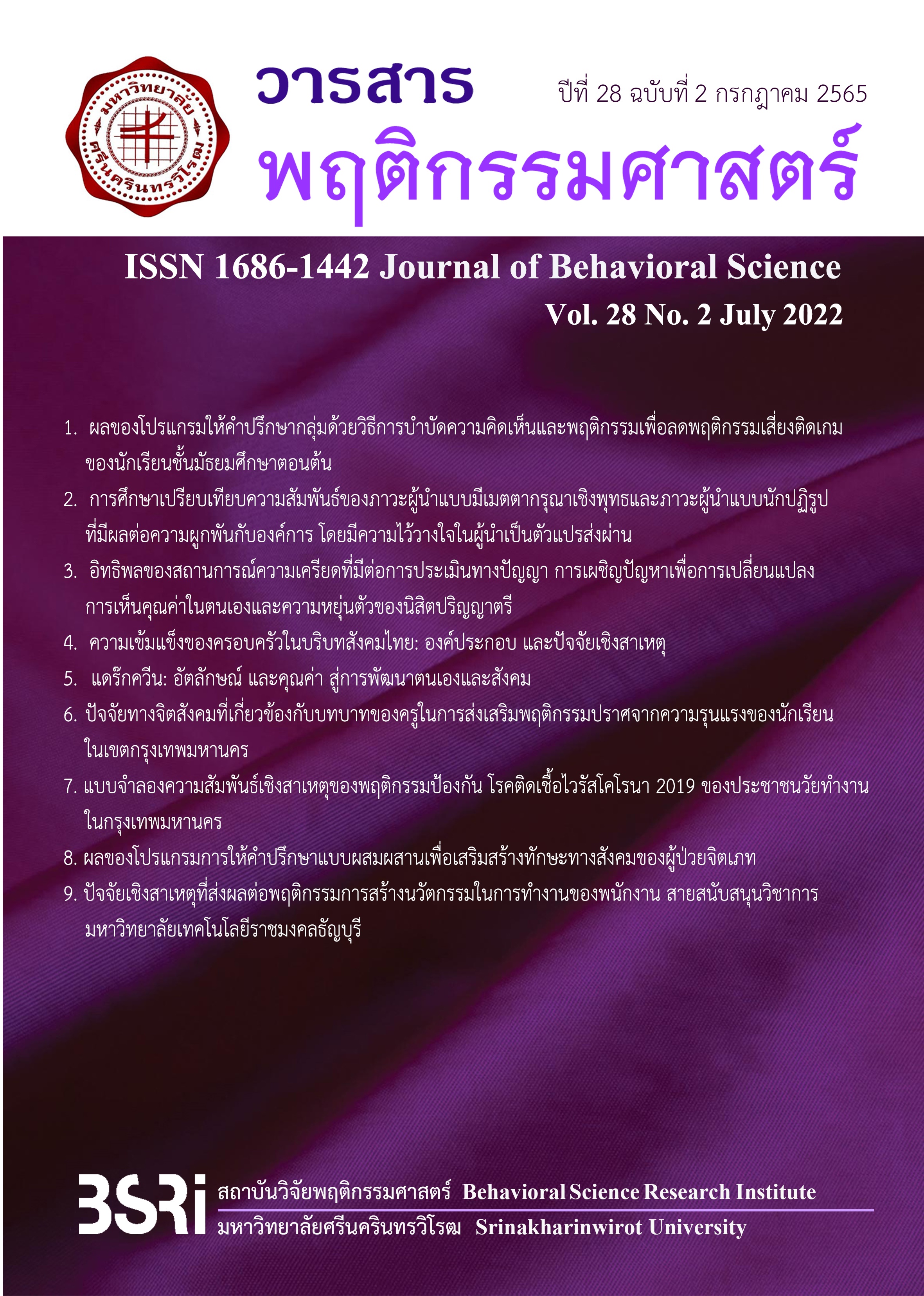
ผลของโปรแกรมการให้คำปรึกษาแบบผสมผสานเพื่อเสริมสร้างทักษะทางสังคม ของผู้ป่วยจิตเภท
คำสำคัญ:
การให้คำปรึกษา, โปรแกรมการให้คำปรึกษาแบบผสมผสาน, ทักษะทางสังคม, ผู้ป่วยจิตเภทบทคัดย่อ
งานวิจัยกึ่งทดลองครั้งนี้มีวัตถุประสงค์เพื่อศึกษาประสิทธิผลของโปรแกรมการให้คำปรึกษาแบบผสมผสานเพื่อเสริมสร้างทักษะทางสังคมของผู้ป่วยจิตเภท กลุ่มตัวอย่างคือผู้ป่วยจิตเภทที่ตรงตามเกณฑ์คัดเข้าและมีความสมัครใจเข้าร่วมจำนวน 16 คน นำมาสุ่มแบบจำแนกกลุ่มเข้ากลุ่มทดลองและกลุ่มควบคุมจำนวนกลุ่มละ 8 คน ดำเนินการเก็บข้อมูลด้วยแบบสอบถามวัดทักษะทางสังคมที่มีค่าความเชื่อมั่น 0.9 ใช้โปรแกรมการให้คำปรึกษาแบบผสมผสานเพื่อเสริมสร้างทักษะทางสังคมของผู้ป่วยจิตเภท จำนวน 8 ครั้ง ครั้งละ 1 ชั่วโมง 30 นาที ผลการเปรียบเทียบความแตกต่างของทักษะทางสังคมระหว่างกลุ่มทดลองและกลุ่มควบคุมในระยะก่อนและหลังการทดลอง พบว่าผู้ป่วยจิตเภทกลุ่มทดลองมีทักษะทางสังคมสูงกว่ากลุ่มควบคุมอย่างมีนัยสำคัญทางสถิติที่ p<.01 และพบว่าหลังจบการทดลองผู้ป่วยจิตเภทกลุ่มทดลองมีทักษะทางสังคมในด้านการสื่อสารและการสร้างสัมพันธภาพ ด้านการจัดการความเครียด และด้านการตัดสินใจในการแก้ปัญหาสูงกว่าก่อนทดลองอย่างมีนัยสำคัญทางสถิติที่ p<.01 อีกทั้งยังพบว่าการทำกิจกรรมมีส่วนช่วยให้ผู้ป่วยจิตเภทจะมีความกระตือรือร้นในการเปลี่ยนแปลงพฤติกรรมมั่นใจกล้าที่จะเริ่มต้นบทสนทนา มีการร่วมมือและช่วยเหลือกันภายในกลุ่ม รู้จักแลกเปลี่ยนแนวทางการแก้ไขปัญหา สามารถจัดการอารมณ์ได้
Downloads
เอกสารอ้างอิง
Baowan, R. (2015). Kānphatthanā Thaksathāngsangkhom læčhitsāthārana khō̜ngnakrīan Chanmatthayomsưksā Pīthī Nưng Hō̜ngrīanʻatchariya Dūaikānrīan Bǣprūammư̄ [Development of seventh grade students’ social skills and public mind, gifted classroom through cooperative learning]. Graduate School, Srinakharinwirot University.
Bureau of Mental Health Service. (2017). Khūmư̄ Kāndūlǣ Phūpūai Rōkčhitphēt Samrap Rōngphayābān Nai Khēt Sukphāp [Schizophrenia Care Guide for Hospitals in Health Areas]. Victoria Image Company Limited.
Chaiphan, M. (2014). Nǣokhit Tritdī Kānsưksā Kānprap Phrưttikam Nai Chanrīan [Theory concept in a study of behavioral modification in the classroom]. Princess of Naradhiwas University.
Corey. (2017). Theory and practice of groups counseling. Cengage Learning.
Iamsuphasit, S. (1997). Kānphatthanā Thaksa Thāngsangkhom [development of social skills]. Thantarak Hospital.
Kanket, P. (2011). khwāmsuk Kānhenkhunkhā Naitonʻēng læthaksathāngsangkhom khō̜ngyaowachon Naičhangwat Chīangmai thīmīradap Čhitʻāsā Tǣktāngkan [Happiness, Self-esteem and social skills of the youth in Chiang Mai with different level of volunteer spirit], Department Of Psychology. Chiang Mai University.
Lotrakun, M., & Sukkhanit, P. (2015). Psychiatry Ramathibodi. Faculty of Medicine Ramathibodi Hospital, Mahidol University.
Maha, Y. (2019). Phonkhō̜ng Prōkrǣm Kāndūlǣ Bǣpongrūam Tō̜phrưttikam Kāndūlǣtonʻē lækhwāmrūsưkmīkhunkhānaitonʻēng khō̜ngphūpūaičhitphēt [The effects of holistic caring program on self-care behaviors and self-esteem among patients with schizophrenia]. Burapha University.
Nilsen, W. (2018). Nuancing the role of social skills. BMC Pediatrics.
Ollhoff, J. & L. (2004). Getting along teaching social skills to children and youth. Sparrow Media Group.
Phusuwan, T. (2018). Phonkānhai Khamprưksāklum Tāmnǣokhit Kānprapphrưttikam Thāngpanya Tō̜thaksathāngsangkhom khō̜ngnaksưksā Radapparinyatrī [The effects of group counseling with rational emotive behavior therapy on prosocial behaviors of undergraduate students]. Suratthani Rajabhat Journal, 6(2), 111-137.
Ruangtrakoon, S. (2014). Psychiatry Textbook. Ruenkaew Printing.
Rungrengkonkit, S. (2001). Krō̜p Nǣokhit Nai Kānfư̄nfū Phūpūai Čhitphēt . The Journal of Psychiatric Nursing and Mental Health, 14(2), 15-23.
Sapmi, W. (2013). Tritdī læ Krabūankān Hai Khamprưksā [The counseling process]. Chulalongkorn University.
Shertzer, B., & Stone, S. C. (1974). Group counseling fundamentals of counseling. Houghton Mifftin Company.
Sithithong, P. (2013). Patčhaithāng Chīwačhitsangkhom thīkīaokhō̜ngkap khwāmnư̄aināI khō̜ngphūdūlǣphūpūai Rōkčhitphēt : Kranīsưksā Rōngphayābānsomdet Phračhaotāksinmahārāt Čhangwattāk [Bio-psycho-Social factors related to burnout of caregivers' schizoprhenia patients : case study Somdejprachaotaksinmaharaj Hospital, Tak Province], Development Psychology, Srinakharinwirot University.
Sukdee, N. (2017). Kānphatthanā Prōkrǣm Kānʻō̜kkamlangkāi Dōichai Tritdī Būranākān Prasātkhwāmrūsưk Rūamkap Phūmpanyāthai phư̄a Phatthanā Samatphāp ThāngkāI thīsamphan kapsukphāp læ Thaksathāngsangkhom khō̜ng Dekʻō̜thittik [Development of exercise program using sensory integration theory with thai wisdom to improve health–related physical fitness and social skills of autistic children]. Chulalongkorn University.
Surasiang, K. (2010). Kānphatthanā Thaksathāngsangkhom khō̜ngdekkamphrā Dūaikān Haikānprưksāklum Tāmtritsatī Kānprapphrưttikam Thāngpanya [The development of social skills in orphan by the cognitive behavior group counseling]. Burapha University.
Thaptavee, C. (2015). Kānsœ̄msāng Kānkhaočhai khwāmrūsưk Phūʻư̄n Dūaikānprưksāklum Bǣpyưtbukkhonpensūnklāng khō̜ngphūdūlǣ Phūtitsānsēptit Naisū Fư̄nfūsamatphāp Phūtityāsēptit [Enhancing empathy through person-centered group counseling of staff in a rehabilitation center]. Journal of education, 2(26), 130-144.
Thongsai, S. (2015). Kāndūlǣ Phūpūai Čhitphēt Nai Bō̜ribot Sangkhom Thai Yāngyangyư̄n [Schizophrenic caring in sustainaibility Thai context]. Journal of Nursing Division, 42(3), 159-168.
Thorne, F. C. (2011). Principles of personality counseling. Milton Keynes.
Woraphan, P. (2022). nǣothāng kānčhatkān rīanrū sangkhom sưksā phư̄a phatthanā thaksa thāng sangkhom khō̜ng nakrīan matthayom sưksā tō̜n plāI [Guideline for Learning management in social studies enhance of social skills of senior high school students]. Journal of Roi Kaensarn Academi, 7(2), 283-297.
World Health Organization. (2020). Mental, behavioural or neurodevelopmental disorders. https://www.who.int/classifications/icd/icdonlineversions/en/
ดาวน์โหลด
เผยแพร่แล้ว
รูปแบบการอ้างอิง
ฉบับ
ประเภทบทความ
สัญญาอนุญาต
ลิขสิทธิ์ (c) 2022 วารสารพฤติกรรมศาสตร์

อนุญาตภายใต้เงื่อนไข Creative Commons Attribution-NonCommercial-NoDerivatives 4.0 International License.
สถาบันวิจัยพฤติกรรมศาสตร์ มหาวิทยาลัยศรีนครินทรวิโรฒ
114 ซอยสุขุมวิท 23 ถนนสุขุมวิท แขวงคลองเตยเหนือ เขตวัฒนา กรุงเทพฯ 10110
โทร 02-649-5000 ต่อ 17600


