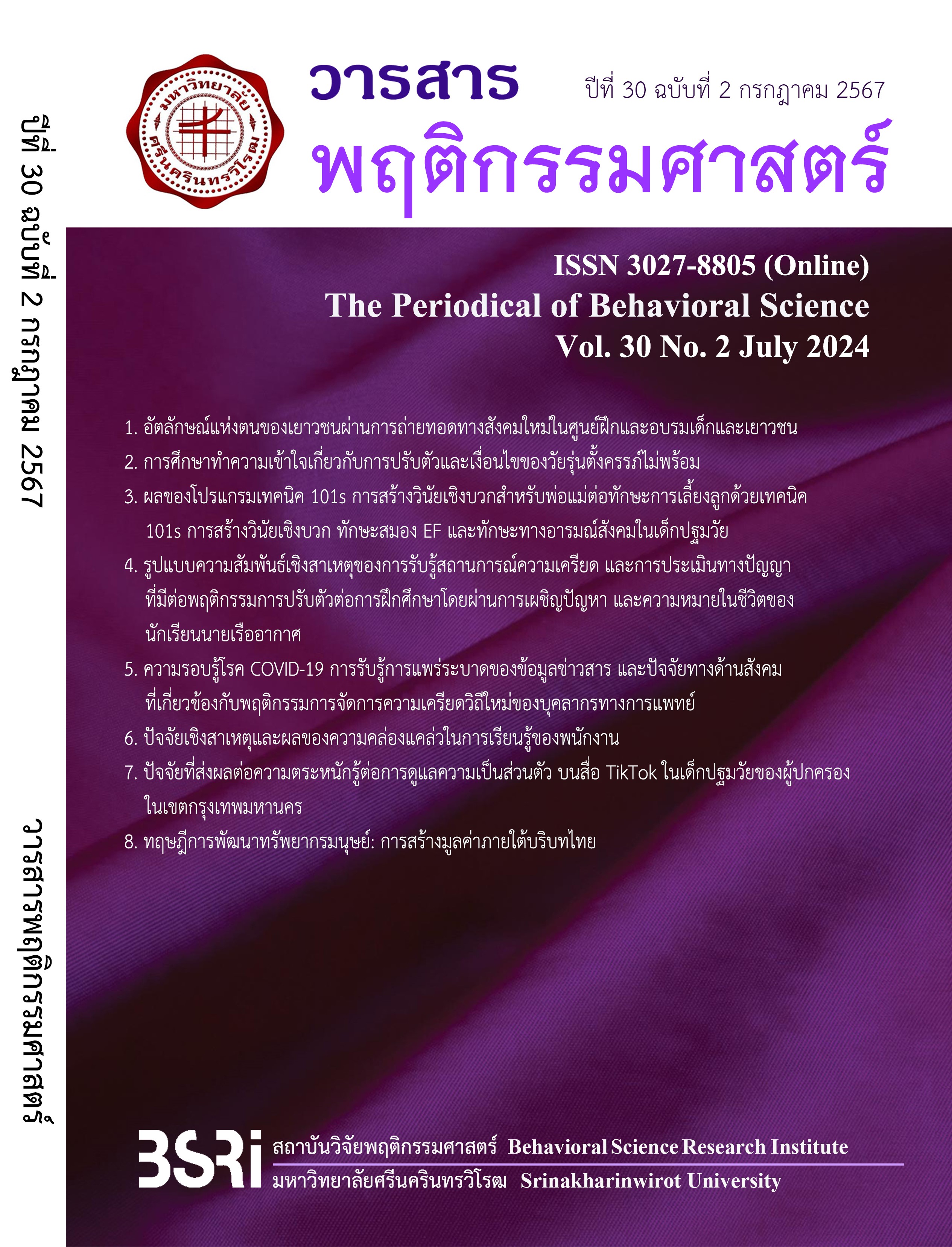
อัตลักษณ์แห่งตนของเยาวชนผ่านการถ่ายทอดทางสังคมใหม่ในศูนย์ฝึกและอบรมเด็กและเยาวชน
คำสำคัญ:
อัตลักษณ์แห่งตน, การถ่ายทอดทางสังคมใหม่, ศูนย์ฝึกและอบรมเด็กและเยาวชนบทคัดย่อ
การถอดถอน “ตัวตนเดิม” และเสริมสร้าง “ตัวตนใหม่” เพื่อให้เยาวชนมีอัตลักษณ์แห่งตนเชิงบวกเป็นเป้าหมายหลักตามกระบวนการถ่ายทอดทางสังคมใหม่ การวิจัยนี้มีความมุ่งหมายเพื่อทำความเข้าใจการให้ความหมาย และเงื่อนไขของการสร้างอัตลักษณ์แห่งตนของเยาวชนในศูนย์ฝึกและอบรมเด็กและเยาวชนภายหลังผ่านกระบวนการถ่ายทอดทางสังคมใหม่ ออกแบบด้วยการวิจัยเชิงคุณภาพแบบกรณีศึกษา เลือกกลุ่มผู้ให้ข้อมูลหลักแบบเจาะจง ตามคุณสมบัติ กลุ่มแรกคือนักวิชาชีพในศูนย์ฝึกและอบรมฯ จำนวน 4 ราย และกลุ่มที่สองคือเยาวชนในศูนย์ฝึกและอบรมฯ จำนวน 6 ราย ใช้วิธีการสัมภาษณ์เชิงลึก วิเคราะห์ข้อมูลเชิงเนื้อหา ผลการศึกษาพบว่า ความหมายของการสร้างอัตลักษณ์แห่งตนของเยาวชนในศูนย์ฝึกและอบรมฯ แบ่งออกเป็น 2 ลักษณะคือ การสร้างภาพลักษณ์ใหม่ให้กับตนเอง และการเปลี่ยนตัวตนอย่างมีเป้าหมาย นอกจากนี้ยังพบว่า ปัจจัยภายใน ประกอบด้วย บทเรียนในอดีตย้อนเตือนตนเอง และแรงผลักดันจากความสำเร็จของเพื่อน ร่วมกับปัจจัยภายนอก ประกอบด้วย ครอบครัวช่วยเสริมพลังใจ และเจ้าหน้าที่ไว้วางใจและให้ความช่วยเหลือเป็นเงื่อนไขของการสร้างอัตลักษณ์แห่งตนของเยาวชนในศูนย์ฝึกและอบรมฯ ข้อค้นพบจากการวิจัยสามารถนำไปประยุกต์ใช้สำหรับครอบครัว หรือหน่วยงานที่มีบริบทในการควบคุม ดูแลเยาวชนที่กระทำผิดเพื่อเสริมสร้างอัตลักษณ์แห่งตนของเยาวชนในการเตรียมพร้อมกลับคืนสู่สังคม
Downloads
เอกสารอ้างอิง
Bandura, A., & Walters, R. H. (1963). Social learning and personality development. Holt Rinehart and Winston.
Becker, H. S. (1963). Outsiders: Studies in the Sociology of Deviance. Free Press.
Chaowata, K. (2015). Knowledge building for self-identity changes of miss-stepping children and youth. Srinakharinwirot Research and Development (Journal of Humanities and Social Sciences), 7(13), 1-15. https://so04.tci-thaijo.org/index.php/swurd/article/view/54505 [in Thai]
Cooley, C. H. (1902). Looking-glass self. The production of reality: Essays and readings on social interaction, 6, 126-128.
Crossman, A. (2019). Understanding critical theory. Thought Co. https://www.thoughtco.com/ashley-crossman-4705318
Department Juvenile Observation and Protection. (2020). Lawsuit report of 2563. https://shorturl.asia/c3wTl
Department Juvenile Observation and Protection. (2022). Lawsuit report of 2565. https://shorturl.asia/RK0Dw
Heitzmann, C. A., & Kaplan, R. M. (1988). Assessment of methods for measuring social support. Health psychology, 7(1), 75.
Juliana, J., & Mohamad, Z. S. (2023). Challenges in building positive self-concept in female adolescent offenders in juvenile detention centers in Tangerang, Indonesia. Humanities, Arts and Social Sciences Studies, 23(1), 104–113.
Kaewkerd, N. (2021). Mistaken behaviorals and the need for career for children and youths in juvenile vocational training centers for boys. NRRU Community Research Journal, 15(1), 223-235. [in Thai]
Kamolsuksatit, S. (2020). Juvenile repeat offenders guidelines for the prevention and correction of juvenile repeat offenders in an offense relating to drugs based on factors that predict the criminologist. Humanities and Social Sciences Nakhon Sawan Rajabhat University Academic Journal, 7(1), 1-19. [in Thai]
Kampangkaewand, C., & Sripa, K. (2022). The recidivism among juveniles involved in drug use: A case study of Ban Pranee Juvenile Vocational Training Center for girls. Royal Police Cadet Academy, 11(2), 139-154. [in Thai]
Maltseva, T. V., Malyshev, K. B., Sobolev, N. G., Kirillova, E. P., & Mikhailov, A. N. (2021). Basic model of resocialization of convicts. SHS Web of Conferences, EDP Sciences.
Maneethep, C. (2018). The effects of imprisonment on the characteristics related to the tendency to repeat criminal offenses by inmates [Doctoral dissertation]. National Institute of Development Administration. https://shorturl.asia/mUxX3
Podhisita, C. (2019). The science and art of qualitative research. Amarin Printing & Publishing. [in Thai]
Sumsiripong, P. (2018). Juvenile offender in narcotic cases. ARU Research Journal, 5(3), 24-30. [in Thai]
Thanombunchai, C. (2009). Good Child Discourse: A Case Study of the Ubekka Training Center [Doctoral dissertation]. Silpakorn University. https://shorturl.asia/f3NAd
ดาวน์โหลด
เผยแพร่แล้ว
รูปแบบการอ้างอิง
ฉบับ
ประเภทบทความ
สัญญาอนุญาต
ลิขสิทธิ์ (c) 2024 วารสารพฤติกรรมศาสตร์

อนุญาตภายใต้เงื่อนไข Creative Commons Attribution-NonCommercial-NoDerivatives 4.0 International License.
สถาบันวิจัยพฤติกรรมศาสตร์ มหาวิทยาลัยศรีนครินทรวิโรฒ
114 ซอยสุขุมวิท 23 ถนนสุขุมวิท แขวงคลองเตยเหนือ เขตวัฒนา กรุงเทพฯ 10110
โทร 02-649-5000 ต่อ 17600


