
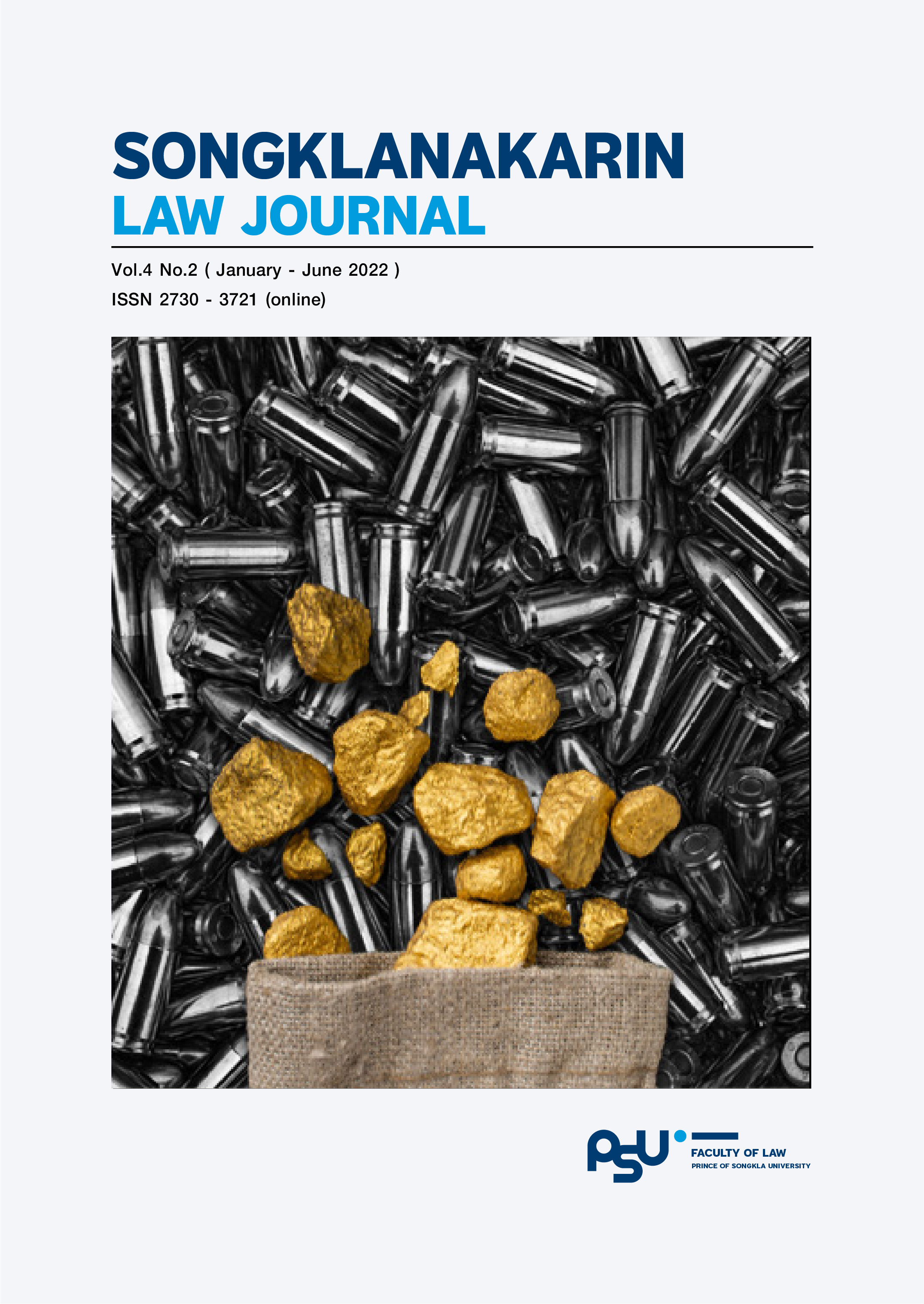
แร่แห่งความขัดแย้ง: การกลับมาของปัญหาสิทธิมนุษยชนที่แฝงเร้นท่ามกลางยุค 4.0
คำสำคัญ:
แร่แห่งความขัดแย้ง, การกำกับตรวจสอบแร่ปลอดความขัดแย้งบทคัดย่อ
ในยุคปัจจุบันผู้คนทั่วโลกต่างเพลิดเพลินกับการใช้และเรียนรู้เทคโนโลยีใหม่ ๆ ซึ่งขับเคลื่อนไปด้วยความทันสมัยในยุค 4.0 แต่จะมีสักกี่คนตระหนักถึงความสำคัญของวัตถุดิบซึ่งถูกนำมาใช้ในการผลิตข้าวของเครื่องใช้ในตลาดโลกทุกวันนี้ บทความวิชาการนี้มีวัตถุประสงค์หลักเพื่อนำผู้อ่านชาวไทย ไม่ว่าจะเป็นนักวิชาการ ผู้ประกอบการ บุคลากรในกระบวนการผลิตแร่และบุคคลทั่วไปได้ทำความรู้จักกับ แร่แห่งความขัดแย้ง (Conflict Minerals) โดยวิเคราะห์ถึงนิยาม ประวัติความเป็นมา แนวนโยบาย กฎหมายและระเบียบปฏิบัติ โดยการนำแนวความคิดเรื่องความเหลื่อมล้ำของสิทธิมนุษยชนซึ่งซ่อนเร้นอยู่ภายใต้ผลิตภัณฑ์ที่ผู้คนใช้กันอยู่ในชีวิตประจำวัน มาวิเคราะห์ภายใต้ทฤษฎีการประกอบการอย่างรับผิดชอบต่อสังคมของ OECD Guidance (The Organization for Economic Co-operation and Development) แห่งสหประชาชาติ รวมถึงบทบัญญัติทางกฎหมายไม่ว่าจะเป็น ร่างข้อบังคับสหภาพยุโรปหรือบทกฎหมายเพื่อการคุ้มครองผู้บริโภค Dodd Frank แห่งสหรัฐอเมริกา (The Dodd–Frank Wall Street Reform and Consumer Protection Act 2010) มาใช้เป็นกรอบในการวิเคราะห์ และความคาดหวังในอนาคตต่อการพัฒนาหลักปฏิบัติร่วมกันทั้งในระดับสากลและในประเทศไทย
ผลการวิเคราะห์พบว่าแม้จะมีการกำหนดแนวนโยบายซึ่งเกี่ยวข้องกับประเด็นปัญหาดังกล่าวในระดับสากล รวมถึงการมีกฎหมายบังคับใช้ในบางประเทศ หากแต่ยังคงปรากฏการเล็ดลอดเข้ามาของแร่แห่งความขัดแย้งผ่านช่องทางต่าง ๆ ทั้งในประเทศไทยและประเทศอื่น ๆ ทั่วทุกภูมิภาคในโลก อาจถึงเวลาที่เวทีนานาชาติจะต้องตระหนักถึงการมีอยู่ของแร่แห่งความขัดแย้งและร่วมมือกันหาทางออกไม่ว่าโดยการเพิ่มความแข็งแกร่งเชิงนโยบาย ระบบการตรวจสอบแร่ที่ละเอียดและเข้าถึงกระบวนการผลิตมากกว่าเก่า หรือการใช้ประโยชน์จากเครื่องมือทางกฎหมายเพื่อลดช่องว่างดังว่านั้น
เอกสารอ้างอิง
ณัชชา สุขะวัธนกุล. (23 ตุลาคม 2563). แร่ธาตุแห่งความขัดแย้ง: เมื่อการละเมิดสิทธิมนุษยชนแฝงมากับระบบอุตสาหกรรม. กรุงเทพธุรกิจ.
เรื่องเล่าจากข้าวของ. (2562). แร่แห่งความขัดแย้ง. สืบค้นวันที่ 24 กรกฎาคม 2564, จาก http://kundaliniyogana.com/2019/09/02/แร่แห่งความขัดแย้ง/
Archbishop Rusengo, Francois. (n.d.). Progress and Challenges on Conflict Minerals. Retrieved July 3, 2021, from https://enoughproject.org/special-topics/progress-and-challenges-conflict-minerals-facts
Bates, Nick, and Sunman, Hilary. (2009). Trading for Peace: Achieving security and poverty reduction through trade in natural resources in the Great Lakes area. Retrieved July 17, 2021, from https://www.eldis.org/document/A42479
Coghlan, B., Ngoy, P., Mulumba, F., Hardy, C., Bemo, V. N., Stewart, T., Lewis, J., and Brennan, R. (2018). Mortality in the Democratic Republic of Congo: An ongoing crisis. New York : International Rescue Committee.
DODD-FRANK WALL STREET REFORM AND CONSUMER PROTECTION ACT, PUBLIC LAW 111–203 2010.
Enough Project. (2017). 11 Letters from Congolese Civil Society Groups in Support of the U.S. Conflict Minerals Law. Retrieved July 22, 2021, from https://enoughproject.org/blog/seven-letters-congolese-groups-support-us-conflict-minerals-law
European Commission. (2020). Combatting conflict minerals, Retrieved July 11, 2021, from https://ec.europa.eu/trade/policy/in-focus/conflict-minerals-regulation/
Garrett, Nicholas and Mitchell, Harrison. (2009). Trading conflict for development. Retrieved July 3, 2021, from https://assets.publishing.service.gov.uk/media/57a08b6ced915d3cfd000ce4/trade-conflict-development.pdf
Garrett, Nicholas and Mitchell, Harrison. (2018, March 5). Congo Rebels Cash in on Demand for Tin, Financial Times.
Garrett, Nicholas, Sergiou, Sylvia, and Vlassenroot, Koen. (2019). Negotiated Peace for Extortion: The Case of Walikale Territory in eastern DR Congo. Journal of East African Studies, 3 (1), Retrieved July 24, 2021, from https://www.researchgate.net/publication/233148193_Negotiated_Peace_for_Extortion_The_Case_of_Walikale_Territory_in_Eastern_DR_Congo
Garrett, Nicholas. (2018). Artisanal Cassiterite Mining and Trade in North Kivu: Implications for Poverty Reduction and Security. Washington DC: The World Bank.
International Conference on the Great Lakes Region, The Pact on Security, Stability, and Development in the Great Lakes Region 2012.
Koch, Dirk-Jan. and Kinsbergen, Sara. (2018). Exaggerating unintended effects? Competing narratives on the impact of conflict minerals regulation. Resources Policy, 57. Retrieved July 10, 2021, from https://www.sciencedirect.com/science/article/pii/S0301420717302222?via%3Dihub
Kugiya, Hugo. (2012). New SEC rule forces manufacturers to disclose ‘conflict minerals’. Retrieved July 17, 2021, from https://www.bizjournals.com/seattle/news/2012/10/11/new-sec-rule-forces-manufacturers-to.html
Magnowski, Daniel. (2018, October 30). Tin price spike shows Congo’s growing origin role, Reuters.
OECD. (2016). OECD Due Diligence Guidance for Responsible Supply Chains of Minerals from Conflict-Affected and High-Risk Areas: Third Edition. Paris: OECD Publishing.
Prendergast, John. (2009). Can You Hear Congo Now? Cell Phones, Conflict Minerals, and the Worst Sexual Violence in the World. Retrieved July 11, 2021, from https://enoughproject.org/reports/can-you-hear-congo-now-cell-phones-conflict-minerals-and-worst-sexual-violence-world
Tegera, Aloys and Johnson, Dominic. (2017). Rules for Sale: Formal and informal cross-border trade in Eastern DRC. Goma : Pole Institute.
The Enough Project Team and the Grassroots Reconciliation Group. (2019). A Comprehensive Approach to Congo’s Conflict Minerals. Washington : The Enough Project.
ดาวน์โหลด
เผยแพร่แล้ว
ฉบับ
ประเภทบทความ
สัญญาอนุญาต
ลิขสิทธิ์ (c) 2022 วารสารกฎหมายสงขลานครินทร์

อนุญาตภายใต้เงื่อนไข Creative Commons Attribution-NonCommercial-NoDerivatives 4.0 International License.
ลิขสิทธิ์ในบทความที่ตีพิมพ์เผยแพร่เป็นของวารสารกฎหมายสงขลานครินทร์ วารสารกฎหมายสงขลานครินทร์มีสิทธิในการเผยแพร่ ทำซ้ำ หรือรวบรวมบทความที่ตีพิมพ์เผยแพร่แล้ว ความคิดเห็นใด ๆ ของผู้เขียนในบทความ กองบรรณาธิการวารสารไม่จำเป็นต้องเห็นพ้องด้วย ทั้งนี้กองบรรณาธิการวารสารไม่สงวนสิทธิในการคัดลอกแต่ให้อ้างอิงแหล่งที่มาด้วย

