Analysis of the Fundamental Teachings Found in the Dedication of Merit (Boon Cheak Khao) without Causes of Community Decline in Thasila Subdistrict, Songdao District, Sakhon Nakhon Province
Article Sidebar
Main Article Content
Abstract
This research aimed to: 1) study the significance and origin of the Boon Jaek Khao (Rice-Giving Merit-Making) ceremony free from vice; 2) study the Dhamma principles reflected in the Boon Jaek Khao ceremony free from vice in Tha Sila Subdistrict, Song Dao District, Sakon Nakhon Province; and 3) analyze the Dhamma principles manifested in this practice. This is qualitative research, gathering data from both documents and fieldwork through in-depth interviews with 25 key informants. The collected data was analyzed descriptively.
The research results were as follows:
1. The significance and origin of the Boon Jaek Khao ceremony free from vice: This ceremony supports the underprivileged and enhances familial and communal relationships by cultivating virtues and compassion among the merit-makers. It brings peace and a sense of fulfillment through wholesome actions and fosters collaboration within the community in accordance with Buddhist teachings. The avoidance of alcohol contributes to a serene and joyful merit-making atmosphere.
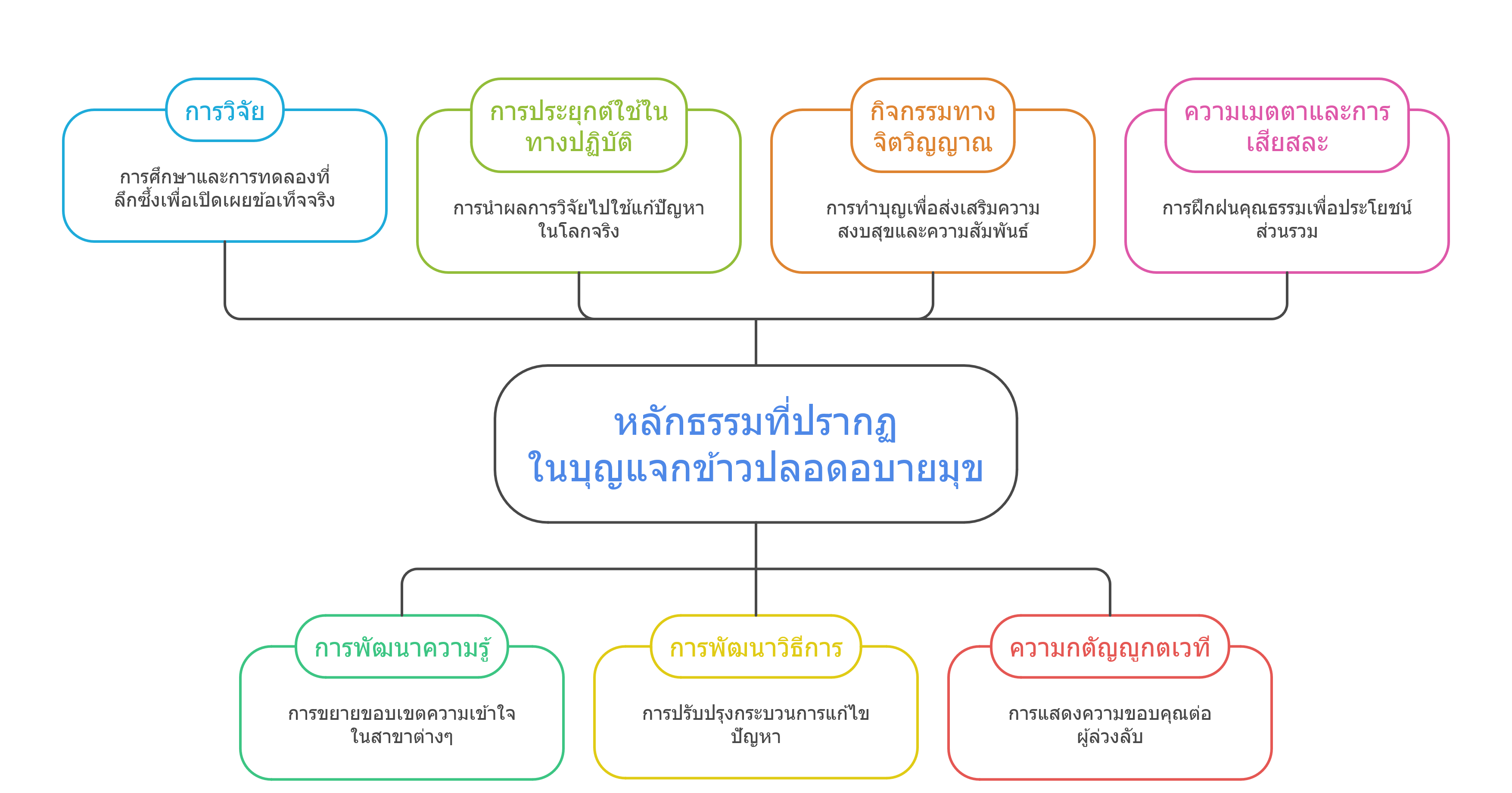
2. Dhamma principles in the Boon Jaek Khao ceremony free from vice in Tha Sila Subdistrict, Song Dao District, Sakon Nakhon Province: The practice embodies core Buddhist teachings such as generosity (Dāna), morality (Sīla), and meditation (Bhāvanā). It also emphasizes gratitude, the Five Precepts (Pañca-sīla), the Five Virtues (pañca-dhamma), and abstinence from vice. These principles encourage moral conduct, inner peace, and community harmony. Observing the Five Precepts fosters a peaceful and content life, while merit-making expresses gratitude and nurtures spiritual and intellectual growth.
3. Analysis of the Dhamma principles reflected in the Boon Jaek Khao ceremony free from vice: The practice in Tha Sila community reflects essential Dhamma principles including generosity, ethical conduct, and abstinence from vice. It enhances love, unity, and gratitude, contributing to a peaceful way of life and enriching social values.
Article Details

This work is licensed under a Creative Commons Attribution-NonCommercial-NoDerivatives 4.0 International License.
เพื่อให้เป็นไปตามกฎหมายลิขสิทธิ์ ผู้นิพนธ์ทุกท่านต้องลงลายมือชื่อในแบบฟอร์มใบมอบลิขสิทธิ์บทความ ให้แก่วารสารฯ พร้อมกับบทความต้นฉบับที่ได้แก้ไขครั้งสุดท้าย นอกจากนี้ ผู้นิพนธ์ทุกท่านต้องยืนยันว่าบทความ ต้นฉบับที่ส่งมาตีพิมพ์นั้น ได้ส่งมาตีพิมพ์เฉพาะในวารสาร วิชาการธรรม ทรรศน์ เพียงแห่งเดียวเท่านั้น หากมีการใช้ ภาพหรือตารางของผู้นิพนธ์อื่นที่ปรากฏในสิ่งตีพิมพ์อื่นมาแล้ว ผู้นิพนธ์ต้องขออนุญาตเจ้าของลิขสิทธิ์ก่อน พร้อมทั้ง แสดงหนังสือที่ได้รับการยินยอมต่อบรรณาธิการ ก่อนที่บทความจะได้รับการตีพิมพ์References
ปรีชา พิณทอง. (2534). ประเพณีโบราณไทยอีสาน. (พิมพ์ครั้งที่ 7). อุบลราชธานี: ศิริธรรมออฟเซ็ท.
พระครูสุธีคัมภีรญาณ. (2565). รูปแบบการแบ่งปันและการสร้างความกตัญญูในงานบุญแจกข้าวของชาวอีสาน. วารสารสังคมศาสตร์ปัญญาพัฒน์, 4(4), 269-282. https://so06.tci-thaijo.org/index.php/JSSP/article/view/260244
พระภัทรนันต์ ฐิตเสฏฺโฐ, พระครูโกศลอรรถกิจ, อุทัย เอกสะพัง, พระมหาอภินันท์ นนฺทภาณี คำหารพล และพระณัฐพงษ์ สิริสุวณฺโณ จันทร์โร. (2559). ศึกษาวิเคราะห์บุญกิริยาวัตถุ 3 ที่ปรากฏในคัมภีร์อรรถกถาธรรมบท. วารสารปัญญาปณิธาน, 1(1), 22-28. https://so05.tci-thaijo.org/index.php/PPJ/article/view/216206/150217
พุทธทาสภิกขุ. (2537). ภาษาคน-ภาษาธรรม. กรุงเทพฯ: ธรรมสภา.
มหาจุฬาลงกรณราชวิทยาลัย. (2539). พระไตรปิฎกภาษาไทย ฉบับมหาจุฬาลงกรณราชวิทยาลัย. กรุงเทพฯ: มหาจุฬาลงกรณราชวิทยาลัย.
อัษฎางค์ ชมดี. (2553). ร้อยเรื่องเมืองสุรินทร์. (พิมพ์ครั้งที่ 2). อุบลราชธานี: ศิริธรรมออฟ.
