
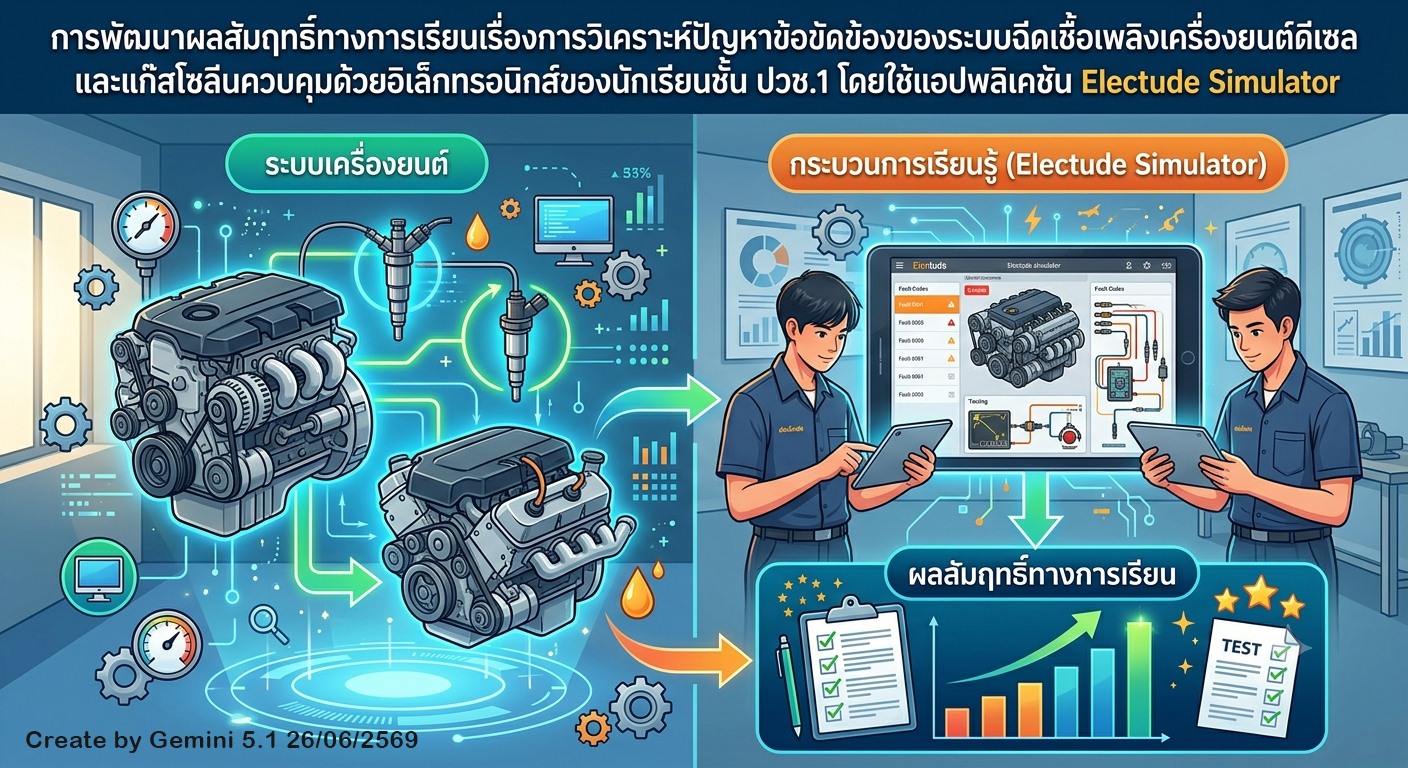
การพัฒนาผลสัมฤทธิ์ทางการเรียนเรื่องการวิเคราะห์ปัญหาข้อขัดข้องของระบบฉีดเชื้อเพลิงเครื่องยนต์ดีเซลและแก๊สโซลีนควบคุมด้วยอิเล็กทรอนิกส์ของนักเรียนชั้น ปวช.1 โดยใช้แอปพลิเคชัน Electude Simulator
Article Sidebar
Main Article Content
บทคัดย่อ
การวิจัยครั้งนี้มีวัตถุประสงค์เพื่อ 1) เปรียบเทียบผลสัมฤทธิ์ทางการเรียนเรื่องการวิเคราะห์ปัญหาข้อขัดข้องของระบบฉีดเชื้อเพลิงเครื่อดีเซลและแก๊สโซลีนควบคุมด้วยอิเล็กทรอนิกส์ ของนักเรียนชั้น ปวช. 1 โดยใช้แอปพลิเคชัน Electude Simulator ก่อนและหลังเรียน และ 2) ศึกษาความพึงพอใจของนักเรียนชั้น ปวช. 1 ที่มีต่อการเรียนโดยใช้ แอปพลิเคชัน Electude Simulator กลุ่มตัวอย่าง คือ นักเรียนระดับชั้นประกาศนียบัตรวิชาชีพ ชั้นปีที่ 1 แผนกวิชาช่างยนต์ จำนวน 20 คน เลือกแบบเจาะจง (Purposive Sampling) เครื่องมือ ได้แก่ แผนการจัดการเรียนรู้วิชางานแก๊สโซลีน แบบทดสอบวัดผลสัมฤทธิ์วิชางานแก๊สโซลีนและแบบสอบถามความพึงพอใจของนักเรียนที่มีต่อการเรียนโดยใช้แอปพลิเคชัน Electude Simu โดยใช้การวิจัยกึ่งทดลองใช้รูปแบบการทดลอง แบบกลุ่มเดียว วัดก่อนและหลังเรียน (One-Group Pretest–Posttest Design) สถิติที่ใช้ในการวิเคราะห์ข้อมูล ได้แก่ ค่าเฉลี่ย ส่วนเบี่ยงเบนมาตรฐาน และ T-Test Dependent ผลการวิจัยพบว่า 1) ผลสัมฤทธิ์ทางการเรียนของนักเรียนระดับ ปวช. 1 โดยใช้แอปพลิเคชัน Electude Simulator หลังการจัดการเรียนรู้สูงกว่าก่อนเรียนอย่างมีนัยสำคัญทางสถิติที่ระดับ .05 ค่าเฉลี่ยหลังเรียน ( = 25.50) ค่าเฉลี่ยก่อนเรียน (
= 18.30) และ 2) นักเรียนมีความพึงพอใจต่อการจัดการเรียนรู้โดยใช้แอปพลิเคชัน Electude Simulator อยู่ในระดับ “มากที่สุด”
= 4.52 และ S.D. = 0.53 ซึ่งสะท้อนให้เห็นถึงความเหมาะสมของสื่อเสมือนจริงในการเรียนการสอนด้านช่างยนต์
Article Details

อนุญาตภายใต้เงื่อนไข Creative Commons Attribution-NonCommercial-NoDerivatives 4.0 International License.
เอกสารอ้างอิง
กรมการขนส่งทางบก. (2562). รายงานสถานการณ์ยานยนต์ในประเทศไทย. กรมการขนส่งทางบก.
Electude. (n.d.). Automotive curriculum and learning solutions. https://www.electude. com/learning-solutions/automotive-curriculum.
Rutten, N., van Joolingen, W. R., & van der Veen, J. T. (2012). The learning effects of computer simulations in science education. Computers & Education, 58(1), 136–153.
Wieman, C. E., Adams, W. K., & Perkins, K. K. (2008). PhET: Simulations that enhance learning. Science, 322(5902), 682–683.
Electude International. (2014).Cloud-based engine management simulator. https://www.ratchetandwrench.com.
Ingerea. (n.d.). Electude e-learning platform. https://www.ingerea.com/en_ GB/electude
Electude. (n.d.). Automotive curriculum and learning solutions. https://www.electude. com/learning-solutions/automotive-curriculum.
Autocast. (n.d.). Why Autocast? E-learning solution for automotive technicians and engineers. https://autocast.ro/en/about/
Piaget, J. (1972). The psychology of the child. Basic Books.
บุญชม ศรีสะอาด. (2553). การวิจัยเบื้องต้น (พิมพ์ครั้งที่ 8). สุวีริยาสาส์น.
Kolb, D. A. (1984). Experiential learning: Experience as the source of learning and development. Prentice-Hall.
Mayer, R. E. (2009). Multimedia learning (2nd ed.). Cambridge University Press.
Chamorro-Atalaya, O., Morales-Romero, G., Quispe-Andía, A., Trinidad-Loli, N., León-Velarde, C., Lezama-Gonzales, P., & Mendoza-Daza, J. (2021). Analysis of satisfaction in the use of technological simulation tools in the learning of the automatic process control course. International Journal of Engineering Pedagogy (iJEP), 11(6), 132–140. https://doi.org/10.3991/ijep.v11i6.24911
