
การวางแผนกลยุทธ์การตลาดเพื่อเพิ่มยอดขายเม็ดพลาสติกของบริษัท พลาสติกพลัส จำกัด
Article Sidebar
Main Article Content
บทคัดย่อ
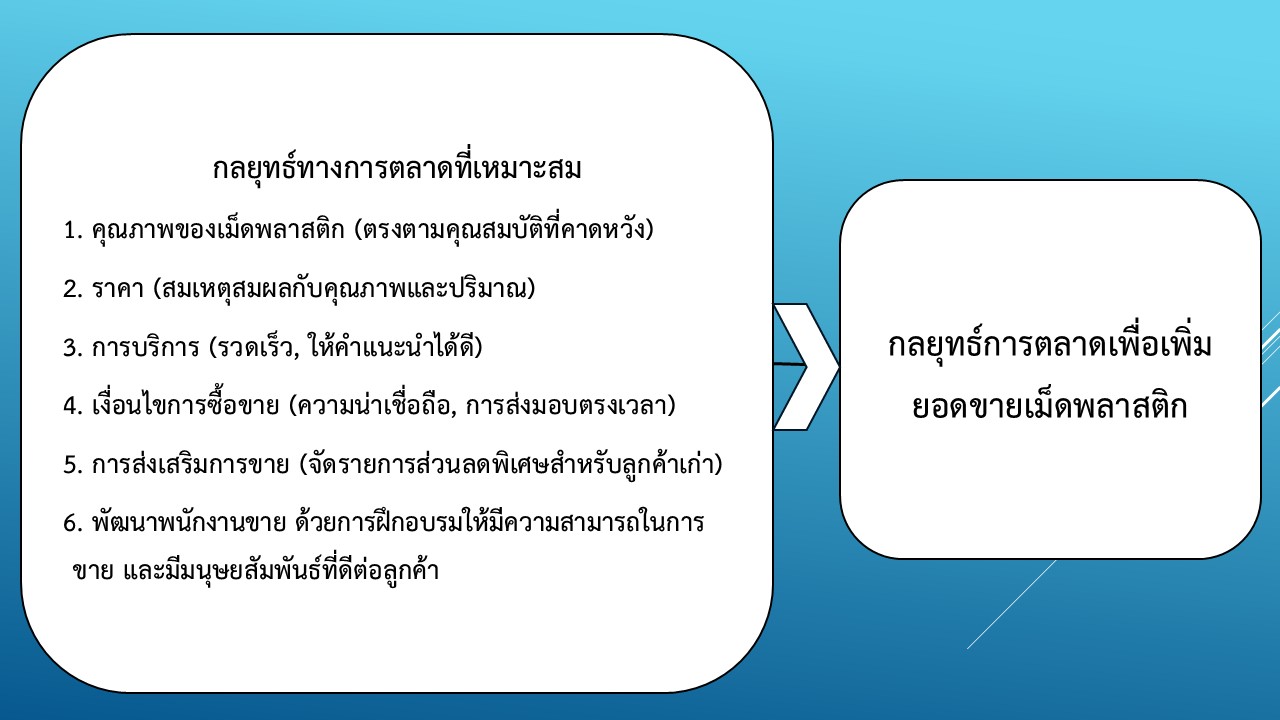
การศึกษาค้นคว้าอิสระเรื่องการวางแผนกลยุทธ์การตลาดเพื่อเพิ่มยอดขายเม็ดพลาสติกของบริษัทพลาสติกพลัส จำกัด มีวัตถุประสงค์เพื่อ 1) ศึกษาสาเหตุและสภาพแวดล้อมทางธุรกิจที่มีผลต่อการเพิ่มยอดขายเม็ดพลาสติก 2) ศึกษาความพึงพอใจของลูกค้าในการซื้อเม็ดพลาสติก 3) กำหนดกลยุทธ์ในการเพิ่มยอดขายเม็ดพลาสติก กลุ่มตัวอย่าง คือ ลูกค้าที่ซื้อเม็ดพลาสติกของบริษัทพลาสติกพลัส จำกัด จำนวน 100 คน เครื่องมือที่ใช้ในการเก็บรวบรวมข้อมูล คือ แบบสอบถาม และแบบสัมภาษณ์เชิงลึก วิเคราะห์ข้อมูลด้วยใช้สถิติเชิงพรรณนา และการวิเคราะห์เนื้อหา ผลการวิจัยพบว่า 1) สาเหตุสำคัญเกิดจากการที่บริษัท พลาสติก พลัส จำกัด ไม่ได้ทำการตลาดเชิงรุกและไม่มีฝากขายโดยตรง บริษัทฯ ได้รับการคำสั่งซื้อจากกลุ่มฐานลูกค้าเก่า กลุ่มลูกค้าที่ได้รับการแนะนำบอกต่อ และกลุ่มตัวแทนจำหน่ายเม็ดพลาสติก 2) ความพึงพอใจของลูกค้าในการซื้อเม็ดลาสติกจากบริษัทฯ คือสัมพันธภาพที่ดีและการบริการที่สะดวกรวดเร็ว การบริการหลังการขายหากลูกค้าต้องการเปลี่ยนสินค้า และเงื่อนไขการชำระเงินที่บริษัทบริการให้ลูกค้าอย่างมิตรภาพและเข้าใจ 3) กำหนดกลยุทธ์ในการเพิ่มยอดขายเม็ดพลาสติก ได้แก่ (1) สร้างความรับรู้ผลิตภัณฑ์เม็ดพลาสติกของบริษัท พลาสติก พลัส จำกัด (2) สร้างสัมพันธภาพที่ดีกับกลุ่มตัวแทนจำหน่ายเม็ดพลาสติกให้มีความเชื่อมั่น และสร้างรายการส่งเสริมการขาย (3) จัดรายการส่วนลดพิเศษสำหรับลูกค้าเก่าด้วยกรณีจ่ายเงินสด
คำสำคัญ: การวางแผน, กลยุทธ์การตลาด, การเพิ่มยอดขาย, เม็ดพลาสติก
Article Details

อนุญาตภายใต้เงื่อนไข Creative Commons Attribution-NonCommercial-NoDerivatives 4.0 International License.
เอกสารอ้างอิง
กริมา ชัยสงค์. (2565). กลยุทธ์การตลาดเพื่อการแข่งขันในอุตสาหกรรมพลาสติกของประเทศไทย.จุฬาลงกรณ์มหาวิทยาลัย.
จิราพร วัฒนพฤกษา. (2564). การพัฒนากลยุทธ์ส่วนประสมทางการตลาดสำหรับอุตสาหกรรมเม็ดพลาสติกชีวภาพในประเทศไทย. วารสารบริหารธุรกิจ, 45(2), 125-142.
ชุติมา เจริญชนม์. (2555). การศึกษากลยุทธ์ทางธุรกิจเพื่อการเติบโตของธุรกิจโรงสีข้าวกรณีศึกษา โรงสีข้าวเจริญธัญญกิจ จังหวัดราชบุรี [การศึกษาค้นคว้าอิสระ]. บัณฑิตวิทยาลัย มหาวิทยาลัยหอการค้าไทย.
น้อย คล้ายแจ้ง. (2558). ปัจจัยที่มีผลต่อการตัดสินใจซื้อเม็ดพลาสติกของลูกค้า บริษัท ปิโตรพลัส เคมีคอล จํากัด จังหวัดนครปฐม [วิทยานิพนธ์มหาบัณฑิต, มหาวิทยาลัยเกษตรศาสตร์].
ปกรณ์ ตั้งเจริญกุล, และ เมธา เลิศเจริญสุข. (2563). ปัจจัยแห่งความสำเร็จทางการตลาดในอุตสาหกรรมพลาสติกไทย. วารสารการจัดการสมัยใหม่, 18(1), 78-95.
ปทิตตา จันทร์สิน. (2567). แนวโน้มราคาเม็ดพลาสติกและวัสดุอุปกรณ์ที่ทำจากพลาสติกปี 2567 สืบค้นเมื่อ 4 สิงหาคม 2566, จาก https://www.v-servelogistics.com
ยงยุทธ ศรีสวัสดิ์. (2024).รูปแบบการยกระดับขนาดธุรกิจขนาดย่อมเพื่อพัฒนากลไกการตลาดเม็ดพลาสติกด้วยภาคีเครือข่ายในพื้นที่ปริมณฑล [วิทยานิพนธ์มหาบัณฑิต, มหาวิทยาลัยกรุงเทพธนบุรี].
สมชาย มีโชค, วนิดา สุขศรี, และ อนุชา พัฒนกิจ. (2562). อิทธิพลของส่วนประสมทางการตลาดที่มีต่อผลการดำเนินงานของธุรกิจเอสเอ็มอีในอุตสาหกรรมพลาสติก. Veridian E-Journal, 12(3), 45-60.
อรุณี เกตุมงคล. (2564). การศึกษาอุปสรรคทางการตลาดในการส่งออกเม็ดพลาสติกของวิสาหกิจขนาดกลางและขนาดย่อมในประเทศไทย [วิทยานิพนธ์มหาบัณฑิต, มหาวิทยาลัยธรรมศาสตร์].
David, F. R., & David, F. R. (2017). Strategic management: A competitive advantage approach, concepts and cases (16th ed.). Pearson Education.
Grünig, R., & Kühn, R. (2015). The strategy planning process: Analyses, options, projects. Springer.
Helms, M. M., & Nixon, J. (2010). Exploring SWOT analysis – where are we now? A review of academic research from the last decade. Journal of Strategy and Management, 3(3), 215-251.
Kotler, P., & Keller, K. L. (2016). Marketing management (15th ed.). Pearson Education.
Kotler, P., & Keller, K. L. (2016). Marketing management (15th ed.). Pearson Education.
Oliver, R. L. (2014). Satisfaction: A behavioral perspective on the consumer (2nd ed.). Routledge.
Porter, M. E. (2008). The five competitive forces that shape strategy. Harvard Business Review Press.
Yüksel, I. (2012). Developing a multi-criteria decision-making model for PESTEL analysis. International Journal of Business and Management, 7(24), 52-66.
