
ความต้องการจำเป็นและแนวทางการบริหารแบบมีส่วนร่วมที่ส่งผลต่อประสิทธิภาพงานพัสดุของโรงเรียน ในสังกัดสำนักงานเขตพื้นที่การศึกษามัธยมศึกษานครสวรรค์
Article Sidebar
Main Article Content
บทคัดย่อ
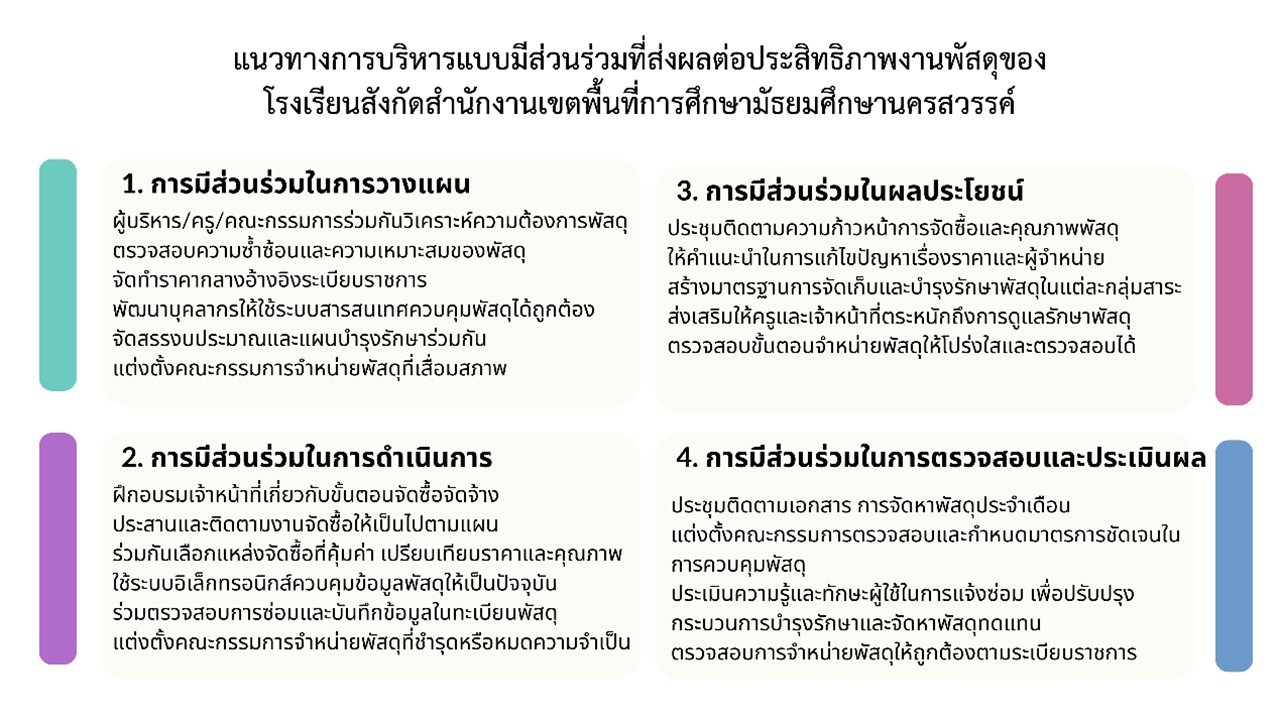
การวิจัยครั้งนี้มีวัตถุประสงค์ 1. เพื่อศึกษาสภาพปัจจุบัน สภาพที่พึงประสงค์ และประเมินความต้องการจำเป็นในการบริหารแบบมีส่วนร่วมที่ส่งผลต่อประสิทธิภาพงานพัสดุของโรงเรียน 2. เพื่อเปรียบเทียบสภาพปัจจุบัน และสภาพที่พึงประสงค์ในการบริหารแบบมีส่วนร่วมที่ส่งผลต่อประสิทธิภาพงานพัสดุของโรงเรียน จำแนกตามการดำรงตำแหน่ง และประสบการณ์ในการปฏิบัติงาน และ3. แนวทางการบริหารแบบมีส่วนร่วมที่ส่งผลต่อประสิทธิภาพงานพัสดุของโรงเรียน ในสังกัดสำนักงานเขตพื้นที่การศึกษามัธยมศึกษานครสวรรค์ เครื่องมือที่ใช้ในการวิจัย คือ แบบสอบถามและแบบสัมภาษณ์กึ่งโครงสร้าง กลุ่มตัวอย่าง ได้แก่ นักวิชาการพัสดุปฏิบัติการ ผู้บริหารสถานศึกษา เจ้าหน้าที่พัสดุ และครู จำนวน 398 คน สถิติที่ใช้ในการวิเคราะห์ข้อมูลเชิงปริมาณ ได้แก่ ค่าความถี่ ร้อยละ ค่าเฉลี่ยค่าเบี่ยงเบนมาตรฐาน การวิเคราะห์ความแปรปรวนทางเดียว (One-way ANOVA) ความต้องการจำเป็น (PNI modified) และข้อมูลเชิงคุณภาพด้วยวิธีการวิเคราะห์เนื้อหา ผลการวิจัยพบว่า 1. สภาพปัจจุบัน และสภาพที่พึงประสงค์ในการบริหารแบบมีส่วนร่วมที่ส่งผลต่อประสิทธิภาพงานพัสดุของโรงเรียน โดยรวมอยู่ในระดับมาก และมากที่สุด ตามลำดับ มีความต้องการจำเป็นเรียงลำดับความสำคัญจากมากไปหาน้อย ได้แก่ 1) ด้านการบำรุงรักษาพัสดุ 2) ด้านการควบคุมพัสดุ 3) ด้านการจำหน่ายพัสดุ และ4) ด้านการจัดหาพัสดุ 2. ผลการเปรียบเทียบสภาพปัจจุบัน และสภาพที่พึงประสงค์ในการบริหารแบบมีส่วนร่วมที่ส่งผลต่อประสิทธิภาพงานพัสดุจำแนกตามการดำรงตำแหน่ง และประสบการณ์ในการปฏิบัติงาน พบว่า แตกต่างกันอย่างมีนัยสำคัญทางสถิติที่ระดับ .01 และ3. แนวทางการบริหารแบบมีส่วนร่วมที่ส่งผลต่อประสิทธิภาพงานพัสดุของโรงเรียน ควรส่งเสริมให้ผู้บริหารคณะกรรมการ และครูมีส่วนร่วมในการวางแผนและจัดการระบบการจัดซื้อจัดจ้าง เน้นถึงความจำเป็นในการประเมินร่วมกัน การฝึกอบรม การจัดทำงบประมาณ และการตรวจสอบพัสดุ เพื่อให้แน่ใจว่า การดำเนินงานมีประสิทธิภาพและโปร่งใส เน้นการประเมินและปรับปรุงการจัดซื้อจัดจ้างอย่างต่อเนื่อง
คำสำคัญ: การบริหารแบบมีส่วนร่วม, ประสิทธิภาพ, งานพัสดุ
Article Details

อนุญาตภายใต้เงื่อนไข Creative Commons Attribution-NonCommercial-NoDerivatives 4.0 International License.
เอกสารอ้างอิง
จงรักษ์ เวียงสมุทร. (2559). ปัจจัยที่มีผลต่อประสิทธิภาพการบริหารงานคลังขององค์การบริหารส่วนตำบลในเขตอำเภอสามชัย จังหวัดกาฬสินธุ์ (วิทยานิพนธ์บริหารธุรกิจมหาบัณฑิต). มหาวิทยาลัยราชภัฏมหาสารคาม.
จุฑามาศ เสมามอญ. (2558). ปัญหาและแนวทางพัฒนางานพัสดุของครูในโรงเรียนมัธยมศึกษาสหวิทยาเขตระยอง 2 สังกัดสำนักงานเขตพื้นที่การศึกษามัธยมศึกษา เขต 18 (วิทยานิพนธ์การศึกษามหาบัณฑิต สาขาวิชาการบริหารการศึกษา). มหาวิทยาลัยบูรพา.
ชุติมา สรรพโส. (2562). สภาพและปัญหาการดำเนินงานพัสดุผ่านระบบสารสนเทศของโรงเรียน สังกัดสำนักงานเขตพื้นที่การศึกษาประถมศึกษาบึงกาฬ (วิทยานิพนธ์ครุศาสตรมหาบัณฑิต สาขาวิชาการบริหารการศึกษา). มหาวิทยาลัยราชภัฏสกลนคร.
ทัดชัย วงค์คำจันทร์. (2566). ความต้องการจำเป็นและแนวทางการพัฒนาประสิทธิผลการบริหารงานพัสดุในโรงเรียน สังกัดสำนักงานเขตพื้นที่การศึกษาประถมศึกษาบึงกาฬ (วิทยานิพนธ์มหาบัณฑิต สาขาวิชาการบริหารการศึกษา). มหาวิทยาลัยราชภัฏสกลนคร.
ทำนอง ภูเกิดพิมพ์. (ม.ป.ป.). แนวคิดการบริหารแบบมีส่วนร่วมในการจัดการศึกษาของชุมชน. http://www.thaischool.net/view_tj.php
ธร สุนทรายุทธ. (2551). การบริหารจัดการเชิงปฏิรูป: ทฤษฎี วิจัย และปฏิบัติทางการศึกษา. กรุงเทพฯ: บริษัท เนติกุลการพิมพ์ จำกัด.
บุญชม ศรีสะอาด. (2556). วิธีการทางสถิติสำหรับการวิจัย (พิมพ์ครั้งที่ 5). กรุงเทพฯ: สุวิริยาสาส์น.
บุษบา เคะนะอ่อน. (2565). ความสัมพันธ์ระหว่างการบริหารแบบมีส่วนร่วมกับประสิทธิผลการบริหารโรงเรียนขนาดเล็ก สังกัดสำนักงานเขตพื้นที่การศึกษาประถมศึกษาสกลนคร เขต 1 (วิทยานิพนธ์มหาบัณฑิต). มหาวิทยาลัยราชภัฏสกลนคร.
ประสาร พรหมณา. (ม.ป.ป.). การบริหารแบบมีส่วนร่วม. http://trang.nfe.go.th/alltis16/UserFiles/ Pdf/wijaiman.pdf
ปิยวรรณ มากกลาย, & ภูมิพิพัฒน์ รักพรมงคล. (2561). แนวทางพัฒนาการบริหารงานพัสดุของสถานศึกษา สังกัดสำนักงานเขตพื้นที่การศึกษาประถมศึกษากำแพงเพชร เขต 2. ใน เอกสารประกอบรายงานสืบเนื่องจากการประชุมวิชาการระดับชาติ ครุศาสตร์ ศึกษา ครั้งที่ 1 (หน้า 136–148).
เยาวรักษ์ ฉัตรวิไล. (2560). ประสิทธิภาพการบริหารงานพัสดุขององค์การบริหารส่วนจังหวัดสกลนคร (วิทยานิพนธ์ รป.ม.). มหาวิทยาลัยราชภัฏสกลนคร.
สำนักงานคณะกรรมการพัฒนาระบบราชการ. (2566). เว็บไซต์สำนักงานคณะกรรมการพัฒนาระบบราชการ. http://www.opdc.go.th/special.php?spc_id=2&contentid=156
สุทธีรา นัยติ๊บ, & สมชาย บุญศิริเภสัช. (2558). การศึกษาการบริหารงานของโรงเรียนมัธยมศึกษาในจังหวัดแพร่. ใน รายงานสืบเนื่องจากการประชุมสัมมนาวิชาการนำเสนองานวิจัยระดับนานาชาติ เครือข่ายบัณฑิตศึกษา มหาวิทยาลัยราชภัฏภาคเหนือ ครั้งที่ 15 (หน้า 1,563–1,572).
สุภารัตน์ บาลนาคม. (2564). ปัจจัยที่ส่งผลต่อประสิทธิภาพการบริหารงานพัสดุในโรงเรียน สังกัดสำนักงานเขตพื้นที่การศึกษาประถมศึกษาอุดรธานี เขต 1 (วิทยานิพนธ์ครุศาสตรมหาบัณฑิต). มหาวิทยาลัยราชภัฏสกลนคร.
สุวัช มูลเมืองแสน. (2563). สภาพปัญหาและแนวทางการบริหารงานพัสดุในโรงเรียนมัธยมศึกษา สังกัดเขตตรวจราชการที่ 11 (วิทยานิพนธ์ครุศาสตรมหาบัณฑิต สาขาวิชาการบริหารการศึกษา). มหาวิทยาลัยราชภัฏสกลนคร.
สุวิมล ว่องวาณิช. (2562). การวิจัยประเมินความต้องการจำเป็น (พิมพ์ครั้งที่ 4). กรุงเทพฯ: สำนักพิมพ์แห่งจุฬาลงกรณ์มหาวิทยาลัย.
Bryman, A. (1986). Leadership and organization. London: Routledge & Kegan Paul.
Chambers, R., Pacey, A., & Thrupp, L. A. (1989). Farmer first: Farmer innovation and agricultural research. North Yorkshire: Short Run Press.
Cohen, J. M., & Uphoff, N. T. (1980). Participation's place in rural development: Seeking clarity through specificity. New York: World Development.
Likert, R. (1993). A technique for the measurement of attitude. Chicago: Rand McNally.
