
Effective Transformational Leadership Model For Middle-level Administrators in Private Colleges and Universities under Shaanxi Province
Article Sidebar
Main Article Content
บทคัดย่อ
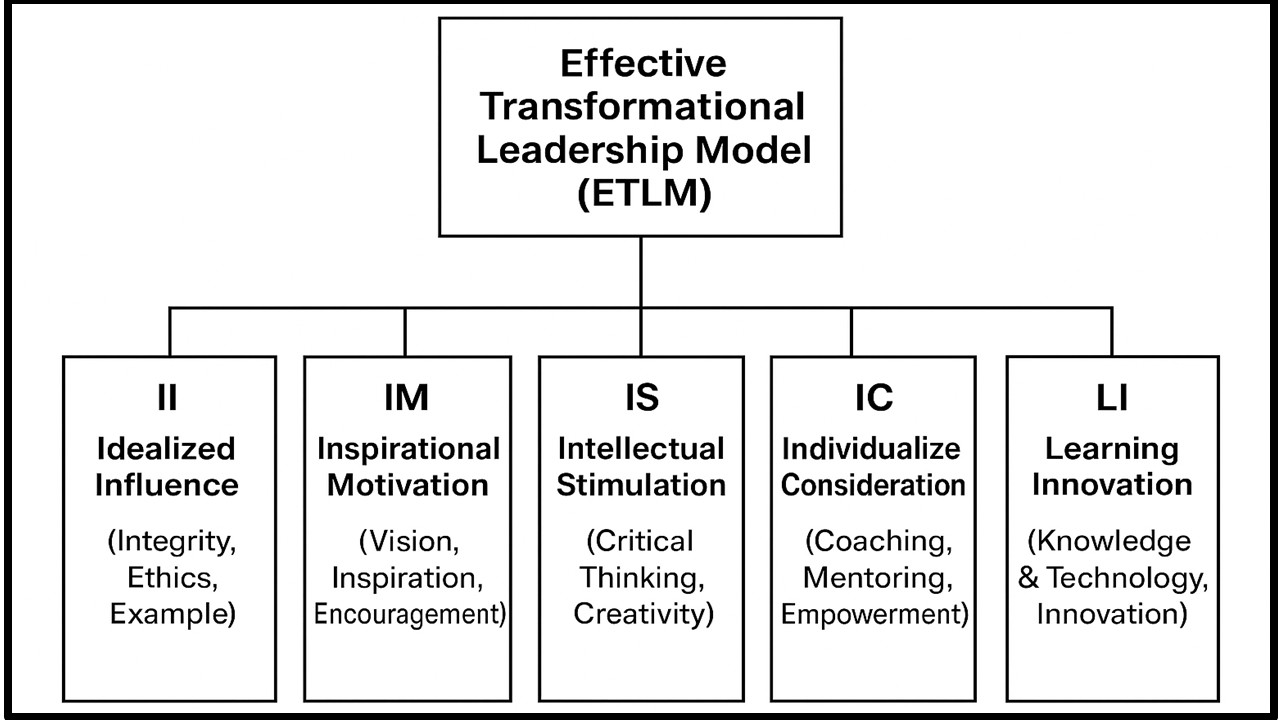
The research objectives of this dissertation were: 1) To determine the components and indicators to the effective transformational leadership model for middle-level administrators in private colleges and universities under Shaanxi Province; 2) To propose the effective transformational leadership model for middle-level administrators in private colleges and universities under Shaanxi Province; 3) To develop the guidelines to apply effective transformational leadership model for middle-level administrators in private colleges and universities under Shaanxi Province. This research combined quantitative and qualitative methods. It selected 309 administrative personnel, assistant deans, department heads, and teachers of private colleges and universities in Shaanxi Province. Using a stratified sampling method, data were collected through IOC tools, five-point scale questionnaires, and focus group interviews. The questionnaire response rate was 100% and all were valid. Data analysis was conducted through CFA to explore the effective transformational leadership model of middle-level administrators in private colleges and universities in Shaanxi Province. The research results show: 1) The effective transformational leadership model of middle-level administrators consists of 5 components: Ideal Influence (II), Inspirational Motivation (IM), Intellectual Stimulation (IS), Individualized Consideration (IC), and Learning Innovation (LI), including 41 measurement indicators; 2) Model of effective transformational leadership for middle-level administrators in private colleges and universities under Shaanxi Province was fit with the empirical data;3) Five key guidelines were identified for the effective transformational leadership capabilities of middle-level administrators in private colleges and universities in Shaanxi Province.
Keywords: Effective, Transformational Leadership, Model, Private Colleges and Universities
Article Details

อนุญาตภายใต้เงื่อนไข Creative Commons Attribution-NonCommercial-NoDerivatives 4.0 International License.
เอกสารอ้างอิง
Amabile, T. M. (1996). Creativity in context. Update to the social psychology of creativity. Boulder, CO: Westview Press.
Asbari, M. (2024). The effect of transformational leadership, organizational structure, and learning culture on school innovation capacity. Professional Education Studies and Operations Research, 1(2), 22–29.
Bass, B. M. (1985). Leadership and performance beyond expectations. Free Press.
Bass, B. M.& Riggio, R. E. (2006). Transformational leadership (2nd ed.). Psychology Press.
Bass,B.M.&Avolio,B.J.(1994). Improving organizational effectiveness through transformational leadership. Sage Publications.
Benavides,L.M.,Arias, J., F. O. (2020). Digital transformation in higher education institutions: A systematic literature review. International Journal of Educational Technology in Higher Education, 17(1), 1–24.
Bento, F., Adenusi, T.& Khanal, P. (2023). Middle-level leadership in schools: A scoping review of literature informed by a complex system perspective. International Journal of Leadership in Education.
Collingwood,B.P. (2023). Leadership development experiences of middle-level administrators in higher education: A phenomenological study. Doctoral dissertation, Gannon University.
Chen, H., Liu, J., & Yu, X. (2022). The development of private higher education in Shaanxi: Challenges and opportunities.Journal of Higher Education Development in China, 45(3), 78–92.
Feng, C., Liu,L.& Zhang,L.(2016). A decade of research progress on transformational leadership in China. Studies of Psychological and Behavior, 14(1), 134–139.
He, R.& Zhang, R. (2022). The role of leadership in promoting interdisciplinary collaboration in teaching-oriented universities. Educational and Management Research, 3, 44–49.
Hou, M., Ahmad, J. B.& Zhao, Y. (2024). Integrating transformational leadership with artificial intelligence: Driving a new future for Chinese K–12 education. International Journal of Educational Organization & Leadership, 31(1), 123.
Kusmaryanto, S.& Santoso, C. B. (2025). A scoping review of middle managers in the digital transformation era in public sector organizations: Are they still needed? Cogent Business & Management, 12(1), Article 2461734.
Leithwood, K.,& Jantzi, D. (2006). Transformational school leadership for large-scale reform: Effects on students, teachers, and their classroom practices. School Effectiveness and School Improvement, 17(2), 201–227.
Li, F.& Liao, Q. (2024). Analysis of transformational leadership research hotspots over the last decade based on CiteSpace. Management Review, 8, 50–64.
Li, N.& Hou, J. (2018). Human-oriented management for middle-level cadres in private colleges. Research in Educational Development, 20, 42–47.
Li, Y. (2024). Path analysis of transformational leadership's four dimensions in inspiring followers. PR Magazine, 150(8), 88–90.
Liang, J. (2024). The construction and development of teacher leadership model from the perspective of strategic execution of private colleges in Guangxi. Journal of Hubei Open Vocational College, 37(11), 32–43.
Liu, F.& Chen, J. (2020). The mechanism of leadership impact on organizational performance in public universities: An empirical study. Journal of Higher Education Administration, 4, 52–58.
Shamir, B., House, R. J.& Arthur, M. B. (1993). The motivational effects of charismatic leadership: A self-concept based theory. Organization Science, 4(4), 577–594.
Smith, D. & Vass, A. (2019). Leadership development in higher education: Examining the efficacy of leadership programs for middle-level administrators. Journal of Higher Education Policy and Leadership Studies, 3(1), 12–27.
Senge, P. M. (1990). The fifth discipline: The art and practice of the learning organization. Doubleday.
Wang, J.& Li, Q.(2021). Building innovative capacity in under-resourced Chinese universities: The role of organizational learning. Journal of Higher Education Policy and Management, 43(3), 279–295.
Weng,H.(2022).From learning organizations to digital governance: Pathways for administrative transformation in Chinese universities. Modern University Education, 2, 51–56.
Xie, H. X.& Ma, J. T. (2021). Research on the moral legitimacy and exemplary behavior of private university leaders in transitional China. Journal of Higher Education Development, 42(3), 45–52.
Zhao, X.& Liu,Y. (2020). Vision-driven leadership in private university governance. Research on Higher Education in China, 12, 45–68.
