
Professional Administrations in the Art Universities under Liaoning Province
Article Sidebar
Main Article Content
บทคัดย่อ
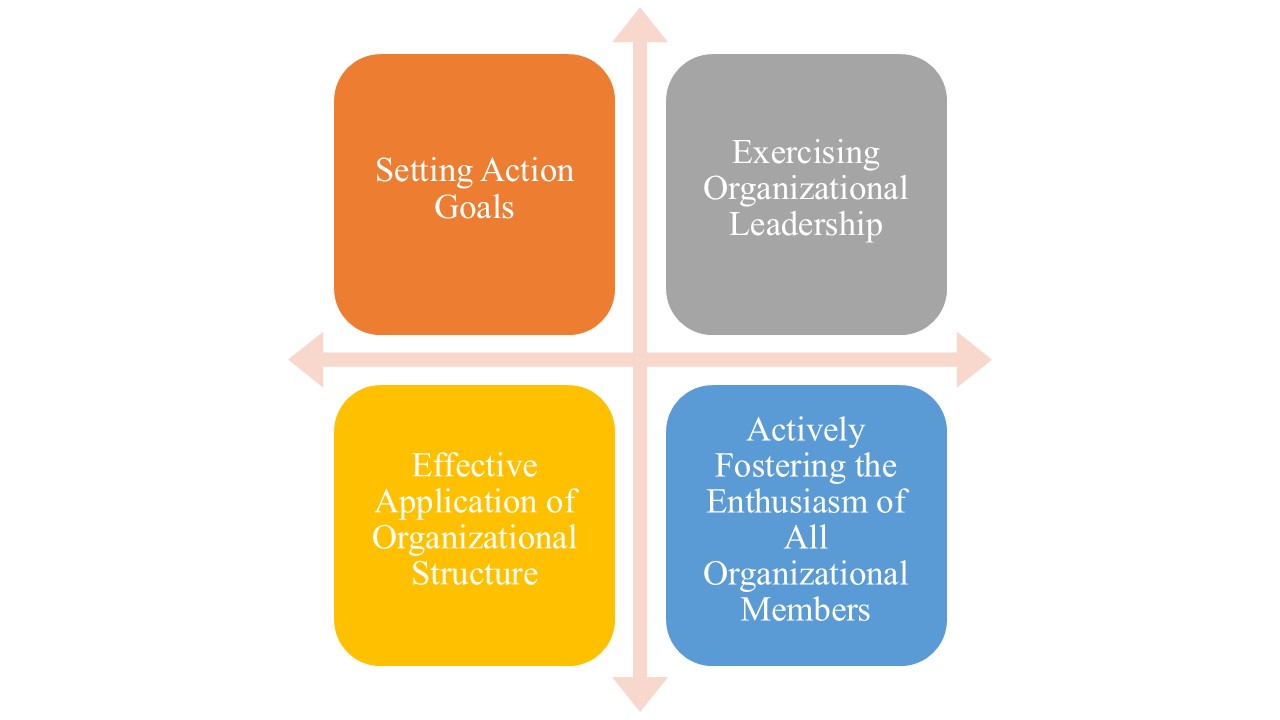
The objectives of this research were: (1) to explore the components of professional administrators in art universities under Liaoning Province, (2) to validate a professional administrators’ model for art universities under Liaoning Province, and (3) to propose practical guidelines for professional administrators in art universities under Liaoning Province. This study employed a mixed-methods design that combined quantitative and qualitative approaches. The population comprised 1,047 teachers working during the 2023 academic year across eight art universities in Liaoning Province. A stratified random sampling method, based on Krejcie and Morgan’s table, was used to select 285 teachers. Additionally, nine key informants were chosen through purposive sampling for interviews, and a focus group discussion was conducted with seven key informants. Research instruments included semi-structured interview guides, a five-point Likert-scale questionnaire, and a focus group discussion guide. The questionnaire response rate was 100%. Data analysis involved frequency, percentage, mean, standard deviation, confirmatory factor analysis (CFA), and content analysis. The findings revealed that professional administrators in art universities in Liaoning Province consist of four main components: (1) setting action goals, (2) exercising organizational leadership, (3) applying organizational structures effectively, and (4) promoting the active engagement of all organizational members. The validated model comprised 20 indicators across the four components. Furthermore, professional guidelines were proposed, consisting of five guidelines for each component.
Keywords: Professional Administrators, Professional Development, Guidelines, Art Universities, Liaoning Province
Article Details

อนุญาตภายใต้เงื่อนไข Creative Commons Attribution-NonCommercial-NoDerivatives 4.0 International License.
เอกสารอ้างอิง
Cao Maojia&Jiang Hua (2021). Analysis on the dynamic system of professional development of young teachers in colleges and universities. Educational Science (03), 89-96.
Chen Rui&Lei Wanpeng (2021). The value implication and practice path of college teachers' professional independent development Journal of Hubei University. Philosophy and Social Sciences Edition (04), 166-173.
Chen Yunzhe&Li Xiang (2021). Research on the influencing factors of the pressure and power transformation of the "elite youth" -- taking the young teachers group in colleges and universities as an example China. Youth Research (11), 13-23.
Chayboonkrong.P, Worapongpat, N. (2024). Promoting teachers' technology usage in Nongkungsri 1 under Kalasin Primary Educational Service Area Office 2, Journal of Public and Private Issues (JPPI), 1(1), 1-12.
Dongling.Z, Worapongpat, N. (2023). Academic Leadership of Administrator Influence Learning Organization of Case Study of The University, Hong Kong, International Journal of Multidisciplinary in Educational & Cultures Studies, 1(2), 12-20.
Du Manli (2017). Prospects for the professional development of university teachers in the context of information technology -- based on the comparison of the current situation of the professional development of university teachers in China and the United States. China Adult Education (09), 134-137.
Friedman, A., & Phillips, M. (2020). Conflict management and collaborative leadership in educational settings. Journal of Leadership Studies, 19(3), 89-103.
Gu Murong (2018). The practical dilemma and realization path of the development of young college teachers' teaching academic ability. Contemporary Education Science (11), 65-68.
Guo, H. (2021). The role of leadership in enhancing team enthusiasm and organizational performance. Journal of Educational Leadership, 14(2), 115-126.
Hou Xichao and Zhang Xiufang (2016). Three basic issues in the professional development of university teachers. Modern Education Management (06), 104-107.
Hu Meng&Ning Lina (2022). The innovative practice of improving the ability of university teachers to cultivate morality and cultivate people - A review of How Teachers Establish Morality and Cultivate People Research on Science and Technology Management (21), 250-252.
Jiang Zhanfeng&Liu Ning (2022). The value implication, practical challenges and logical approach of college teachers' ability to improve the ideological and political education of the curriculum. China University Teaching (03), 70-76.
Jing Anlei & Zhou Haitao (2019). Analysis of the key tasks and ways to strengthen the construction of university teachers. Journal of the National Institute of Education Administration (03), 48-52.
Keung, C., et.al. (2020). Kindergarten teachers’ perceptions of whole-child development: The roles of leadership practices and professional learning communities. Educational Management Administration & Leadership, 48(5), 875-892. https://doi.org/10.1177/1741143219864941
Luo Jun (2018). A Brief Discussion on the Political Competence Building of Middle-level Leaders in Universities in the New Era. School Party Building and Ideological Education, 2018(11), 64-66.
Lei Wei (2018). Characteristics, current situation and strategies of professional development of young teachers in colleges and universities. Educational Theory and Practice (24), 41-43.
Li Na (2016). The lack and response of organizational support in the professional development of university teachers. Modern Education Management (08), 79-83.
Li Qingyuan, Shi Lingming&Zuo Nihong. (2006). Analysis of professional development of higher vocational teachers. Education and occupation (23), 51-53.
Liu Zhanxu&Wang Wenli (2017). Analysis of the role of university teachers in the ecological environment of smart education Fujian Forum. Humanities and Social Sciences Edition (05), 173-177.
Li, J., & Wong, C. (2020). Organizational structure and leadership: Improving transparency and communication in educational institutions. Journal of Educational Management, 34(1), 72-85.
Li, J. (2021). Strategic goal-setting in educational leadership: Aligning mission and objectives. International Journal of Educational Management, 32(4), 78-91.
Makjod , S., Worapongpat, N., Kangpheng, S., & Bhasabutr, P.. (2025). Academic Administration of the Opportunity Expansion School under the Prachinburi Primary Educational Service Area Office 1 . Journal of Education and Learning Reviews, 2(5), 85–94.
Min.Y,Worapongpat,N. (2023). CREATIVE LEADERSHIP AND SCHOOL ADMINISTRATION PARTICIPATION UNDER ZHONG SHAN POLYTECNIC IN GUANGDONG PROVINCE, International Journal of Multidisciplinary in Educational & Cultures Studies,1(1), 1-13
Ning.L ,Worapongpat.N, Wongkumchai.T, Zidi.X, Jiewei.W, Mingyu.Z. (2023). ADMININSTRATION MUSIC COURSES FOR SUSTAINABLE SUCCESS CASE STUDY JIANGLING TOWN CENTRAL HIGH SCHOOL DAZHOU CITY, UBRU International Journal Ubon Ratchathani Rajabhat University [ubruij], 3(2), 21-39.
Matt Mundey. (2023). Proposed 9 Benefits of Continuous Professional Development Retrieved. from https://www.think-learning.com/performance-management/ benefits-of-continuous-professional-development/
