
การพัฒนาโปรแกรมเสริมสร้างภาวะผู้นำทางวิชาการของครู สังกัดสำนักงานเขตพื้นที่การศึกษาประถมศึกษาร้อยเอ็ด เขต 2
Article Sidebar
Main Article Content
บทคัดย่อ
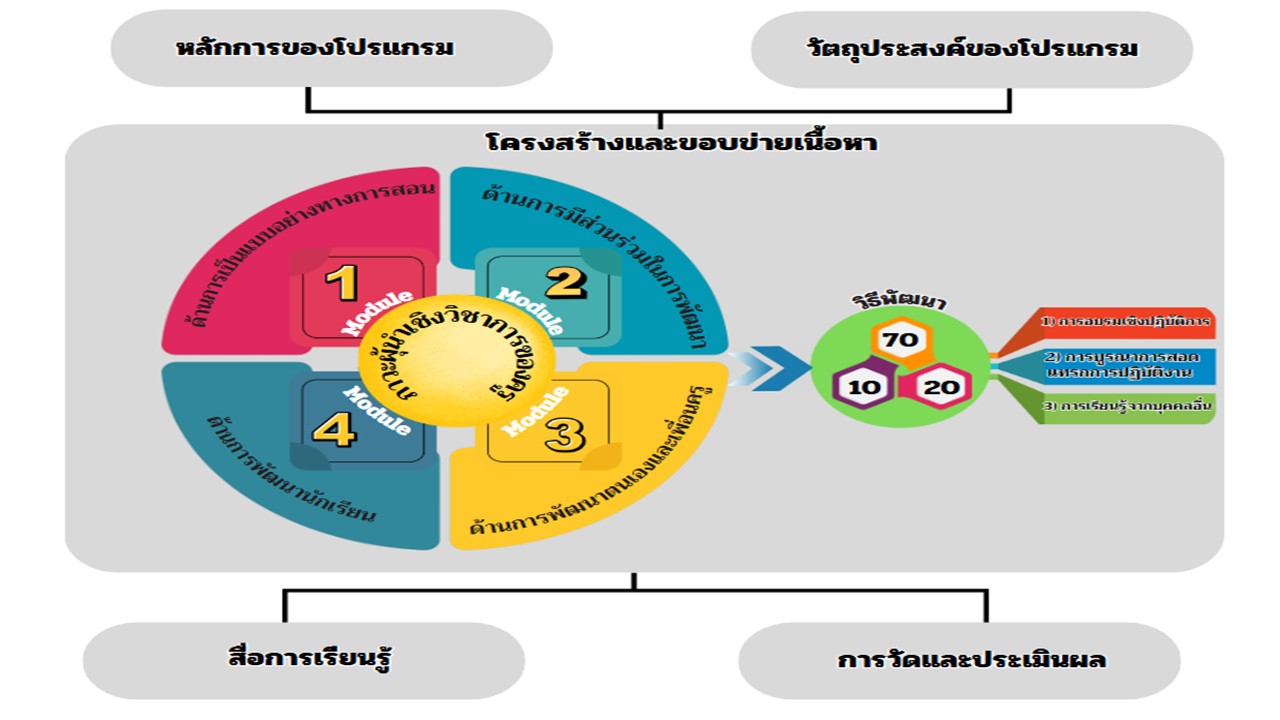
งานวิจัยนี้มีความสำคัญในการยกระดับคุณภาพครู โดยมุ่งเน้นการเสริมสร้าง ภาวะผู้นำทางวิชาการ เนื่องจากผลการศึกษาพบว่า สภาพปัจจุบันของภาวะผู้นำทางวิชาการของครูในสังกัดฯ โดยรวมอยู่ในระดับปานกลาง ซึ่งต่ำกว่าสภาพที่พึงประสงค์อย่างมาก การพัฒนาโปรแกรมจึงเป็นความจำเป็นเร่งด่วนเพื่อแก้ไขช่องว่างและเพิ่มความเข้มแข็งทางวิชาการให้แก่ครู มีวัตถุประสงค์ในการวิจัยดังนี้ 1) เพื่อศึกษาสภาพปัจจุบัน สภาพที่พึงประสงค์ และความต้องการจำเป็นในการพัฒนาโปรแกรมฯ 2) เพื่อพัฒนาโปรแกรมเสริมสร้างภาวะผู้นำทางวิชาการของครู สังกัดสำนักงานเขตพื้นที่การศึกษาประถมศึกษาร้อยเอ็ด เขต 2 มีวิธีวิจัยแบบผสานวิธี แบ่งเป็น 2 ระยะ คือ ระยะที่ 1 การศึกษาสภาพและความต้องการจำเป็น กลุ่มตัวอย่าง คือ ผู้บริหารโรงเรียน และครู จำนวน 304 คน เครื่องมือที่ใช้จำนวน 1 ฉบับคือแบบสอบถามมาตราส่วนประมาณค่า 5 ระดับ (เครื่องมือมีคุณภาพสูง: IOC 0.80−1.00, ค่าความเชื่อมั่น 0.980−0.985) ระยะที่ 2 การพัฒนาโปรแกรม ใช้ข้อมูลจากครูที่มีวิธีปฏิบัติที่เป็นเลิศ 3 คน และผู้ทรงคุณวุฒิ 5 คน ในการสร้างและประเมินความเหมาะสม/ความเป็นไปได้ของโปรแกรม สถิติที่ใช้คือ ค่าเฉลี่ย และส่วนเบี่ยงเบนมาตรฐาน ผลการวิจัยและข้อค้นพบ 1.องค์ประกอบภาวะผู้นำทางวิชาการ ประกอบด้วย 4 องค์ประกอบ ได้แก่ 1) การเป็นแบบอย่างทางการสอน 2) การมีส่วนร่วมในการพัฒนา 3) การพัฒนาตนเองและเพื่อนครู และ 4) การพัฒนานักเรียน ซึ่งทุกด้านมีความเหมาะสมในระดับ มากที่สุด สภาพปัจจุบันอยู่ในระดับปานกลาง และสภาพที่พึงประสงค์อยู่ในระดับมากที่สุดความต้องการจำเป็น ด้านที่จำเป็นต้องได้รับการพัฒนามากที่สุดคือ ด้านการพัฒนาตนเองและเพื่อนครู รองลงมาคือ ด้านการพัฒนานักเรียน, ด้านการมีส่วนร่วมในการพัฒนา, และด้านการเป็นแบบอย่างทางการสอนตามลำดับ 2. โปรแกรมที่พัฒนาขึ้น ประกอบด้วย 7 องค์ประกอบหลัก มีเนื้อหาแบ่งเป็น 4 โมดูล ตามองค์ประกอบภาวะผู้นำฯ รวม 72 ชั่วโมง โดยได้รับการประเมินจากผู้ทรงคุณวุฒิว่ามีความเหมาะสมและความเป็นไปได้ในระดับ มากที่สุด ในทุกด้าน
คำสำคัญ: ภาวะผู้นำทางวิชาการ, โปรแกรมการพัฒนา, สำนักงานเขตพื้นที่การศึกษาประถมศึกษา
Article Details

อนุญาตภายใต้เงื่อนไข Creative Commons Attribution-NonCommercial-NoDerivatives 4.0 International License.
เอกสารอ้างอิง
ขวัญจิตต์ เนียมเกตุ. (2552). ภาวะผู้นำทางวิชาการของครูผู้สอน. กรุงเทพฯ: กระทรวงศึกษาธิการ.
ชฎากาญจน์ เจริญชนม์. (2553). ภาวะผู้นำทางวิชาการของครู. กรุงเทพฯ: สำนักงานคณะกรรมการการศึกษา.
ชัยลักษณ์ รักษา และคณะ. (2552). การพัฒนาภาวะผู้นำทางวิชาการ. กรุงเทพฯ: ศูนย์พัฒนาวิชาการ.
วิจารณ์ พานิช. (2555). ครูเพื่อศตวรรษที่ 21. กรุงเทพฯ: มูลนิธิสยามกัมมาจล.
สำนักงานเลขาธิการสภาการศึกษา. (2552). พระราชบัญญัติการศึกษาแห่งชาติ พ.ศ. 2542 และแก้ไขเพิ่มเติม (ฉบับที่ 2) พ.ศ. 2545. กรุงเทพฯ: สำนักงานเลขาธิการสภาการศึกษา.
สำนักงานเลขาธิการสภาการศึกษา. (2553). รายงานการปฏิรูปการศึกษาในทศวรรษที่สอง. กรุงเทพฯ: กระทรวงศึกษาธิการ.
สุมลพรรณ เกิดโมลี. (2550). ภาวะผู้นำทางวิชาการในสถานศึกษา. กรุงเทพฯ: สำนักพิมพ์แห่งจุฬาลงกรณ์มหาวิทยาลัย.
อินทร กิตติก้อง. (2550). ผู้นำทางวิชาการในสถานศึกษา. กรุงเทพฯ: จุฬาลงกรณ์มหาวิทยาลัย.
Anderson, L. W., & Krathwohl, D. R. (Eds.). (2001). A taxonomy for learning, teaching, and assessing: A revision of Bloom's taxonomy of educational objectives. Longman.
Blase, J., & Blase, J. (1999). Effective instructional leadership: Teachers’ perspectives on how principals promote teaching and learning in schools. Journal of Educational Administration, 38(2), 130–141. https://doi.org/10.1108/09578230010320082
Branch, R. M. (2009). Instructional design: The ADDIE approach. Springer.
Bush, T. (2019). Leadership and management in education. Educational Management Administration & Leadership, 47(1), 5–20. https://doi.org/10.1177/1741143218802590
Darling-Hammond, L., Hyler, M. E., & Gardner, M. (2017). Effective teacher professional development. Learning Policy Institute.
Dick, W., Carey, L., & Carey, J. O. (2014). The systematic design of instruction (8th ed.). Pearson.
DuFour, R., DuFour, R., Eaker, R., & Many, T. (2010). Learning by doing: A handbook for professional learning communities at work (2nd ed.). Solution Tree Press.
Fullan, M. (2014). The principal: Three keys to maximizing impact. Jossey-Bass.
Glickman, C. D., Gordon, S. P., & Ross-Gordon, J. M. (2017). Supervision and instructional leadership: A developmental approach (10th ed.). Pearson.
Guskey, T. R. (2002). Professional development and teacher change. Teachers and Teaching, 8(3), 381–391.
Hallinger, P. (2011). Leadership for learning: Lessons from 40 years of empirical research. Journal of Educational Administration, 49(2), 125–142. https://doi.org/10.1108/09578231111116699
Hallinger, P., & Murphy, J. (1985). Assessing the instructional management behavior of principals. The Elementary School Journal, 86(2), 217–247. https://doi.org/10.1086/461445
Harris, A. (2005). Distributed leadership in schools: Developing the leaders of tomorrow. Routledge.
Harris, A. (2013). Distributed leadership: Friend or foe? Educational Management Administration & Leadership, 41(5), 545–554. https://doi.org/10.1177/1741143213497635
Joyce, B., & Showers, B. (2002). Student achievement through staff development (3rd ed.). ASCD.
Leithwood, K., Harris, A., & Hopkins, D. (2020). Seven strong claims about successful school leadership revisited. School Leadership & Management, 40(1), 5–22. https://doi.org/10.1080/13632434.2019.1596077
Marzano, R. J., Frontier, T., & Livingston, D. (2011). Effective supervision: Supporting the art and science of teaching. ASCD.
Marzano, R. J., Waters, T., & McNulty, B. A. (2005). School leadership that works: From research to results. ASCD.
Northouse, P. G. (2016). Leadership: Theory and practice (7th ed.). SAGE Publications.
Ormrod, J. E. (2020). Educational psychology: Developing learners (10th ed.). Pearson.
Robinson, V. (2011). Student-centered leadership. Jossey-Bass.
Sergiovanni, T. J. (2015). The principalship: A reflective practice perspective (7th ed.). Pearson.
Supovitz, J., & Turner, H. (2000). The effects of professional development on science teaching practices and classroom culture. Journal of Research in Science Teaching, 37(9), 963–980. https://doi.org/10.1002/1098-2736(200011)37:9<963::AID-TEA6>3.0.CO;2-0
Yukl, G. (2013). Leadership in organizations (8th ed.). Pearson.
