DEVELOPMENT OF LEARNING MANAGEMENT MODEL USING PHENOMENON BASED LEARNING WITH ARTIFICIAL INTELLIGENCE (AI) TO ENHANCE COMMUNICATION SKILLS FOR PRE-SERVICE TEACHER IN THE DIGITAL ERA
Article Sidebar
Main Article Content
Abstract
This research aims to: 1) Develop a learning management model using phenomenon-based learning integrated with artificial intelligence to promote communication skills for pre-service teachers in the digital era, 2) Examine the effects of using the learning management model, and 3) Evaluate and refine a learning management model. The participants were 40 first-year pre-service teachers selected through volunteer sampling. The research instruments included: 1) An appropriateness assessment form, 2) A communication skills evaluation form, and 3) A satisfaction questionnaire. Quantitative data were analyzed using mean, standard deviation, and percentage, paired sample t-test and content analysis. Research findings revealed that the learning management model consisted of 4 components and 5 instructional units: 1) Principles, 2) Objectives, 3) Learning activity procedures, consisting of 3.1) Concept study, 3.2) Phenomenon observation, 3.3) Language arts integration with AI, 3.4) Dialogic communication, and 3.5) Communication evaluation, and
4) Assessment and evaluation. The developed model was found to be highly appropriate (M = 4.53, S.D. = 0.16). After using the model, pre-service teachers had communication skills scores higher than 70 percent and their post-learning communication skills scores (M = 8.32, S.D. = 0.72) were significantly higher than their pre-learning scores (M = 6.25, S.D. = 0.74) at the .05 level. The satisfaction towards the learning management model was at the highest level (M = 4.39, SD = 0.53) which effectively the use of artificial intelligence technology and the designed situational activities, both of which played a crucial role in promoting and practicing communication skills improvements students increased confidence in language use and greater communicative expression.
Article Details
References
กรนิษฐ์ ชายป่า และคณะ. (2565). การพัฒนารูปแบบการสอนภาษาไทยสำหรับชาวต่างชาติ โดย ADDIE MODEL. วารสารวิทยาลัยสงฆ์นครลำปาง, 11(3), 53-64.
กระทรวงศึกษาธิการ. (2561). กรอบมาตรฐานคุณวุฒิครูและมาตรฐานวิชาชีพครู. กรุงเทพมหานคร: กระทรวงศึกษาธิการ.
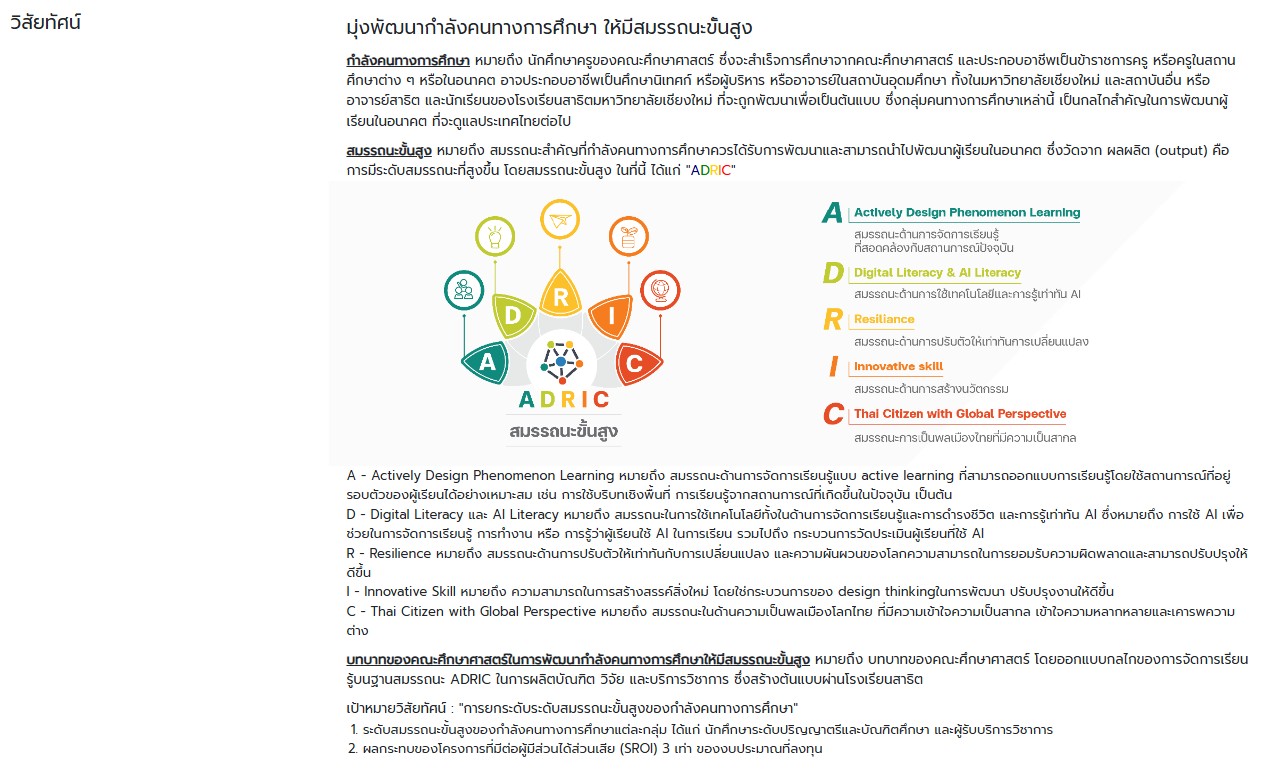
คณะศึกษาศาสตร์ มหาวิทยาลัยเชียงใหม่. (2567). วิสัยทัศน์ มุ่งพัฒนาสมรรถนะขั้นสูงของกำลังคนทางการศึกษา. เรียกใช้เมื่อ 13 พฤศจิกายน 2568 จาก https://webmaster.edu.cmu.ac.th/assets/upload/files/2024/11/20241118161753_36710.jpg
ชนาธิป พรกุล. (2554). การสอนกระบวนการคิด: ทฤษฎีและการนำไปใช้. (พิมพ์ครั้งที่ 2). กรุงเทพมหานคร: วีพริ้นท์.
ชลาธิป สมาหิโต. (2564). การจัดการเรียนรู้โดยใช้ปรากฏการณ์เป็นฐาน. กรุงเทพมหานคร: สำนักพิมพ์มหาวิทยาลัย.
ทิศนา แขมมณี. (2547). การออกแบบการสอน: ศาสตร์และศิลป์ของการสอน. (พิมพ์ครั้งที่ 4). กรุงเทพมหานคร: สำนักพิมพ์จุฬาลงกรณ์มหาวิทยาลัย.
ทิศนา แขมมณี. (2548). การจัดการเรียนรู้: ศาสตร์และศิลป์ของการสอน. (พิมพ์ครั้งที่ 4). กรุงเทพมหานคร: สำนักพิมพ์จุฬาลงกรณ์มหาวิทยาลัย.
พิมพันธ์ เดชะคุปต์ และคณะ. (2551). นวัตกรรมการจัดการเรียนรู้เพื่อพัฒนาทักษะการคิด. กรุงเทพมหานคร: โรงพิมพ์แห่งจุฬาลงกรณ์มหาวิทยาลัย.
สมร เจนจิจะ. (2548). การพูดเพื่อการสื่อสาร. กรุงเทพมหานคร: สำนักพิมพ์มหาวิทยาลัยเกษตรศาสตร์.
สิริประภา อินทคง และคณะ. (2567). การพัฒนาความสามารถด้านการพูดของนักเรียนชั้นมัธยมศึกษาปีที่ 2 ด้วยการจัดการเรียนรู้เทคนิคทีม คู่ เดี่ยว. วารสารนวัตกรรมการจัดการศึกษาและการวิจัย, 6(5), 1073-1084.
สุวิมล ว่องวานิช. (2549). การประเมินผลการศึกษา. กรุงเทพมหานคร: สำนักพิมพ์จุฬาลงกรณ์มหาวิทยาลัย.
Symeonidis, V. & Schwarz, J. F. (2016). Phenomenon-based teaching and learning in teacher education programes. Journal of Education and Learning, 5(2), 1-9.