Succession Planning for Organizational Success: Conceptual Framework and Practical Guidelines
Keywords:
Succession Planning, Talent Management, High-Potential Employees (HiPos), Leadership PipelineAbstract
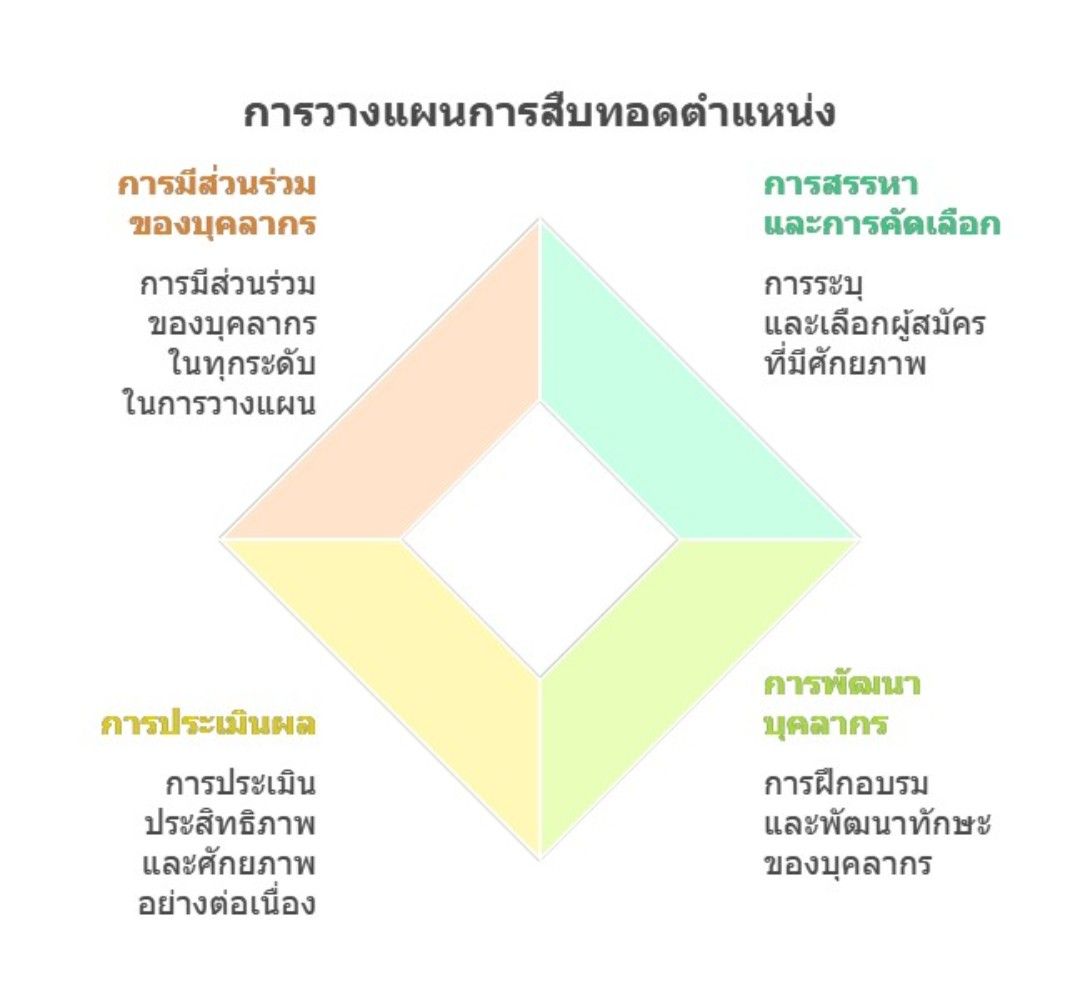
This academic article aims to study succession planning approaches, which are crucial for organizational development and success. The results indicate that succession planning helps reduce organizational problems and ensures continuity in personnel operations within the organization. Additionally, it promotes the potential and development of individuals within the organization, enabling the organization to cultivate leaders who are suitable for its specific needs. There should be a process for selecting talented individuals within the organization to participate in succession planning, and the organization should manage its talent appropriately. Furthermore, when selecting personnel for succession, organizations should clearly define the goals of succession planning within their organizational plans, as well as outline the pathways for positions and the qualifications required by the organization. Afterward, the potential of individuals should be assessed, and those selected should be developed in preparation for their future positions. Subsequently, performance should be monitored, and the results evaluated. An effective succession planning process requires cooperation from personnel across all departments within the organization, utilizing various development formats such as training, a focus on learning, coaching and mentoring, assigning challenging tasks that promote learning, considering 360-degree feedback for self-development, online learning, and appropriate evaluation. These efforts transform succession planning into an important tool with a significant impact on the organization. However, succession planning may face challenges due to operational conflicts, patronage systems within the organization, and a lack of diverse knowledge.
References
กองเจ้าหน้าที่ สำนักงานปลัดกระทรวงเกษตรและสหกรณ์. (2565). คู่มือการวางแผนทดแทนตำแหน่ง (Succession Plan) ของกระทรวงเกษตรและสหกรณ์. สืบค้นจาก https://www.opsmoac.go.th/kst-knowledge-files-441291791794.
กุลชลี พวงเพ็ชร. (2560). การบริหารทรัพยากรมนุษย์. (พิมพ์ครั้งที่ 2). ปทุมธานี: ยูโอเพ่น.
เกียรติ บุญยโพ. (2562). การบริหารทรัพยากรมนุษย์ในยุคใหม่. วารสารวิทยาการจัดการปริทัศน์, 21(1), 165-170.
นลิศา เล็กนาวา. (2561). ลักษณะคนเก่งจากการวิเคราะห์ข้อมูลในองค์กร. (บริหารธุรกิจมหาบัณฑิต, มหาวิทยาลัยธรรมศาสตร์).
นิรมล กะการดี. (2560). ปัจจัยที่ส่งผลต่อการย้ายงานบ่อยของคนวัยทำงานกลุ่ม Generation Y. (บริหารธุรกิจมหาบัณฑิต, มหาวิทยาลัยธรรมศาสตร์).
บริษัท เจเอเอส แอสเซ็ท จำกัด (มหาชน). (2567). แผนการบริหารความต่อเนื่องทางธุรกิจ. สืบค้นจาก https://www.jasasset.co.th/storage/document/cg/business-continuity-plan-th.pdf.
ปุณฑรีก์ อภิพัฒนศิริพงษ์. (2565). การศึกษาแนวทางการพัฒนาระบบบริหารคนเก่งของนักวิเทศสัมพันธ์ สำนักงาน การต่างประเทศ สำนักปลัดกรุงเทพมหานคร. (รัฐศาสตรมหาบัณฑิต มหาวิทยาลัยธรรมศาสตร์).
ฝ่ายบริหารทรัพยากรบุคคล อบก. (2565). การวางแผนสืบทอดตำแหน่ง. สืบค้นจาก http://conference.tgo.or.th/download/tgo_or_th/AboutTGO/Corruption/FY2562/ITA/Doc/25_5.pdf.
พระครูภัทรสารสุนทร. (2565). การพัฒนาทรัพยากรมนุษย์ในยุคนิวนอร์มัล. วารสาร มจร พุทธศาสตร์ปริทรรศน์, 6(3), 262–275.
พระครูวิเทศกัลยาณธรรม (ฐิติกร กลฺยาณธมฺโม) และ สุภัทรชัย สีสะใบ. (2566). การวางแผนการสืบทอดตำแหน่งเพื่อเตรียมความพร้อมสู่การเปลี่ยนแปลงในองค์กร. วารสาร มจร สังคมศาสตร์ปริทรรศน์, 12(4), 457–470.
พระมหายุทธพิชาญ โยธสาสโน, พระครูเกษมอาจารสุนทร, พระครูสุธรรมกิจโกศล และ พรพิมล โพธิ์ชัยหล้า. (2566). การบริหารทรัพยากรมนุษย์ปัจจัยสู่ความสำเร็จและภาพลักษณ์ที่ดีขององค์กร. วารสารวนัมฎองแหรกพุทธศาสตรปริทรรศ์, 10(1), 169-172.
วรุณรัตน์ คัทมาตย์. (2567). สถิติสุดอึ้ง ซีอีโอลาออก-ถูกปลด มากที่สุดเป็นประวัติการณ์ในปี 2024. สืบค้นจาก https://www.bangkokbiznews.com/lifestyle/1159214.
วสุธิดา นักเกษม. (2564). การพัฒนารูปแบบผู้สืบทอดตำแหน่งทางธุรกิจในกลุ่มอุตสาหกรรมบริการดิจิทัลของประเทศไทย.(ปรัชญาดุษฎีบัณฑิต, มหาวิทยาลัยศิลปากร).
วุฒิพงศ์ จันทร์เมืองไทย. (2564). นวัตกรรมการบริหารทรัพยากรมนุษย์สำหรับองค์กรด้านการศึกษา. วารสารนวัตกรรมและการจัดการ, 6(2), 50-62.
สหธร เพชรวิโรจน์ชัย. (2568). ปัจจัยที่ทำให้แผนสืบทอดตำแหน่ง (Succession Planning) ล้มเหลว. สืบค้นจาก https://th.hrnote.asia/orgdevelopment/hr-succession-planning-250228/.
อรธิชา ศิลปวิศวกุล. (2563). การบริหารทรัพยากรบุคคลภาครัฐในภาวะวิกฤต กรณีศึกษา สำนักงานคณะกรรมการนโยบายรัฐวิสาหกิจกับวิกฤติการแพร่ระบาดของรึโควิด-19. (รัฐประศาสนศาสตรมหาบัณฑิต, จุฬาลงกรณ์มหาวิทยาลัย).
อัครกิตติ์ พัฒนสัมพันธ์. (2561). ยกระดับองค์กรด้วยการบริหารจัดการคนเก่ง. วารสารวิทยาลัยพาณิชยศาสตร์บูรพาปริทัศน์, 13(2), 66–79.
อารียา อ่ำอินทร์. (2567). แนวทางการพัฒนาแผนการสืบทอดตำแหน่งและการเตรียมความพร้อมการเข้าสู่ตำแหน่งระดับบริหารของผู้ปฏิบัติงานที่มีศักยภาพในบริษัทแห่งหนึ่งในกลุ่มอุตสาหกรรมการผลิตอัญมณีและเครื่องประดับในจังหวัดกรุงเทพมหานคร. (ศิลปศาสตรมหาบัณฑิต, มหาวิทยาลัยบูรพา).
อุไร ศรีชมภู และ วิษณุ สุมิตสวรรค์. (2562). การเตรียมความพร้อมสู่การป็นผู้บริหารมหาวิทยาลัย กรณีศึกษามหาวิทยาลัยแห่งหนึ่งในจังหวัดขอนแก่น. วารสารมหาจุฬานาครทรรน์, 6(7), 3383-3340.
Enakrire, R. T., & Smuts, H. (2023). Knowledge retention for enhanced organisational growth in Higher Education Institutions. Journal of Information & Knowledge Management, 22(01), 2250054.
HREX.asia. (2562). การพัฒนาองค์กร (Organization Development: OD) ให้ก้าวสู่ความสำเร็จ. สืบค้นจาก https://th.hrnote.asia/orgdevelopment/190610-organization-development-od/.
Humansoft. (2024a). เทคนิคการพัฒนาศักยภาพบุคลากรที่ HR ควรรู้. สืบค้นจาก https://www.humansoft.co.th/en/blog/potential-development.
Humansoft. (2024b). การประเมิน 360 องศา: พัฒนาบุคลากรด้วย feedback จากทุกทิศทาง. สืบค้นจาก https://www.humansoft.co.th/th/blog/360-degree-feedback.
Karthik, V. (2023). Role of HR in talent management and succession planning. International Journal of Research Publication and Reviews, 4(5), 3412-3415.
McCarthy, G., & Milner, J. (2020). Ability, motivation and opportunity: managerial coaching in practice. Asia Pacific Journal of Human Resources, 58(1), 149-170.
Potočnik, K., & Anderson, N. (2016). A critical review of change management and innovation related concepts in management studies: Toward conceptual and operational clarity. European Journal of Work and Organizational Psychology, 25, 481-494.
Westfall, C. (2020). Leadership development in the digital age: Strategies for success. Retrieved from https://www.forbes.com/sites/chriswestfall/2020/08/25/leadership-development-in-the-digital-age-strategies-for-success/?sh=3bcb38c360bd.
Downloads
Published
How to Cite
Issue
Section
License
Copyright (c) 2025 Journal of Social Science Panyapat

This work is licensed under a Creative Commons Attribution-NonCommercial-NoDerivatives 4.0 International License.


