Success Conditions of Learning Management for Developing Computational Thinking Skills of Primary School Students in Ratchaburi Province under the Office of The Basic Education Commission
Keywords:
Learning Management, Computational Thinking Skills, Condition for SuccessAbstract
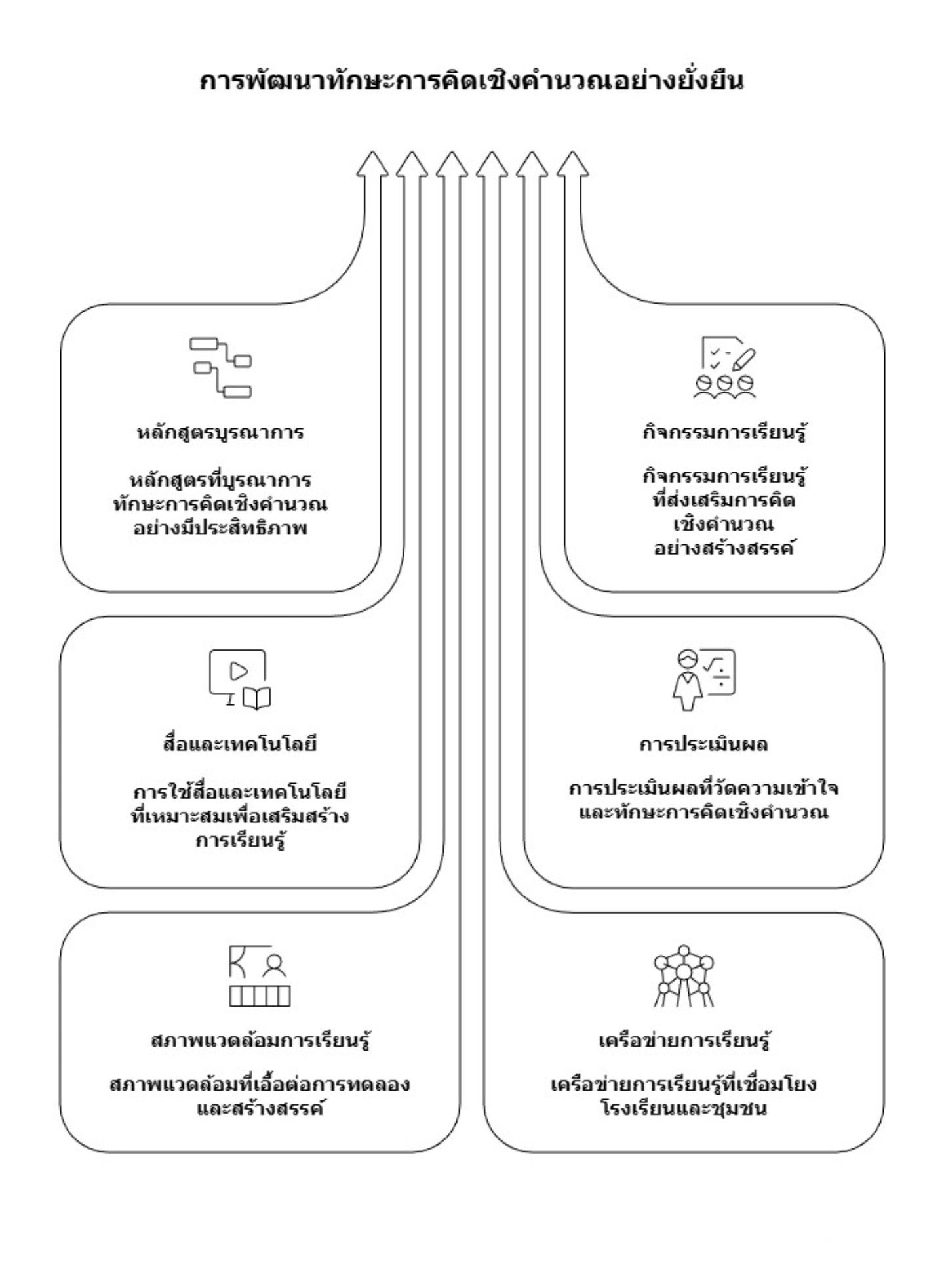
This study aimed to examine the processes and success conditions of learning management for developing computational thinking skills of primary school students in Ratchaburi Province under the Office of the Basic Education Commission, and to propose guidelines for enhancing these skills. A qualitative research approach was employed, with 20 key informants including school directors, deputy directors, heads of academic affairs, subject group leaders, teachers, and parents. Data were collected through in-depth interviews, focus group discussions, and non-participant observations, and analyzed using qualitative content analysis. The results indicated that the learning management process was systematic and comprehensive, covering curriculum design, learning objectives, activities, instructional media, assessment, teachers’ roles, and student participation. It integrated theoretical and practical activities, digital and local media, teacher support, and student reflection, enabling sustainable development of computational thinking skills. Success conditions comprised the learning environment (physical, psychological, and technological support) and the learning network (internal school, external school, and student-to-student networks). The proposed guidelines emphasized integrating computational thinking across subjects, providing diverse, real-life connected activities, utilizing appropriate media and technology, developing teachers and professional learning communities, and involving parents and communities as learning supporters.
References
กระทรวงศึกษาธิการ. (2551). หลักสูตรแกนกลางการศึกษาขั้นพื้นฐาน พุทธศักราช 2551 ฉบับปรับปรุง พ.ศ. 2560.กรุงเทพฯ: โรงพิมพ์คุรุสภา.
กุลิสรา จิตรชญาวณิช. (2562). แนวทางการจัดการเรียนรู้วิทยาการคำนวณสำหรับนักเรียนประถมศึกษา. กรุงเทพฯ: จุฬาลงกรณ์มหาวิทยาลัย.
เกรียงศักดิ์ บุญขวาง. (2556). สภาพแวดล้อมทางการเรียนและแนวทางพัฒนาของนักเรียนวิทยาลัยสารพัดช่างชลบุรี. (การศึกษามหาบัณฑิต, มหาวิทยาลัยบูรพา).
ชยการ คีรีรัตน์. (2562). การใช้กระบวนการแก้ปัญหาและโปรแกรม App Inventor พัฒนาทักษะการคิดเชิงคำนวณ (Computational Thinking: CT) สำหรับผู้เรียนระดับมัธยมศึกษา. Journal of Education Studies, Chulalongkorn University, 47(2), 31–47.
ชินวงศ์ วิเศษ. (2562). การพัฒนารูปแบบเครือข่ายการเรียนรู้ผ่านเครือข่ายสังคมออนไลน์เพื่อพัฒนาครูวิชาชีพ จังหวัดสุรินทร์ ประเทศไทย. Journal of Education Studies, Chulalongkorn University, 45(4), 164–176.
ณิรดา เวชญาลักษณ์. (2561). การจัดการเรียนรู้เพื่อพัฒนาทักษะการคิดเชิงคำนวณ. กรุงเทพฯ: จุฬาลงกรณ์มหาวิทยาลัย.
เด่นชัย วงษ์ช่าง. (2556). สภาพแวดล้อมทางการเรียนของนักเรียนโรงเรียนมาบตาพุดพันพิทยาคาร เขตนิคมอุตสาหกรรมมาบตาพุด อำเภอเมือง จังหวัดระยอง. (การศึกษามหาบัณฑิต, มหาวิทยาลัยบูรพา).
พรนภัส ใหญ่วงค์ และ อังคณา อ่อนธานี. (2566). การพัฒนาชุดเกม Unplugged Coding เพื่อส่งเสริมทักษะการคิดเชิงคำนวณสำหรับนักเรียนชั้นประถมศึกษาตอนต้น. วารสารนวัตกรรมการเรียนรู้และเทคโนโลยี, 3(1), 25-34.
พิมพันธ์ เดชะคุปต์ และ พเยาว์ ยินดีสุข. (2557). การจัดการเรียนรู้ในศตวรรษที่ 21. กรุงเทพฯ: โรงพิมพ์จุฬาลงกรณ์มหาวิทยาลัย.
รุ่งทิพย์ ศรสิงห์, พรชัย ทองเจือ และ ผ่องลักษม์ จิตต์การุญ. (2560). การพัฒนาความสามารถในการคิดแก้ปัญหาของเด็กปฐมวัยโดยใช้เกมการศึกษา. Humanities and Social Sciences Journal of Pibulsongkram Rajabhat University, 11(1), 92–104.
วิจารณ์ พาณิชย์. (2555). Teach Less, Learn More: การจัดการเรียนรู้ที่มุ่งเน้นผู้เรียนเป็นศูนย์กลาง. กรุงเทพฯ: มูลนิธิสด-ศรีสฤษดิ์วงศ์.
วิจารณ์ พาณิชย์. (2556). ทักษะที่จำเป็นในศตวรรษที่ 21: 3Rs + 8Cs + 2Ls. กรุงเทพฯ: ส.เจริญการพิมพ์.
ษณอนงค์ ชูรา. (2566). รูปแบบการบริหารเครือข่ายความร่วมมือเพื่อส่งเสริมทักษะชีวิตของนักเรียนประถมศึกษา สังกัดสำนักงานคณะกรรมการการศึกษาขั้นพื้นฐาน. (การศึกษาดุษฎีบัณฑิต, มหาวิทยาลัยนเรศวร).
สถาบันส่งเสริมการสอนวิทยาศาสตร์และเทคโนโลยี. (2561). คู่มือการใช้หลักสูตรเทคโนโลยี (วิทยาการคำนวณ) กลุ่มสาระการเรียนรู้วิทยาศาสตร์ (ฉบับปรับปรุง พ.ศ. 2560). กรุงเทพฯ: สถาบันส่งเสริมการสอนวิทยาศาสตร์และเทคโนโลยี.
สำนักงานเลขาธิการสภาการศึกษา. (2564). แนวทางการส่งเสริมการจัดการเรียนการสอนวิทยาการคำนวณ Coding เพื่อพัฒนาทักษะผู้เรียนในศตวรรษที่ 21. กรุงเทพฯ: 21 เซ็นจูรี่.
สำนักงานส่งเสริมเศรษฐกิจดิจิทัล. (2562). การพัฒนาทักษะดิจิทัลสำหรับเด็กไทย. กรุงเทพฯ: สำนักงานส่งเสริมเศรษฐกิจดิจิทัล.
สุธีระ ประเสริฐสรรพ์. (2559). การเข้าใจวิทยาศาสตร์ที่ครบถ้วน เป้าหมายสูงสุดของสะเต็มศึกษา. สงขลา: นำศิลป์โฆษณา.
อเนก นาคะบุตร. (2561). ทุนทางสังคมและประชาสังคมในเมืองไทย. กรุงเทพฯ: สำนักงานสนับสนุนการวิจัย.
อาภรณ์ ใจเที่ยง. (2553). หลักการสอน (ฉบับปรับปรุง). กรุงเทพฯ: โอเดียนสโตร์.
Bronfenbrenner, U. (1979). The ecology of human development: Experiments by nature and design. Cambridge: Harvard university press.
Corbin, J., & Strauss, A. (2008). Basics of Qualitative Research: Techniques and Procedures for Developing Grounded Theory. (3rd ed.). Thousand Oaks, CA: Sage
Darling-Hammond, L., Burns, D., Campbell, C., Goodwin, A. L., Hammerness, K., Low, E. L., & Zeichner, K. M. (2017). Empowered Educators: How High-Performing Systems Shape Teaching Quality around the World. New Jersey: John Wiley & Sons.
Richardson, C., Henriksen, D., Mishra, P., & Deep-Play Research Group. (2017). The courage to be creative: An interview with Dr. Yong Zhao. TechTrends, 61(6), 515-519.
Selby, C., & Woollard, J. (2013). Computational thinking: The developing definition. Retrieved from https://eprints.soton.ac.uk/356481/1/Selby_Woollard_bg_soton_eprints.pdf.
Vygotsky, L. S. (1978). Mind in Society The Development of Higher Psychological Processes. Cambridge: Harvard University Press.
Downloads
Published
How to Cite
Issue
Section
License
Copyright (c) 2025 Journal of Social Science Panyapat

This work is licensed under a Creative Commons Attribution-NonCommercial-NoDerivatives 4.0 International License.


