The Right of Discipleship: Cold War History and Memory as Dynamic Cultural Capital of the Phu Khiao–Tham Pha Nam Thip Community, Roi Et Province
Keywords:
Community Memory, Cold War, Phu Khiao–Tham Pha Nam Thip, Cultural Capital, Local IdentityAbstract
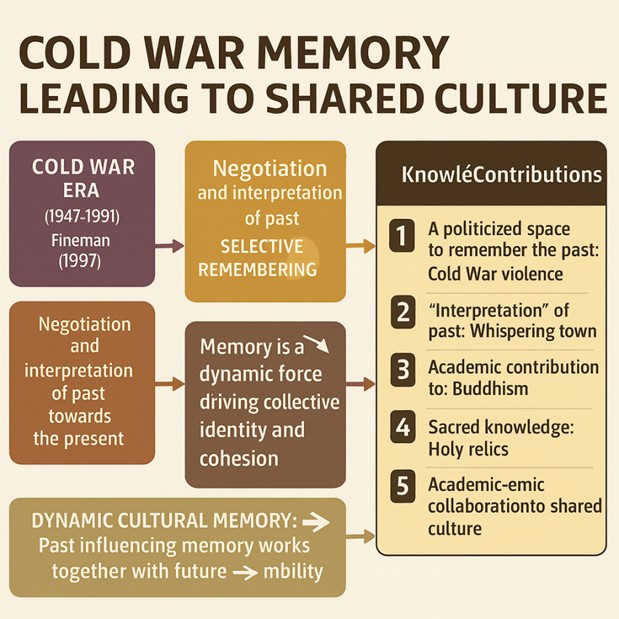
This study explores the historical dynamics of the Phu Khiao–Tham Pha Nam Thip area in Roi Et Province from the Cold War to the present, focusing on how state policies, socio-political contexts, and community memories have interacted to transform the meaning of the landscape. Employing a historical methodology integrated with the anthropology of memory, the research draws upon archival documents—such as Prince Damrong Rajanubhab’s 1906 inspection report of Udon Monthon, Cold War security policies, and Royal Gazette announcements—alongside local chronicles, oral narratives from Luang Pu Sri Mahaviro’s disciples, and in-depth interviews with community leaders. Findings reveal that Phu Khiao–Tham Pha Nam Thip has undergone multiple transformations—from a “forest of life” in pre–Cold War memory to a “red zone” under the Cold War security regime, and finally to a “wildlife conservation zone” in the post–Cold War era. Facing the loss of access to natural resources, local communities selectively reconstructed collective memories of forest pioneering, Buddhist virtue, and ecological stewardship to legitimize their cultural and moral rights. After the COVID-19 pandemic, these memories were further reinterpreted as creative cultural capital through learning tourism, exhibitions, and the Young Local Guides project—revitalizing the local economy and negotiating coexistence with the state. The study demonstrates that memory functions not merely as a reflection of the past but as a living cultural force that continually mediates the relationship between history, identity, and sustainable local development.
References
กรมอุทยานแห่งชาติ สัตว์ป่า และพันธุ์พืช. (2531). ประกาศกระทรวงเกษตรและสหกรณ์ เรื่อง กำหนดพื้นที่ป่าดงบังอี่และป่าดงภูสีฐาน (บางส่วน) ให้เป็นเขตห้ามล่าสัตว์ป่าถ้ำผาน้ำทิพย์. สืบค้นจาก https://portal.dnp.go.th/DNP/FileSystem/download?uuid=028ab0cf-4572-463b-8b46-8cfa5b387933.pdf.
คณะกรรมการฝ่ายจัดทำหนังสือที่ระลึกฯ. (2555). วีระปฏิปทา มหาวีโร. กรุงเทพฯ: ศิลป์สยามบรรจุภัณฑ์และการพิมพ์.
คณะกรรมการฝ่ายประมวลเอกสารและจดหมายเหตุฯ. (2542). วัฒนธรรม พัฒนาการทางประวัติศาสตร์ เอกลักษณ์และภูมิปัญญาจังหวัดร้อยเอ็ด. กรุงเทพฯ: คุรุสภาลาดพร้าว.
เฉลิมพล โสมอินทร์. (2519). พระราชบัญญัติป้องกันการกระทำอันเป็นคอมมิวนิสต์ พ.ศ. 2495. เชียงใหม่: วัฒนาการพิมพ์.
ทิฆัมพร สิงโตมาศ. (2560). หมู่บ้านเสียงปืนแตก: ประวัติศาสตร์ การเคลื่อนไหวทางการเมือง และการสร้างอัตลักษณ์ของท้องถิ่นบ้านนาบัว. วารสารธรรมศาสตร์, 36(3), 112–147.
ธิกานต์ ศรีนารา. (2564). สงครามความทรงจำและการเปลี่ยนแปลงความคิดเกี่ยวกับอดีตของ “อดีตสหาย” ในช่วงระหว่างทศวรรษ 2520–2550. วารสารไทยคดีศึกษา, 18(1), 1–26.
นาง ง. (2568). ผู้สูงอายุชุมชนผาน้ำทิพย์. สัมภาษณ์. 17 เมษายน.
นาย ก. (2568). ผู้แทนกลุ่มผู้ค้าผาน้ำทิพย์. สัมภาษณ์. 17 เมษายน.
นาย ข. (2568). ผู้สูงอายุชุมชนผาน้ำทิพย์. สัมภาษณ์. 17 เมษายน.
นาย ค. (2568). ผู้สูงอายุชุมชนผาน้ำทิพย์. สัมภาษณ์. 17 เมษายน.
บุญมี คำบุศย์. (2541). อดีตรำลึก. ร้อยเอ็ด: นำอักษรการพิมพ์.
ประกาศกระทรวงมหาดไทย. (2512). เรื่อง เขตแทรกซึมของคอมมิวนิสต์. ราชกิจจานุเบกษา, เล่ม 86 ตอนที่ 115 (ฉบับพิเศษ), หน้า 6–9, วันที่ 26 ธันวาคม 2512.
พระมหาธีรนาถ อคฺคธีโร. (2554). หลวงปู่ศรีนิพพาน. นครราชสีมา: วัดป่าภูสูง.
พระราชกฤษฎีกากำหนดป่าดงบังอี่ให้เป็นป่าคุ้มครอง พ.ศ. 2494. (2494, 20 พฤศจิกายน). ราชกิจจานุเบกษา, เล่ม 68, ตอนที่ 69, หน้า 1562–1564.
พระราชบัญญัติคุ้มครองและสงวนป่า พ.ศ. 2481. (2482). ราชกิจจานุเบกษา, เล่ม 56, หน้า 211–223, วันที่ 3 เมษายน 2482.
พระราชบัญญัติป้องกันการกระทำอันเป็นคอมมิวนิสต์ พ.ศ. 2495. (2495). ราชกิจจานุเบกษา, เล่ม 69, ตอนที่ 68 ฉบับพิเศษ, หน้า 1–6, วันที่ 13 พฤศจิกายน 2495.
พระราชบัญญัติว่าด้วยคอมมิวนิสต์ พ.ศ. 2476. (2476, 2 เมษายน). ราชกิจจานุเบกษา, เล่ม 50, หน้า 10–12.
สมเด็จกรมพระยาดำรงราชานุภาพ. (2501). นิทานโบราณคดี. (พิมพ์ครั้งที่ 9). กรุงเทพฯ: คลังวิทยา.
สมเด็จกรมพระยาดำรงราชานุภาพ. (2538). สมเด็จฯ กรมพระยาดำรงราชานุภาพเสด็จไปตรวจราชการมณฑลนครราชสีมาและมณฑลอุดรอีสาน ร.ศ.125 พ.ศ.2449. กรุงเทพฯ: วัชรินทร์การพิมพ์.
Anderson, B. (1977). Withdrawal symptoms: Social and cultural aspects of the October 6 coup. Bulletin of Concerned Asian Scholars, 9(3), 13-30.
Bourdieu, P. (1986). The force of law: Toward a sociology of the juridical field. Hastings LJ, 38, 805.
Carr, E. H. (1961). What is history?. London: Macmillan.
Fineman, D. (1997). A special relationship: the United States and military government in Thailand, 1947-1958. Honolulu: University of Hawai‘i Press.
Halbwachs, M. (1992). On collective memory. Chicago: University of Chicago Press.
Keyes, C. (2014). Finding their voice: Northeastern villagers and the Thai state. Chiang Mai: Silkworm Books.
Downloads
Published
How to Cite
Issue
Section
License
Copyright (c) 2025 Journal of Social Science Panyapat

This work is licensed under a Creative Commons Attribution-NonCommercial-NoDerivatives 4.0 International License.


