Feasibility of Mangosteen Cultivation in Cha-Uat District, Nakhon Si Thammarat Province
Keywords:
Mangosteen, Feasibility, Study of General ConditionAbstract
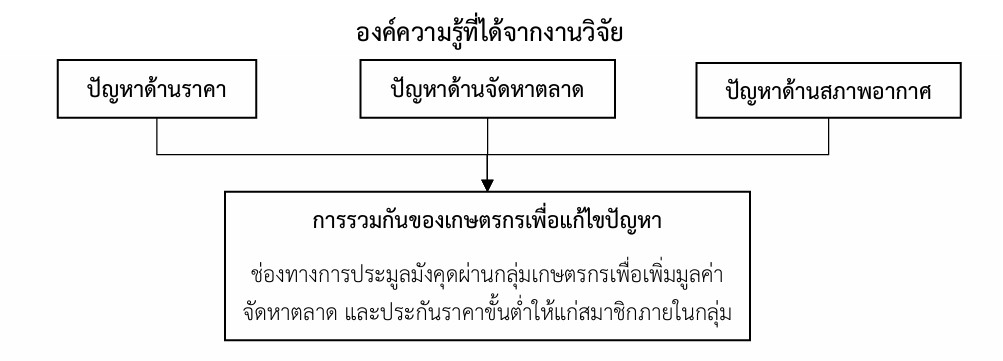
This article aimed to: (1) study the general conditions of mangosteen production and marketing, and (2) analyze the financial feasibility of mangosteen cultivation. The study applied both qualitative and quantitative research approaches. Data collection was conducted through in-depth interviews with a total of 34 mangosteen farmers. Project analysis was employed to examine the general conditions of production and marketing. In addition, financial investment analysis tools were used to assess financial feasibility. The results of the study found that: (1) Production: In Cha-Uat District, the rain shadow effect allows mangosteen to produce off-season yields. Intercropping is also practiced to generate additional income alongside mangosteen. Furthermore, the Cha-Uat Model, which promotes farmer group cooperation, contributes to establishing production standards with secure market support. This model also serves as a learning hub for farmers both within and outside the area. (2) Marketing: In Cha-Uat District, there are three marketing channels: (1) selling at local collection points through local traders, (2) lump-sum orchard sales through buyers who make contracts directly with farmers, and (3) mangosteen auctions through farmer groups. (3) Financial Analysis: Two scenarios were considered: (1) mangosteen production distributed in-season and off-season at a 70:30 ratio, and (2) mangosteen production concentrated mainly in-season at a 90:10 ratio. In the 70:30 scenario, all three marketing channels were financially feasible, with farmer group sales being the most profitable. In the 90:10 scenario, only the farmer group sales channel was financially feasible and profitable.
References
กรมวิชาการเกษตร. (2565). มังคุดนอกฤดู จังหวัดนครศรีธรรมราช. สืบค้นจาก https://www.doa.go.th/ac/nakhonsithammarat/wp-content/uploads/2022/04/มังคุดนอกฤดูจังหวัดนครศรีธรรมราช.pdf.
กรมวิชาการเกษตร. (2566). การจัดการมังคุดเพื่อการส่งออก. สืบค้นจาก https://www.doa.go.th/plprotect/wp-content/uploads/Km/mangosteen.pdf.
กรมส่งเสริมการเกษตร. (2551). คู่มือนักวิชาการส่งเสริมการเกษตร มังคุด. สืบค้นจาก https://www.opsmoac.go.th/prachinburi-manual-files-451991791835.
กระทรวงพาณิชย์. (2567). ข้อมูลการส่งออกมังคุดของประเทศไทย. สืบค้นจาก https://tradereport.moc.go.th/th.
ชรินทร ศรีวิฑูรย์, ภัทร์ธนกัลย์ เตี่ยไพบูลย์ และ ภาวิดา รังษี. (2567). การจัดการห่วงโซ่อุปทานของมังคุดในอำเภอหลังสวน จังหวัดชุมพร. วารสารมหาวิทยาลัยพายัพ, 34(2), 1–17.
นพ ศักดิเศรษฐ์, ชัยพร เฉลิมพักตร์ และ อรพิน โปกุล. (2552). การเพิ่มประสิทธิภาพมังคุดนอกฤดูในจังหวัดนครศรีธรรมราช. วารสารวิจัยมหาวิทยาลัยเทคโนโลยีราชมงคลศรีวิชัย, 1(1), 1-5.
ประไพพิมพ์ สุธีวสินนนท์ และ ประสพชัย พสุนนท์. (2559). กลยุทธ์การเลือกตัวอย่างสำหรับการวิจัยเชิงคุณภาพ. วารสารปาริชาต, 29(2), 31–48.
ประสิทธิ์ ตงยิ่งสิริ. (2542). การวางแผนและการวิเคราะห์โครงการ. กรุงเทพฯ: ซีเอ็ดยูเคชั่น.
สภาอุตสาหกรรมแห่งประเทศไทย. (12 10 2566). รายงานพืชเศรษฐกิจ มังคุด. สืบค้นจาก https://km.fti.or.th/wp-content/uploads/2023/12/รายงานพืชเศรษฐกิจมังคุด.pdf.
สํานักส่งเสริมและฝึกอบรม มหาวิทยาลัยเกษตรศาสตร์. (2536). 35 คําถามกับการปลูกมังคุด. สืบค้นจาก https://kukr.lib.ku.ac.th/kukr_es/index.php?/drought/search_detail/result/285644.
สำนักงานเกษตรอำเภอชะอวด. (2567). ชะอวดโมเดล. นครศรีธรรมราช: สำนักงานเกษตรอำเภอชะอวด.
สำนักงานเศรษฐกิจการเกษตร. (2567). สารสนเทศเศรษฐกิจการเกษตรรายสินค้า ปี2567. สืบค้นจาก https://www.oae.go.th/assets/portals/1/ebookcategory/110_commodity2566/.
อำภา ปัญญาศรีวรมย์. (2531). ต้นทุนและผลตอบแทนในการปลูกมังคุด. (บัญชีมหาบัณฑิต, จุฬาลงกรณ์มหาวิทยาลัย).
Jaroensutasinee, K., Jaroensutasinee, M., & Boonsanong, P. (2023). Climatic factor differences and mangosteen fruit quality between on-and off-season productions. Emerging Science Journal, 7(2), 578-588.
Downloads
Published
How to Cite
Issue
Section
License
Copyright (c) 2025 Journal of Social Science Panyapat

This work is licensed under a Creative Commons Attribution-NonCommercial-NoDerivatives 4.0 International License.


