Development of English Vocabulary Proficiency using 2W3P Learning Management Approach Combined with Learning Application for Matthayomsuksa 3 Students
Keywords:
Learning English Vocabulary, 2W3P Learning Management Approach, Learning ApplicationAbstract
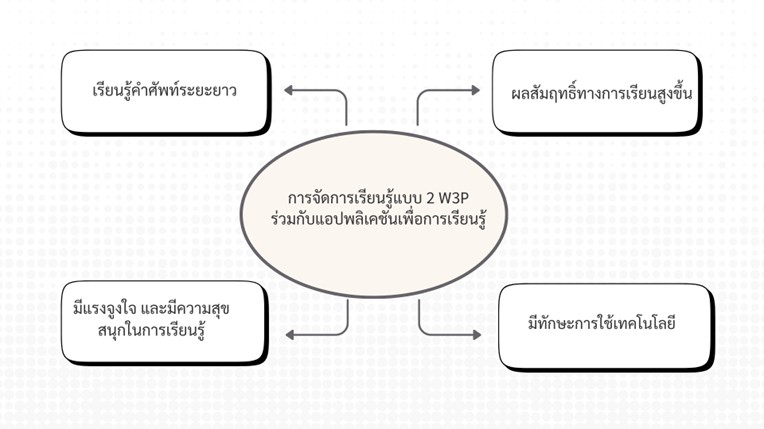
This research article aimed to (1) develop the ability to learn English vocabulary using the 2W3P learning management approach combined with a learning application for Grade 9 students, and (2) study the satisfaction of learning English vocabulary using the 2W3P learning management approach combined with a learning application for Grade 9 students. This study employed a pre-experimental research design. The sample consisted of 39 students from Grade 9/6 at Uttaradit Daruni School, selected through cluster sampling with the classroom as the sampling unit. The instruments used for data collection included lesson plans, a vocabulary achievement test, and a satisfaction questionnaire. The statistics used for data analysis included mean, standard deviation, percentage, and t-test. The results of the study revealed that (1) students' ability to learn English vocabulary after the experiment was significantly higher than before the experiment at the .05 level of significance, and (2) students reported a very high level of satisfaction with learning English vocabulary through the 2W3P approach, expressing a high level of satisfaction regarding the development of their ability to learn English vocabulary using the 2W3P learning management approach combined with a learning application, with an overall satisfaction level rated as very high.
References
กัญญาณัฐ วิเศษนันท์. (2565). การจัดการเรียนรู้ตามแนวการสอนภาษาแบบธรรมชาติร่วมกับเกมในเว็บไซต์ Wordwall เพื่อพัฒนาทักษะด้านคำศัพท์ภาษาอังกฤษและความสนใจของนักเรียนชั้นประถมศึกษาปีที่ 5. (ศึกษาศาสตรมหาบัณฑิต, มหาวิทยาลัยรังสิต).
ชรินทร์ทิพย์ ปฏิมาประกร. (2565). การศึกษาผลสัมฤทธิ์ทางการเรียนวิชาภาษาอังกฤษของนักเรียนชั้นประถมศึกษาปี ที่ 4 โดยใช้การจัดการเรียนรู้แบบ 2W3P ร่วมกับเกมมิฟิเคชัน. (ศึกษาศาสตรมหาบัณฑิต, มหาวิทยาลัยรังสิต).
ซารีป๊ะ รักดี. (2562). การพัฒนาการจัดการเรียนรู้ภาษาอังกฤษแบบ 2W3P โดยใช้หนังสืออ่านเพิ่มเติมชุด A little Guide เพื่อส่งเสริมทักษะการอ่านและผลสัมฤทธิ์ทางการเรียน กลุ่มสาระการเรียนรู้ภาษาต่างประเทศ (ภาษาอังกฤษ) ระดับชั้นประถมศึกษาปีที่ 6. วารสารเทคโนโลยีและสื่อสารการศึกษา คณะศึกษาศาสตร์ มหาวิทยาลัยมหาสารคาม, 2(5), 42-48.
ศิริพร กุนแก้ว. (2567). การพัฒนาการเรียนรู้คำศัพท์โดยใช้เกมคำศัพท์ภาษาอังกฤษ สำหรับนักเรียนชั้นประถมศึกษาปีที่ 5. วารสารวิชาการศึกษาศาสตร์ ศรีนครินทรวิโรฒ, 25(1), 121–134.
สถาบันทดสอบทางการศึกษาแห่งชาติ. (2564). รายงานผลการทดสอบทางการศึกษาระดับชาติขั้นพื้นฐาน (O-NET) ปีการศึกษา 2561-2564. กรุงเทพฯ: สถาบันทดสอบทางการศึกษาแห่งชาติ (องค์การมหาชน).
สุพิชญา ตระกูลสว่าง และ กิตติศักดิ์ ลักษณา. (2568). ผลการจัดการเรียนรู้ด้วยการจัดการเรียนรู้แบบ 2W3P ร่วมกับแบบฝึกออนไลน์ที่ส่งผลสัมฤทธิ์ทางการเรียนภาษาอังกฤษของนักเรียนชั้นมัธยมศึกษาปีที่ 2 โรงเรียนดอนเมืองจาตุรจินดา. วารสารมหาจุฬาวิชาการ, 12(1), 430-447.
Al Firdaus, M. W. M., & Rahmawati, E. (2024). The Impact of Wordwall Online Games on English Vocabulary Mastery in Reading. Premise: Journal of English Education and Applied Linguistics, 13(3), 985-1000.
Kukulska-Hulme, A., & Shield, L. (2008). An overview of mobile assisted language learning: From content delivery to supported collaboration and interaction. ReCALL, 20(3), 271-289.
Nation, I. S. P. (2001). Learning vocabulary in another language. Cambridge: Cambridge university press.
Okumuş Dağdeler, K. (2023). A systematic review of mobile-assisted vocabulary learning research. Smart Learning Environments, 10(1), 19.
Piaget, J. (1952). The origins of intelligence in children. New York: International Universities Press.
Vygotsky, L. S. (1978). Mind in society: The development of higher psychological processes. Cambridge: Harvard University Press.
Downloads
Published
How to Cite
Issue
Section
License
Copyright (c) 2025 Journal of Social Science Panyapat

This work is licensed under a Creative Commons Attribution-NonCommercial-NoDerivatives 4.0 International License.


