Developing and Utilizing Soft Power Cultural Dimensions of World Heritage Cities for Sustainable Tourism: Case Studies Sukhothai, Si Satchanalai and Kamphaeng Phet
Keywords:
Soft Power, Cultural Dimensions, World Heritage Cities, Sustainable TourismAbstract
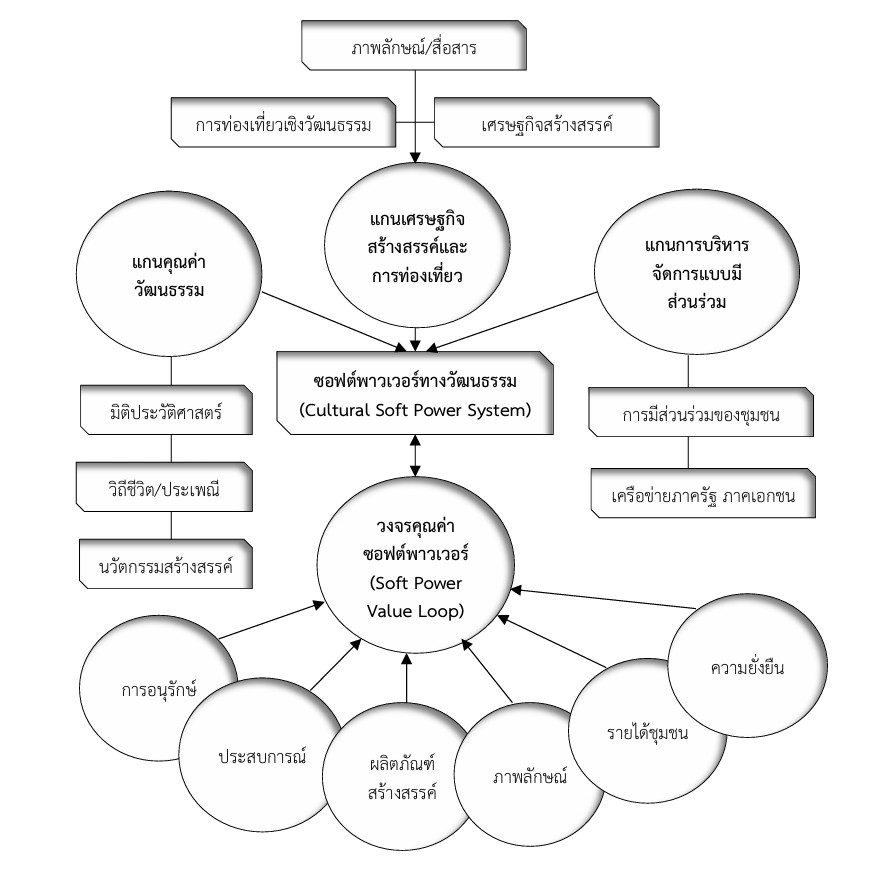
The purpose of this study is to (1) identify the characteristics and components of soft power, tourism, and the creative economy within the cultural dimension of World Heritage cities; (2) examine the relationships among factors influencing the development and utilization of cultural soft power; (3) assess the influence of soft power and creative tourism on the development and application of soft power; and (4) propose strategic approaches for strengthening cultural soft power in the context of World Heritage cities. A mixed-methods design was employed. Quantitative data were collected through questionnaires administered to 461 Thai and international tourists visiting the Sukhothai, Si Satchanalai, and Kamphaeng Phet Historical Parks, selected using purposive and simple random sampling. Qualitative data were obtained from in-depth interviews with 11 key informants. Data analysis included descriptive statistics, correlation coefficients, multiple regression analysis, and content analysis. The results indicate that 1) the characteristics and components of soft power, tourism, and the creative economy in World Heritage contexts were rated at a high level, reflecting the strong potential of cultural heritage to generate social and economic attractiveness; 2) the relationships between soft power, creative tourism, and the development and utilization of cultural soft power were found to be very high; 3) the influence of soft power and creative tourism significantly predicted the development and application of cultural soft power, with predictive values of 79.80% and 93.30%. All variables demonstrated positive and statistically significant effects at the .01 level. 4) Qualitative findings suggest that effective development of cultural soft power should emphasize strengthening cultural identity, leveraging community-based heritage assets, and encouraging participation and local ownership. Sustainable conservation of archaeological sites and careful tourism management are also essential. Integrating digital technologies to communicate heritage values and enhance visitor experiences is recommended. Furthermore, long-term, integrated planning is needed to advance a sustainable creative economy grounded in local identity. Such planning should balance heritage conservation, cultural tourism development, and cultural value creation to ensure the continued relevance and vitality of World Heritage sites in the future.
References
กรมศิลปากร. (2565). อุทยานประวัติศาสตร์สุโขทัย: มรดกโลกแห่งอารยธรรมไทย. กรุงเทพฯ: กรมศิลปากร.
กรมศิลปากร. (2567). รายงานสรุปสถิติผู้เข้าใช้/เข้าชมของกรมศิลปากร ประจำปีงบประมาณ พ.ศ. 2567. สืบค้นจาก https://www.finearts.go.th.
กระทรวงการท่องเที่ยวและกีฬา. (2565). ยุทธศาสตร์การสร้างแบรนด์ประเทศไทยเพื่อการท่องเที่ยวเชิงวัฒนธรรม. กรุงเทพฯ: กระทรวงการท่องเที่ยวและกีฬา.
จริยา โกเมนต์, เฉลิมชัย ปัญญาดี, ปานแพร เชาวน์ประยูร อุดมรักษาทรัพย์ และ ทัดพงศ์ อวิโรธนานนท์. (2568). การพัฒนาความเข้มแข็งในการบริหารจัดการกลุ่มเกษตรกรเพื่อยกระดับการท่องเที่ยวเชิงเกษตรบนแนวคิดเศรษฐกิจสร้างสรรค์ ในพื้นที่อำเภออมก๋อย จังหวัดเชียงใหม่. วารสารวิชาการรัฐศาสตร์และรัฐประศาสนศาสตร์, 7(5), 30–44.
เชิญขวัญ ขำเปรม และ ศุศราภรณ์ แต่งตั้งลำ. (2568). การพัฒนาเส้นทางการท่องเที่ยวเชิงจิตวิญญาณเชื่อมโยงวิถีความเชื่อไทยเพื่อส่งเสริมซอฟต์พาวเวอร์ จังหวัดสิงห์บุรี. วารสารสหวิทยาการมนุษยศาสตร์และสังคมศาสตร์, 8(5), 2313–2328.
ณัฏฐวิชฌ์ ราชแก้ว และเสาวลักษณ์ โกศลกิตติอัมพร. (2567). เศรษฐกิจสร้างสรรค์ อำนาจละมุน : การกระตุ้นเศรษฐกิจไทยในอนาคต. วารสารรัฐศาสตร์ มหาวิทยาลัยมหามกุฏราชวิทยาลัย, 4(1), 128-144.
นน อัครประเสริฐกุล. (2566). การใช้ซอฟท์ พาวเวอร์ (อิทธิพลอ่อน) อย่างมีประสิทธิภาพ: การใช้สื่อในการช่วยเมืองให้ใช้เทคโนโลยีที่ทันสมัยเพื่อการเปลี่ยนแปลงทางสังคม. วารสารกองทุนพัฒนาสือปลอดภัยและสร้างสรรค์, 2(2), 1-30.
นัสชนะ ส่างช้าง. (2568). เศรษฐกิจสร้างสรรค์กับการพัฒนาเมืองท่องเที่ยวเชิงยั่งยืน. วารสารนวัตกรรมสังคมศาสตร์, 2(4), 40-51.
เบญจภัคค์ เจริญมหาวิทย์. (2567). ซอฟต์พาวเวอร์ มรดกทางวัฒนธรรมเพื่อส่งเสริมการท่องเที่ยวไทยของจังหวัดพระนครศรีอยุธยา. วารสารวิชาการอยุธยาศึกษา, 16(1), 84-101.
วัชรินทร์ เกิดทรัพย์ และดรุณี มูเก็ม. (2566). ผู้มีอิทธิพลออนไลน์ขนาดเล็ก (Online Micro-Influencers) ต่อการตัดสินใจเดินทางท่องเที่ยวจังหวัดภูเก็ต ในบริบทภูเก็ตเมืองสร้างสรรค์นวัตกรรม (รายงานการวิจัย). นนทบุรี: มหาวิทยาลัยราชพฤกษ์.
ศรัญญู จันทร์วงศ์ และศุภกรณ์ ดิษฐพันธุ์. (2565). ปัจจัยการพัฒนาการท่องเที่ยวเชิงสร้างสรรค์ในเส้นทางวัฒนธรรม กรณีศึกษา : ชุมชนท่องเที่ยวเชิงวัฒนธรรมย่านเมืองเก่าริมแม่น้ำเพชรบุรี. วารสารศิลปกรรมศาสตร์วิชาการ วิจัย และงานสร้างสรรค์, 9(2), 94-110.
ศิวพร มีนาภา. (2562). ปัจจัยแรงจูงใจในการท่องเที่ยว และปัจจัยองค์ประกอบของแหล่งท่องเที่ยวที่ส่งผลต่อพฤติกรรมการท่องเที่ยวของนักท่องเที่ยวชาวไทยที่เดินทางมาท่องเที่ยวในจังหวัดพระนครศรีอยุธยา. (ศิลปศาสตรมหาบัณฑิต, มหาวิทยาลัยกรุงเทพ).
สำนักงานส่งเสริมเศรษฐกิจสร้างสรรค์. (2566). ยุทธศาสตร์ซอฟต์พาวเวอร์แห่งชาติ. กรุงเทพฯ: สำนักงานส่งเสริมเศรษฐกิจสร้างสรรค์.
สำนักศิลปากรที่ 6 สุโขทัย. (2563). รายงานการอนุรักษ์และพัฒนาอุทยานประวัติศาสตร์สุโขทัย ประจำปี 2563. สุโขทัย: กรมศิลปากร.
สำนักศิลปากรที่ 6 สุโขทัย. (2564). แผนแม่บทการอนุรักษ์และพัฒนาเมืองเก่าสุโขทัยและศรีสัชนาลัย. สุโขทัย: สำนักศิลปากรที่ 6 สุโขทัย กรมศิลปากร.
หิรัญญา กลางนุรักษ์, สันติธร ภูริภักดี และ มนัสสินี บุญมีศรีสง่า. (2567). ซอฟต์พาวเวอร์มรดกทางวัฒนธรรมเพื่อส่งเสริมการท่องเที่ยวของจังหวัดภูเก็ต. วารสารวิจัยวิทยาการจัดการ มหาวิทยาลัยราชภัฏสุรินทร์, 8(3), 629-641.
Anholt, S. (2007). Competitive identity: The new brand management for nations, cities and regions. London: Palgrave Macmillan.
Nye, J. S. (1990). Bound to lead : the changing nature of American power. New York :Basic Books
Nye, J. S. (2004). Soft power: The means to success in world politics. New York: Public Affairs.
Nye, J. S. (2021). Soft power: the evolution of a concept. In Essays on evolutions in the study of political power (pp. 196-208). Oxfordshire: Routledge.
Throsby, D. (2008). The concentric circles model of the cultural industries. Cultural trends, 17(3), 147-164.
Timothy, D. J. (2011). Cultural heritage and tourism: An introduction. Bristol: Channel View Publications.
UNCTAD. (2010). Creative economy report 2010. Geneva: United Nations.
UNESCO. (2013). Creative economy report, 2013, special edition: widening local development pathways. Paris: UNESCO.
UNESCO. (2021). World heritage and sustainable tourism programmed. Paris: UNESCO.
UNESCO. (2023). Culture for sustainable development. Paris: UNESCO.
Weiers, M. R. (2005). Introduction to business statistics. (5th ed.). Pennsylvania: Brooks/Cole.
Downloads
Published
How to Cite
Issue
Section
License
Copyright (c) 2025 Journal of Social Science Panyapat

This work is licensed under a Creative Commons Attribution-NonCommercial-NoDerivatives 4.0 International License.


