การบริหารสถานศึกษาเพื่อพัฒนาความเป็นนวัตกรของครูโรงเรียนสาธิต
คำสำคัญ:
การบริหารสถานศึกษา, ความเป็นนวัตกรของครู, โรงเรียนสาธิตบทคัดย่อ
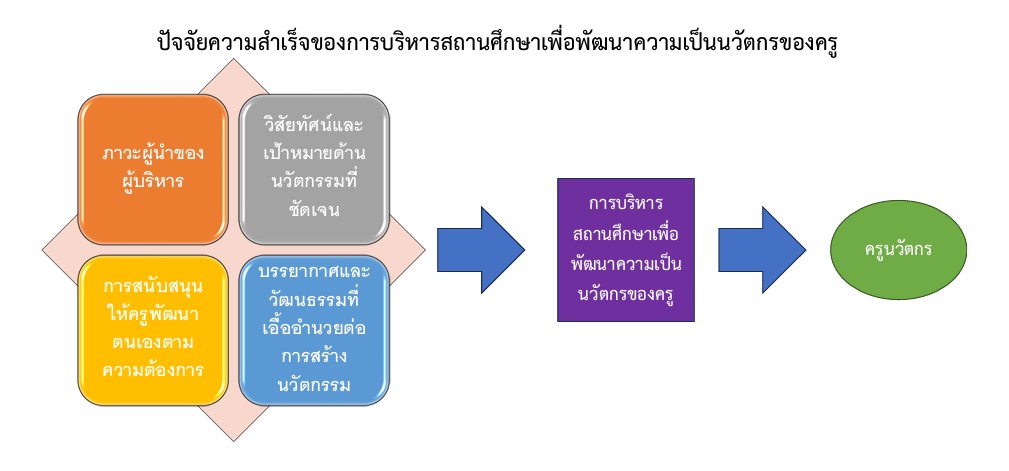
งานวิจัยนี้มีวัตถุประสงค์เพื่อศึกษา 1) สภาพการบริหารสถานศึกษาเพื่อพัฒนาความเป็นนวัตกรของครูในโรงเรียนสาธิต 2) ปัญหาและอุปสรรคของการบริหารสถานศึกษาเพื่อพัฒนาความเป็นนวัตกรของครูในโรงเรียนสาธิต และ 3) ปัจจัยความสำเร็จของการบริหารสถานศึกษาเพื่อพัฒนาความเป็นนวัตกรของครูในโรงเรียนสาธิต งานวิจัยนี้เป็นการวิจัยเชิงคุณภาพ โดยรวบรวมข้อมูลจากผู้ให้ข้อมูล 10 คนจากโรงเรียนสาธิต 5 แห่ง ประกอบด้วยผู้อำนวยการโรงเรียน 5 คน และหัวหน้ากลุ่มสาระการเรียนรู้ 5 คน เครื่องมือที่ใช้ในการวิจัยเป็นแบบสัมภาษณ์แบบกึ่งโครงสร้างเกี่ยวกับสภาพการบริหารโรงเรียนเพื่อพัฒนาความเป็นนวัตกรของครูในโรงเรียนสาธิต การวิเคราะห์ข้อมูลใช้การวิเคราะห์เนื้อหา ผลการวิจัยพบว่า 1) สภาพการบริหารสถานศึกษาเพื่อพัฒนาความเป็นนวัตกรของครูในโรงเรียนสาธิต เป็นการบริหารโดยการกำหนดกลยุทธ์และเป้าหมายด้านการพัฒนาความเป็นนวัตกรที่เปิดโอกาสให้ครูมีส่วนร่วมอย่างทั่วถึง การพัฒนาสมรรถนะครูด้วยวิธีการที่หลากหลาย การสนับสนุนทรัพยากรที่จำเป็นพร้อมทั้งให้ความช่วยเหลือแก่ครูในการพัฒนานวัตกรรม การสร้างบรรยากาศในโรงเรียนและวัฒนธรรมองค์การที่ส่งเสริมให้ครูพัฒนาตนเองอย่างสม่ำเสมอ การใช้ระบบประเมินผลงานทางวิชาการและการประกันคุณภาพเพื่อติดตามและประเมินผลการพัฒนาความเป็นนวัตกรของครู และการสร้างเครือข่ายความร่วมมือของโรงเรียน 2) ปัญหาและอุปสรรคของการบริหารสถานศึกษาเพื่อพัฒนาความเป็นนวัตกรของครูในโรงเรียนสาธิต มี 3 ประการ ได้แก่ ครูมีภาระงานมากจนไม่สามารถบริหารจัดการเวลาให้กับการพัฒนาตนเอง การขาดพื้นที่และเวลาสำหรับการแลกเปลี่ยนเรียนรู้ของครู และการเปลี่ยนแปลงของวัฒนธรรมองค์กรที่เปลี่ยนไปตามพฤติกรรมของครูในโรงเรียน และ 3) ปัจจัยความสำเร็จของการบริหารเพื่อพัฒนาความเป็นนวัตกรของครูในโรงเรียนสาธิตมี 4 ประการ ได้แก่ ภาวะผู้นำของผู้บริหาร วิสัยทัศน์และเป้าหมายด้านนวัตกรรมที่ชัดเจน การสนับสนุนให้ครูพัฒนาตนเองตามความต้องการ และบรรยากาศและวัฒนธรรมที่เอื้ออำนวยต่อการสร้างนวัตกรรม
เอกสารอ้างอิง
กระทรวงศึกษาธิการ. (2567). การพัฒนานวัตกรรมสนับสนุนการจัดการเรียนการสอนผ่านแพลตฟอร์มดิจิทัลอัจฉริยะเพื่อส่งเสริมสมรรถนะผู้สอนและเพิ่มผลสัมฤทธิ์ทางการเรียนของผู้เรียน (รายงานโครงการ). กรุงเทพฯ: กองทุนพัฒนาเทคโนโลยีเพื่อการศึกษา, กระทรวงศึกษาธิการ.
ชวลิต เกิดทิพย์. (2565). การพัฒนารูปแบบวัฒนธรรมองค์การชุมชนการเรียนรู้ทางวิชาชีพ สังกัดสำนักงานเขตพื้นที่การศึกษามัธยมศึกษา ในสามจังหวัดชายแดนภาคใต้. วารสารมานุษยวิทยาเชิงพุทธ, 7(7), 61–83.
ตระกูลพันธ์ ยุชมภู, โสภา อำนวยรัตน์, สันติ บูรณะชาติ และ น้ำฝน กันมา (2563). รูปแบบการบริหารโรงเรียนสาธิตที่มีประสิทธิผลสังกัดมหาวิทยาลัยในกำกับของรัฐ. วารสารนวัตกรรมทางการศึกษา, 20(2), 183–196.
วิวัฒน์ มีสุวรรณ์. (2560). ปัจจัยที่ส่งผลต่อคุณลักษณะของครูนวัตกรด้านเทคโนโลยีการศึกษาในสถานศึกษาสำหรับปฏิบัติการสอน เครือข่ายมหาวิทยาลัยนเรศวร. Journal of Education and Innovation, 19(3), 50–62.
สำนักงานเลขาธิการสภาการศึกษาแห่งชาติ. (2560). แผนการศึกษาแห่งชาติ พ.ศ. 2560 – 2579. กรุงเทพฯ: พริกหวานกราฟฟิค.
Abdullah, M. H. S., & Hassan, N. M. (2024). Negative implications of workload among teachers: A systematic literature review. International Journal of Academic Research in Progressive Education and Development, 13(3), 2515-2527.
Duan, J., & Fadri, R. F. (2024). School innovation culture as predictor of teachers’ research competence. Journal of Education and Educational Research, 11(2), 114-118.
Kolbe, S. W. (2025). Learning by teaching: A pathway to educational justice. International Journal of Teaching and Learning Sciences, 2(1), e116.
Lieberman, A. (2007). Professional learning community: A reflection. In L. Stoll & K. S. Louis (Eds.), Professional learning community: Divergence, depth and dilemma (pp. 199-203). New York: McGraw-Hill.
Normuhammad, S. (2021). Innovative educational process as basis of pedagogical integration. Central Asian Journal of Social Sciences and History, 2(6), 65-72.
OECD. (2025). What does innovation in pedagogy look like?. Paris: OECD Publishing.
Papendieck, A., & Hughes, J. E. (2022). Critical innovators: How teachers and entrepreneurs position themselves as technology in schools. Contemporary Issues in Technology and Teacher Education, 22(3), 579-620.
Sofiyan, S., Sembiring, R., Danilwan, Y., Anggriani, R., & Sudirman, A. (2022). Innovative work behavior and its impact on teacher performance: The role of organizational culture and self efficacy as predictors. Journal of Education Research and Evaluation, 6(1), 44-52.
Thurlings, M., Evers, A. T., & Vermeulen, M. (2014). Toward a model of explaining teachers’ innovative behavior: A literature review. Review of Educational Research, 85(3), 430-471.
Yang, X. Y. (2024). Examining the impact of community engagement projects as incentives for teacher professional development. International Journal of Religion, 5(11), 7636-7650.
Yermolenko, A., Kulishov, V., & Shevchuk, S. (2020). Innovative principles of development of methodical competence of modern teacher of vocational education. Fundamental and applied researches in practice of leading scientific schools, 38(2), 113-118.
Zaporozhchenko, T., Turchyn, T., Marchuk, S., Boichuk, P., Shakotko, V., & Barulina, Y. (2022). On the two types of resources for innovative primary school teacher training. Revista Românească pentru Educatie Multidimensională, 14(4), 40-53.
ดาวน์โหลด
เผยแพร่แล้ว
รูปแบบการอ้างอิง
ฉบับ
ประเภทบทความ
สัญญาอนุญาต
ลิขสิทธิ์ (c) 2026 วารสารสังคมศาสตร์ปัญญาพัฒน์

อนุญาตภายใต้เงื่อนไข Creative Commons Attribution-NonCommercial-NoDerivatives 4.0 International License.


